What Was Plato's IQ? What Can and Cannot Be Known | Riot IQ
Oct 31, 2026·Famous People & IQ
What Was Plato's IQ? What Can and Cannot Be Known
Plato's IQ is unknown. He lived 2,300 years before IQ tests, he is outside Cox's 1926 genius study, and the numbers online have no traceable source.
Dr. Russell T. WarneChief Scientist
Share
Plato's IQ is unknown and cannot be known. He lived in Athens roughly 2,300 years before the first intelligence test, he falls far outside the 1450 to 1850 window of Catharine Cox's 1926 study (the source of most citable IQ estimates for historical figures), and any number attached to his name online has no traceable source.
What can be known is more interesting than a number. The record shows a writer and teacher whose work still anchors Western philosophy, and Plato himself wrote one of the earliest descriptions of what we now call general mental ability, along with a plan for testing children to find the most able. This page covers why no estimate exists, what the record does show, Plato's own theory of ability, and his "myth of the metals."
Why no IQ number for Plato can exist
IQ testing began with the scale Alfred Binet and Théodore Simon published in 1905. Everything said about the intelligence of earlier people is therefore an estimate, and the only estimates with a documented method come from historiometry: raters read biographies and judge what level of ability the recorded childhood achievements imply. Our article on Napoleon's IQ walks through how Cox did this in 1926.
Cox drew her subjects from a list of the most eminent people in history, and she states that "eminent men born before 1450 were also omitted." Plato, born around 428 BCE, was never a candidate. Even if he had been, the method would have had almost nothing to work with. Most of the stories about his youth come from Diogenes Laertius, a biographer who wrote centuries after Plato's death, and modern scholars treat many of them with caution.
Cox also found that thin records push estimates down: "The more complete the record the higher the average IQ for any considerable group in our study." A Plato estimate would be a number built on a handful of late anecdotes. When a figure for Plato does turn up on a celebrity-IQ list or in a video, it comes without a rater, a method or a citation. It is a compliment dressed up as a measurement.
What the record shows about Plato
Plato was born in Athens around 428 or 427 BCE and died around 348 or 347 BCE, according to the Internet Encyclopedia of Philosophy (the Stanford Encyclopedia of Philosophy gives 429?–347). He came from a high-status Athenian family. Later ancient sources say his given name was Aristocles and that "Plato," from the Greek for "broad," began as a nickname, perhaps from a wrestling teacher.
Diogenes Laertius also reports that the young Plato wrote tragedies and burned one after he started listening to Socrates. Whether or not that is true, Socrates was the decisive influence on his life: he is the main speaker in most of Plato's dialogues. After Socrates was executed in 399 BCE, Plato traveled, visited Sicily at about 40, and on returning to Athens founded the Academy, the school whose name gave us the word "academic." Aristotle arrived there at about 17 and stayed until Plato's death.
Plato's dialogues range across ethics, politics, knowledge, love, language, mathematics and the structure of the cosmos. In the Meno, Socrates leads an enslaved boy, step by step, to a solution in geometry. The Stanford Encyclopedia of Philosophy calls Plato "one of the most dazzling writers in the Western literary tradition and one of the most penetrating, wide-ranging, and influential authors in the history of philosophy."
That body of work is strong evidence of exceptional verbal and abstract reasoning. It still tells us very little about where Plato would fall on a modern IQ scale, for reasons covered below.
Plato's own theory of ability
Plato did more than display intelligence; he tried to define it. In Book V of the Republic (455b-c), Socrates describes how people tell "the man naturally gifted for anything" from the one who is not: "the one learned easily, the other with difficulty; that the one with slight instruction could discover much for himself in the matter studied, but the other, after much instruction and drill, could not even remember what he had learned."
Compare that with the definition signed by 52 intelligence researchers in 1997: intelligence "involves the ability to reason, plan, solve problems, think abstractly, comprehend complex ideas, learn quickly and learn from experience." Learning quickly and working things out without much instruction sit at the center of both descriptions.
The Republic also lays out how future rulers should be found. Children are to be watched "from childhood up" and given tasks that test memory and steadiness (413c-e). At 20, the most promising are selected to draw their earlier studies of mathematics together into one overview; at 30, a second selection moves the best into five years of dialectic, the training of reasoning through argument, followed by 15 years of public service; and at 50 the survivors of every test lead the state (537b-540a). For entry to the advanced course, Plato asks for "a certain keenness for study," the capacity to learn without difficulty, and "a good memory and doggedness and industry" (535b-c).
Cox noticed. She opened her 1926 study of genius with Plato, writing that he "provided that a selection should take place in childhood by simple intelligence tests." That is a generous reading, since many of Plato's tests probe character (resistance to fear and pleasure) as much as intellect, but the core idea of identifying able children early and educating them accordingly is recognizably his.
The myth of the metals: an early ability-sorting idea
To make his ideal city stable, Plato has Socrates propose an "opportune falsehood" for the citizens to believe (Republic 414b-415c). The god who made them mixed gold into those fit to rule, silver into their helpers, and iron and brass into farmers and craftsmen. Children usually resemble their parents, the story continues, but not always: a child with "unexpected gold or silver in his composition" must be promoted, and a ruler's child with iron or brass in the soul must be moved down without pity.
The myth is a political fable, and it serves a hierarchy that most modern readers reject. As a piece of intellectual history, though, it contains two ideas that later debates about ability would return to: that people differ in natural aptitude, and that a child's aptitude cannot simply be read off the parents' standing. Modern IQ testing differs from Plato in a basic way. A test score describes a person's current performance against a norm group with a stated margin of error; it does not assign anyone a rank in society.
What Plato's achievements do and do not say about IQ
Plato's influence is an achievement measured over 24 centuries. It reflects his ability, but also the survival of his writings through many centuries of copying, the school he founded, and the long line of later thinkers who built on his work. None of that converts into a score, and it is no help in comparing him with any modern person.
One modern result does connect to his ideas. A 2019 analysis of 97 samples from 31 non-Western countries, totaling 52,340 people, found that a single general factor emerged unambiguously in 71 of the samples, and the authors concluded that the g factor "is likely a universal phenomenon in humans." The quick learner Plato described seems to reflect something found well beyond ancient Athens. For context on how far the genius label is stretched in modern claims, see our look at who is the smartest person in the world.
Frequently asked questions
What was Plato's IQ?
Nobody knows. Plato died more than 2,200 years before the first IQ test, he has no estimate in Cox's historiometric study, and the figures that circulate online have no documented source.
Is Plato in Cox's 1926 study of geniuses?
No. Cox studied 301 eminent people born between 1450 and 1850 and explicitly omitted anyone born before 1450. She did open the book with a discussion of Plato's ideas on selecting gifted children.
Did Plato invent intelligence testing?
Not in any modern sense. In the Republic he proposed watching and testing children to find the most able, and Cox described these as "simple intelligence tests," but they mixed character trials with tests of memory and learning, and they describe an imagined city.
What is the myth of the metals?
It is a founding story in Plato's Republic that says people are made with gold, silver, or iron and brass in their souls, fitting them to rule, to assist, or to farm and make things. Children who differ from their parents are to be moved up or down.
Was Plato's real name Aristocles?
Ancient sources, chiefly Diogenes Laertius, say so, and that "Plato" was a nickname meaning "broad." Scholars accept this as likely but note that the explanations for the nickname vary.
The takeaway
There is no Plato IQ, and there never can be a credible one. The record shows a writer and thinker of extraordinary range whose own description of the gifted learner (quick to learn and able to work things out with little instruction) is strikingly close to how intelligence researchers define general ability today. If you want a modern measurement of your own reasoning instead of an ancient compliment, try an online IQ test built by psychometricians.
References
1. Kraut, R. (2026). Plato. In E. N. Zalta & U. Nodelman (Eds.), The Stanford Encyclopedia of Philosophy. [plato.stanford.edu](. plato.stanford.edu
2. Brickhouse, T., & Smith, N. D. (n.d.). Plato (427–347 B.C.E.). Internet Encyclopedia of Philosophy. [iep.utm.edu](. iep.utm.edu
3. Plato. (1969). Republic (P. Shorey, Trans.; Plato in Twelve Volumes, Vols. 5-6). Harvard University Press. Perseus Digital Library. [perseus.tufts.edu](. perseus.tufts.edu
4. Cox, C. M. (1926). Genetic studies of genius: Vol. II. The early mental traits of three hundred geniuses. Stanford University Press. [archive.org](. archive.org
5. Shields, C. (2020). Aristotle. In E. N. Zalta (Ed.), The Stanford Encyclopedia of Philosophy. [plato.stanford.edu](. plato.stanford.edu
6. Binet, A., & Simon, T. (1905). Méthodes nouvelles pour le diagnostic du niveau intellectuel des anormaux. L'Année Psychologique, 11, 191-244. [doi.org/10.3406/psy.1904.3675](. doi.org
7. Gottfredson, L. S. (1997). Mainstream science on intelligence: An editorial with 52 signatories, history, and bibliography. Intelligence, 24(1), 13-23. [doi.org/10.1016/S0160-2896(97)90011-8](. doi.org
8. Warne, R. T., & Burningham, C. (2019). Spearman's g found in 31 non-Western nations: Strong evidence that g is a universal phenomenon. Psychological Bulletin, 145(3), 237-272. [doi.org/10.1037/bul0000184](. doi.org
9. Warne, R. T. (2020). In the know: Debunking 35 myths about human intelligence. Cambridge University Press. [doi.org/10.1017/9781108593298](. doi.org
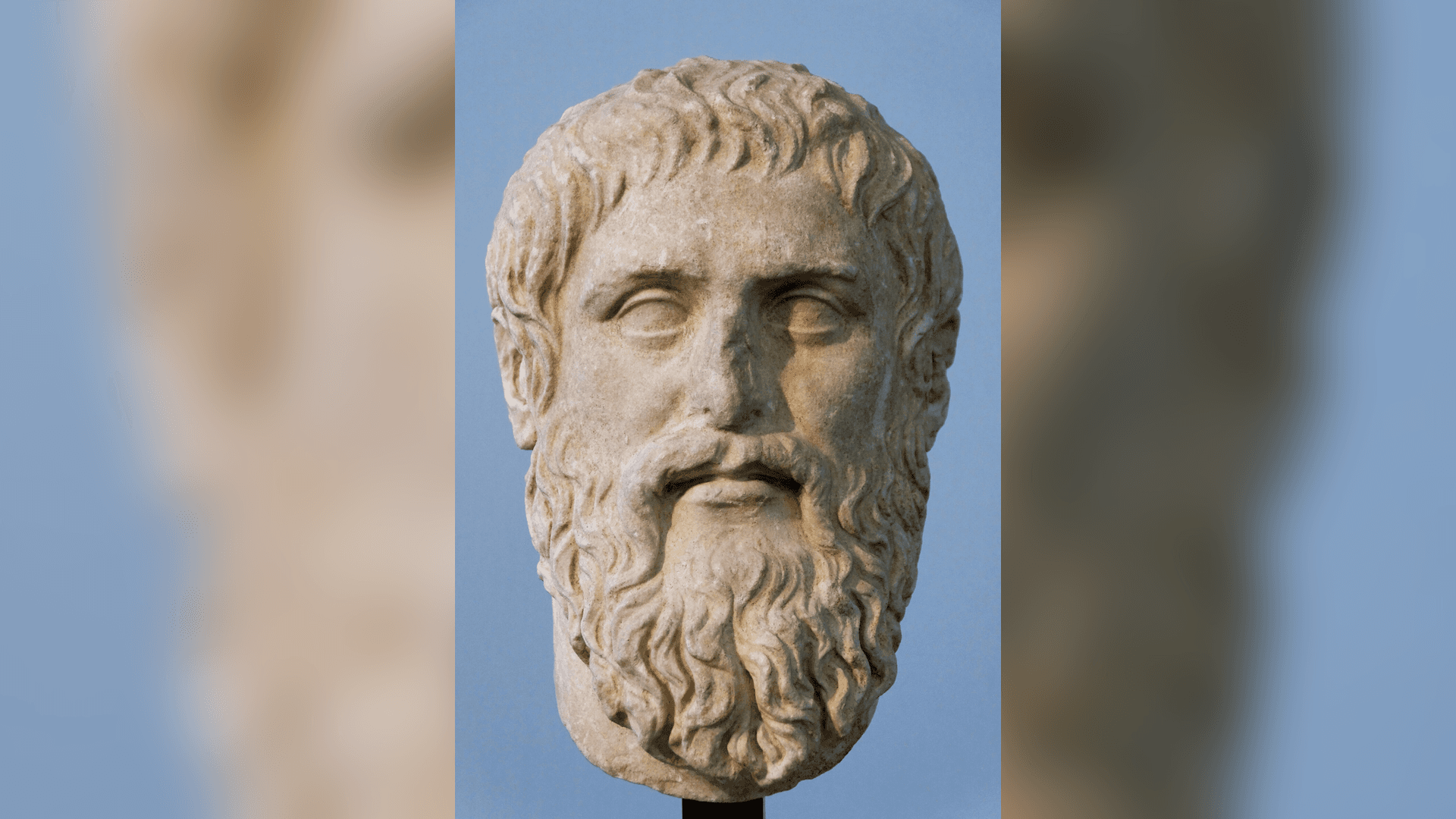
Hero image: Portrait of Plato, Roman copy after Silanion, Capitoline Museums, photo by Marie-Lan Nguyen, CC BY 2.5. Via Wikimedia Commons.
Take our professional IQ test
Want to know your IQ? Try the first ever professional online IQ test.