Steve Jobs' IQ was never tested publicly. The famous 160 figure is an estimate built from one fourth grade test. Here is what is actually documented.
Dr. Russell T. WarneChief Scientist
Share
Steve Jobs never took a publicly documented IQ test, so no real score exists for him. The famous "Steve Jobs IQ 160" is an estimate, published in 2011 by intelligence researcher Jonathan Wai, who converted a single childhood data point, Jobs's recollection that a fourth grade test placed him "at the high school sophomore level," using a scoring formula psychology abandoned decades ago. This article traces the 160 back to its source, explains why an achievement test from elementary school cannot yield an adult IQ, and lays out what the documented record actually shows about Jobs's mind.
Where the 160 number comes from
The fourth grade test story
The chain starts with Jobs himself. In Walter Isaacson's authorized 2011 biography, Jobs recalls a test taken at the end of fourth grade at Monta Loma Elementary in Mountain View, after his teacher Imogene "Teddy" Hill had turned him around academically: "I scored at the high school sophomore level." According to Isaacson's account, the school was so impressed that it proposed moving Jobs ahead, and his parents agreed to let him skip a grade. That one recollection is the entire evidentiary basis for every Steve Jobs IQ figure you have ever seen.
Wai's calculation
In November 2011, Jonathan Wai, a real and credentialed intelligence researcher, worked the anecdote into a number in a Psychology Today post. His method was explicit: the average fourth grader is 9 or 10 years old, the average tenth grader is 15 or 16, so applying the old formula of mental age divided by chronological age times 100 gives a lower bound of 150, an upper bound of 178, and an average of 164. Wai concluded that "Steve Jobs likely had an IQ roughly 160 or above." He also added a caveat the internet dropped: ratio figures inflate at the extremes, and his estimate would convert to roughly 150 on a modern deviation scale, around the 99.9th percentile. The meme kept the 160 and discarded the fine print.
Why that is not an IQ score
An achievement test is not an intelligence test
The test Jobs described was a school "achievement test," an instrument that measures learned material and reports grade-level placement. Achievement and IQ correlate strongly, and a fourth grader performing years ahead is genuine evidence of high ability. They are still different instruments, and even a real claim of 150 or 160 would need a normed intelligence test administration behind it to count as a score.
The formula is a century old and modern tests stop at 160
The mental-age arithmetic Wai used is Lewis Terman's original 1916 "ratio IQ," which defined the intelligence quotient as the ratio of mental age to chronological age. Modern tests replaced it with "deviation IQs," scores placed on a bell curve against a norm sample, and they report a bounded range: the WAIS-IV, the flagship adult test, spans Full Scale IQs from 40 to 160. A precise 160 for an adult who was never tested is folklore wearing the costume of measurement. The same problem sits behind the search for Albert Einstein's IQ, another famous mind with no tested score.
What the documented record shows
Strip away the invented precision and the record is still remarkable. The one documented childhood data point shows a fourth grader testing several grade levels ahead, consistent with very high but unmeasured ability. Jobs later enrolled at Reed College and dropped out, famously auditing classes such as calligraphy, then co-founded Apple and reshaped several industries. A defensible summary reads: well above average, plausibly in the top percentile, precise score unknowable.
The Apple story also resists a single-number explanation. Jobs was the design and marketing visionary while Steve Wozniak was the engineering prodigy, and the company needed both. No IQ figure, real or invented, captures that division of labor.
IQ, vision, and success
Research consistently finds that higher cognitive ability predicts better educational and professional outcomes on average, so nothing about Jobs's story contradicts the science of intelligence. The direction of the inference is what fails. Group-level prediction cannot be run backward to assign one man a score, and outcomes at Jobs's level also involve personality, opportunity, taste, and luck. Our article on whether high IQ correlates with success covers the evidence, and our guide to genius IQ scores explains why "genius" is a judgment rather than a cutoff.
Frequently asked questions
What was Steve Jobs' IQ?
Steve Jobs never took a publicly documented IQ test. The widely quoted 160 comes from researcher Jonathan Wai's 2011 estimate, which converted Jobs's recollection of scoring "at the high school sophomore level" on a fourth grade test using the old mental-age formula. It is an estimate, never a score.
Was Steve Jobs' IQ really 160?
There is no test behind that number. Wai's calculation produced a range of roughly 150 to 178 from a single childhood achievement test, and he noted the figure should convert to about 150 on a modern IQ scale. A real IQ requires a normed test administration, which Jobs never publicly had.
Did Steve Jobs skip a grade in school?
According to Walter Isaacson's biography, Jobs performed so far ahead on testing at the end of fourth grade that the school proposed moving him ahead, and his parents agreed to let him skip one grade. That is the same testing episode that later spawned the IQ estimates.
Was Steve Jobs a genius?
By achievement, obviously exceptional: he co-founded Apple and reshaped several industries. Psychometrically, "genius" is not a defined IQ cutoff, and Jobs has no documented score. The one data point on record suggests very high ability, and a precise number is unknowable.
Did Steve Jobs finish college?
No. Jobs enrolled at Reed College and dropped out, later auditing classes such as calligraphy. A college dropout with world-changing impact is a classic illustration that IQ and credentials are only part of the success story.
What IQ do you need to do what Steve Jobs did?
There is no threshold. Higher cognitive ability predicts better odds of professional achievement on average, but outcomes at Jobs's level also involve personality, opportunity, taste, and luck. No IQ score guarantees or precludes building an Apple.
The takeaway
The honest version of the Steve Jobs IQ story is one childhood test, one thoughtful researcher's back-of-envelope conversion, and a meme that kept the biggest number. If you want a figure that means something for yourself, folklore arithmetic will not produce it. The Reasoning and Intelligence Online Test reports a modern, professionally normed deviation score: you can take the free RIOT IQ test and get the kind of number the 160 legend only pretends to be.
References
1. Wai, J. (2011, November). Was Steve Jobs smart? Heck yes! Psychology Today. psychologytoday.com
2. Isaacson, W. (2011). Steve Jobs. Simon & Schuster. archive.org
3. Terman, L. M. (1916). The measurement of intelligence. Houghton Mifflin. archive.org
4. Canivez, G. L. (2010). Review of the Wechsler Adult Intelligence Scale, Fourth Edition. In The eighteenth mental measurements yearbook. Buros Institute of Mental Measurements. ux1.eiu.edu
5. Warne, R. T. (2020). In the know: Debunking 35 myths about human intelligence. Cambridge University Press. doi.org/10.1017/9781108593298
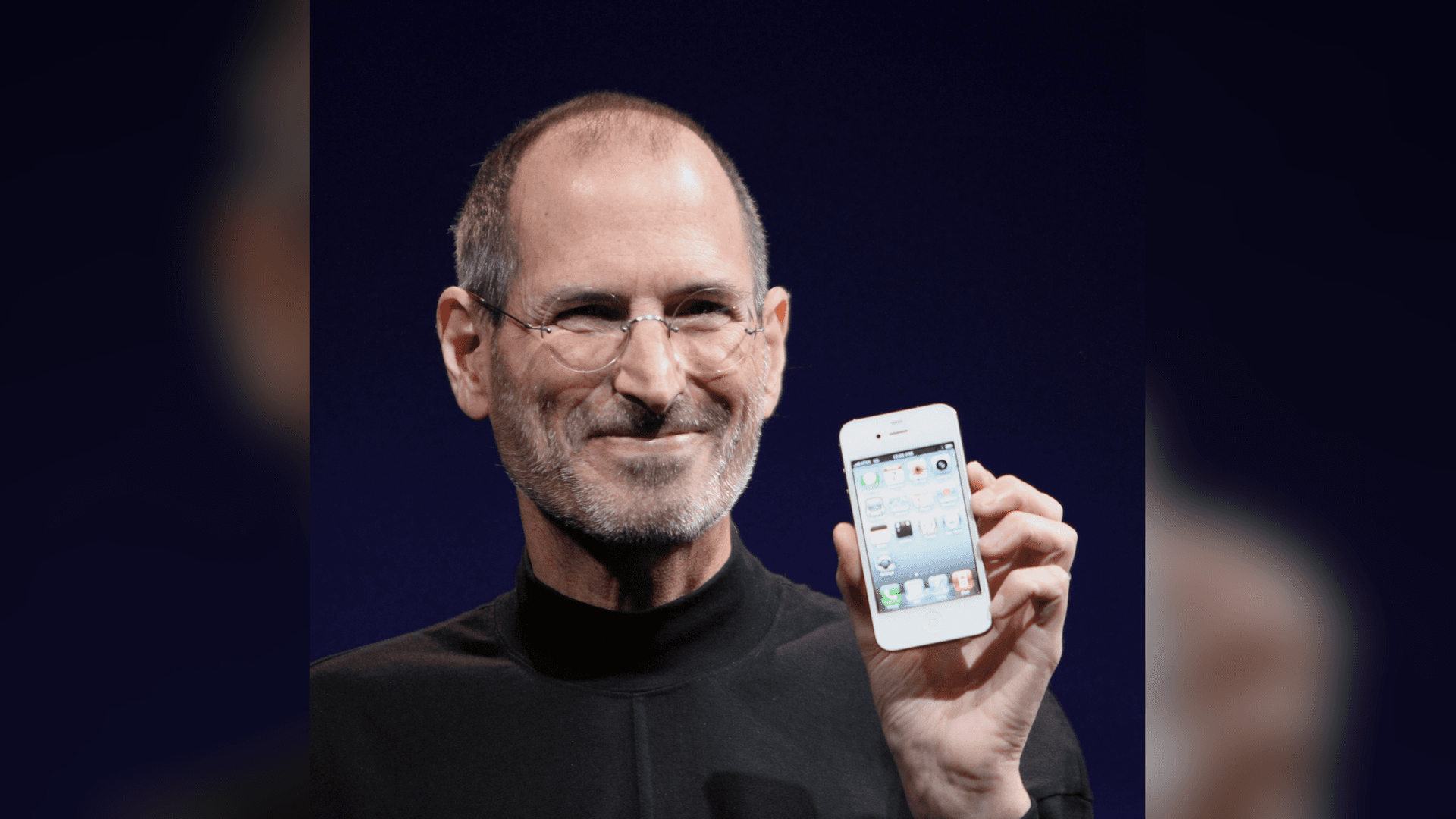
Hero image: Steve Jobs presenting the iPhone 4 at the 2010 Worldwide Developers Conference. Photo: Matthew Yohe, CC BY-SA 3.0, via Wikimedia Commons.
Take our professional IQ test
Want to know your IQ? Try the first ever professional online IQ test.