What Was Marie Curie's IQ? Why No Real Number Exists | Riot IQ
Oct 31, 2026·Famous People & IQ
What Was Marie Curie's IQ? Why No Real Number Exists
Marie Curie's IQ was never tested, and no scholarly study estimates it. The 180 to 200 figures online have no source. Here is what her record shows.
Dr. Russell T. WarneChief Scientist
Share
Marie Curie never took an IQ test, and we found no scholarly study that estimates her IQ, so there is no real number to report. The "180 to 200" figures repeated on celebrity-IQ lists have no traceable source in any study, biography, or test record.
What does exist is an unusually well-documented record of ability: a gold medal at high-school graduation at 15, first place in her physics degree in Paris, two new chemical elements, and two Nobel Prizes in two different sciences. This article covers why no score exists, where the popular numbers fall apart, what the record shows, and what her remarkable family can and cannot tell us about the inheritance of intelligence.
Why there is no real Marie Curie IQ score
Curie was born in Warsaw on 7 November 1867 and finished school in 1883, more than 20 years before Alfred Binet published the first intelligence test in 1905. By the time IQ tests spread in the 1910s and 1920s she was a famous professor in Paris, and there is no record that she ever sat for one.
She is also missing from the one major study that estimated IQs for historical figures. Catharine Cox's 1926 Genetic Studies of Genius, Volume II had raters estimate IQs from biographical records for 301 eminent people, but its sample was limited to people born between 1450 and 1850. Curie was born 17 years too late. That study is the source of the most-cited estimates for figures such as Isaac Newton and Charles Darwin, and nothing comparable exists for her.
That leaves the internet numbers. Lists that give Curie an IQ of 180 to 200 cite no study, name no rater, and describe no method. A figure like that would place her far beyond the range where tests can measure reliably, as our article on whether an IQ of 170 is considered a genius explains. The same pattern shows up for Albert Einstein's IQ, which was likewise never measured. A number repeated across many sites is still a number with no source.
What the record shows about her ability
The American Institute of Physics online exhibit on her life, which draws heavily on her own autobiographical writing, documents her early years in detail.
• A family of teachers: Maria Skłodowska was the fifth child of two educators in Russian-ruled Warsaw. Her father taught mathematics and physics at a boys' high school.
• Top of her class: She later recalled "always having held first rank in my class," and she received a gold medal when she graduated from high school in 1883, at age 15.
• The Floating University: Women were not welcome at the University of Warsaw, so she and her sister Bronya attended the "Floating University," an illegal night school whose classes moved between locations to avoid the czarist authorities.
• Years as a governess: The sisters made a pact. Maria worked as a tutor and then as a governess to help pay for Bronya's medical training in Paris, studying mathematics and physics on her own in her spare time.
• Paris: She enrolled at the Sorbonne in the fall of 1891, at 23, less prepared in mathematics and science than her classmates and weaker in technical French. She finished first in her physics degree in 1893 and second in mathematics in 1894.
That last step says the most. Within two years of arriving in Paris she went from a self-taught governess to the top of a demanding science program in a second language, competing against students with far better preparation.
Two Nobel Prizes in two sciences
Curie chose the newly discovered "uranium rays" as her doctoral topic and measured them with a sensitive electrometer invented by her husband Pierre and his brother. She found that two uranium ores were more radioactive than uranium itself and reasoned that they might contain undiscovered elements. Working with Pierre through repeated chemical separations, she announced polonium in July 1898 and radium in December 1898.
The Nobel Foundation recognized the work twice. In 1903 she shared the Physics prize with Pierre Curie and Henri Becquerel "in recognition of the extraordinary services they have rendered by their joint researches on the radiation phenomena discovered by Professor Henri Becquerel." In 1911 she received the Chemistry prize alone, for "the discovery of the elements radium and polonium, by the isolation of radium and the study of the nature and compounds of this remarkable element." According to the Nobel Foundation, she remains the only woman to have been awarded a Nobel Prize twice.
Achievements like these imply very high ability, but they cannot be converted into an IQ score. They also reflect years of demanding laboratory work in makeshift space, a working partnership with Pierre, and the persistence to continue while French institutions were slower than foreign ones to honor her.
A family of high achievers: what it can and cannot show
The Skłodowski children were a strikingly capable group. Of the five, Józef and Bronya became physicians, Helena became an educator, and Zofia died of typhus. Marie later said, "We all had much facility for intellectual work." The next generation went further: her daughter Irène shared the 1935 Nobel Prize in Chemistry with her husband, Frédéric Joliot, "in recognition of their synthesis of new radioactive elements."
It is tempting to read that as proof that genius is inherited. Family studies do show that intelligence runs in families. In a review of 111 studies, Bouchard and McGue (1981) found that siblings raised together correlate about .47 on intelligence tests, while identical twins raised together correlate about .86. The video above takes up exactly this question, and our article on whether IQ is genetic covers the heritability evidence in more depth.
One family cannot settle the question, though. A sibling correlation of .47 leaves plenty of room for brothers and sisters to differ substantially, and Irène also grew up in her mother's laboratory culture: she worked with Marie on mobile X-ray units in World War I and then at the Radium Institute. In the Curie family, shared genes pushed in the same direction as a household of teachers and, for Irène, a laboratory apprenticeship. A family history cannot pull those influences apart.
What her achievements do and do not say about IQ
Curie's record makes it very likely that she would have scored well above average on a modern intelligence test. Rapid mastery of university mathematics and physics in a second language is the kind of performance that high general reasoning ability predicts: in a study of more than 70,000 English children, general intelligence at age 11 correlated .81 with national exam results at 16 (Deary et al., 2007).
Beyond that, any specific number is guesswork. IQ scores describe performance on a test relative to a norm group, and Curie never took one. Historical estimates, even careful ones like Cox's, rate the surviving paper trail, so they rise and fall with how much of it survives. Her case shows why the honest answer is the evidence itself, without an invented score attached.
Frequently asked questions
What was Marie Curie's IQ?
Unknown. She never took an IQ test, and we found no scholarly study that estimates her IQ from historical records.
Is it true Marie Curie had an IQ of 180 to 200?
No source supports it. The figures appear on celebrity lists without any study, rater, or method behind them.
Why isn't Marie Curie in Cox's 1926 genius study?
Cox's study only included eminent people born between 1450 and 1850. Curie was born in 1867.
How many Nobel Prizes did Marie Curie win?
Two: the 1903 Nobel Prize in Physics, shared with Pierre Curie and Henri Becquerel, and the 1911 Nobel Prize in Chemistry, awarded to her alone.
Did Marie Curie's daughter also win a Nobel Prize?
Yes. Irène Joliot-Curie shared the 1935 Nobel Prize in Chemistry with her husband, Frédéric Joliot, for synthesizing new radioactive elements.
Is intelligence inherited in families like the Curies?
Partly. Intelligence is substantially heritable across populations, but siblings and children share homes and opportunities as well as genes, so one family cannot show how much of its success was inherited.
The takeaway
There is no Marie Curie IQ, only a documented life: top of her class at 15, top of her physics degree in Paris after years of self-study, two new elements, and two Nobel Prizes. Those facts say far more than an untraceable 180 or 200 ever could. If you want a score that comes from an actual measurement, an online IQ test built by psychometricians is the way to get one.
References
1. American Institute of Physics. (n.d.). Marie Curie and the science of radioactivity: Polish girlhood (1867-1891). [history.aip.org](. history.aip.org
2. American Institute of Physics. (n.d.). Marie Curie and the science of radioactivity: The governess. [history.aip.org](. history.aip.org
3. American Institute of Physics. (n.d.). Marie Curie and the science of radioactivity: Years of study. [history.aip.org](. history.aip.org
4. American Institute of Physics. (n.d.). Marie Curie and the science of radioactivity: Research breakthroughs. [history.aip.org](. history.aip.org
5. Nobel Prize Outreach. (n.d.). Marie Curie: Facts. Nobel Prize in Physics 1903. [nobelprize.org](. nobelprize.org
6. Nobel Prize Outreach. (n.d.). Marie Curie: Facts. Nobel Prize in Chemistry 1911. [nobelprize.org](. nobelprize.org
7. Nobel Prize Outreach. (n.d.). Nobel Prize awarded women. [nobelprize.org](. nobelprize.org
8. Nobel Prize Outreach. (n.d.). Irène Joliot-Curie: Facts. Nobel Prize in Chemistry 1935. [nobelprize.org](. nobelprize.org
9. American Institute of Physics. (n.d.). Marie Curie and the science of radioactivity: A second generation of Curies. [history.aip.org](. history.aip.org
10. Cox, C. M. (1926). Genetic studies of genius: Vol. II. The early mental traits of three hundred geniuses. Stanford University Press. [archive.org](. archive.org
11. Bouchard, T. J., Jr., & McGue, M. (1981). Familial studies of intelligence: A review. Science, 212(4498), 1055-1059. [doi.org/10.1126/science.7195071](. doi.org
12. Deary, I. J., Strand, S., Smith, P., & Fernandes, C. (2007). Intelligence and educational achievement. Intelligence, 35(1), 13-21. [doi.org/10.1016/j.intell.2006.02.001](. doi.org
13. Simonton, D. K. (2020). Galton, Terman, Cox: The distinctive Volume II in Genetic Studies of Genius. Gifted Child Quarterly, 64(4), 275-284. [doi.org/10.1177/0016986220921360](. doi.org
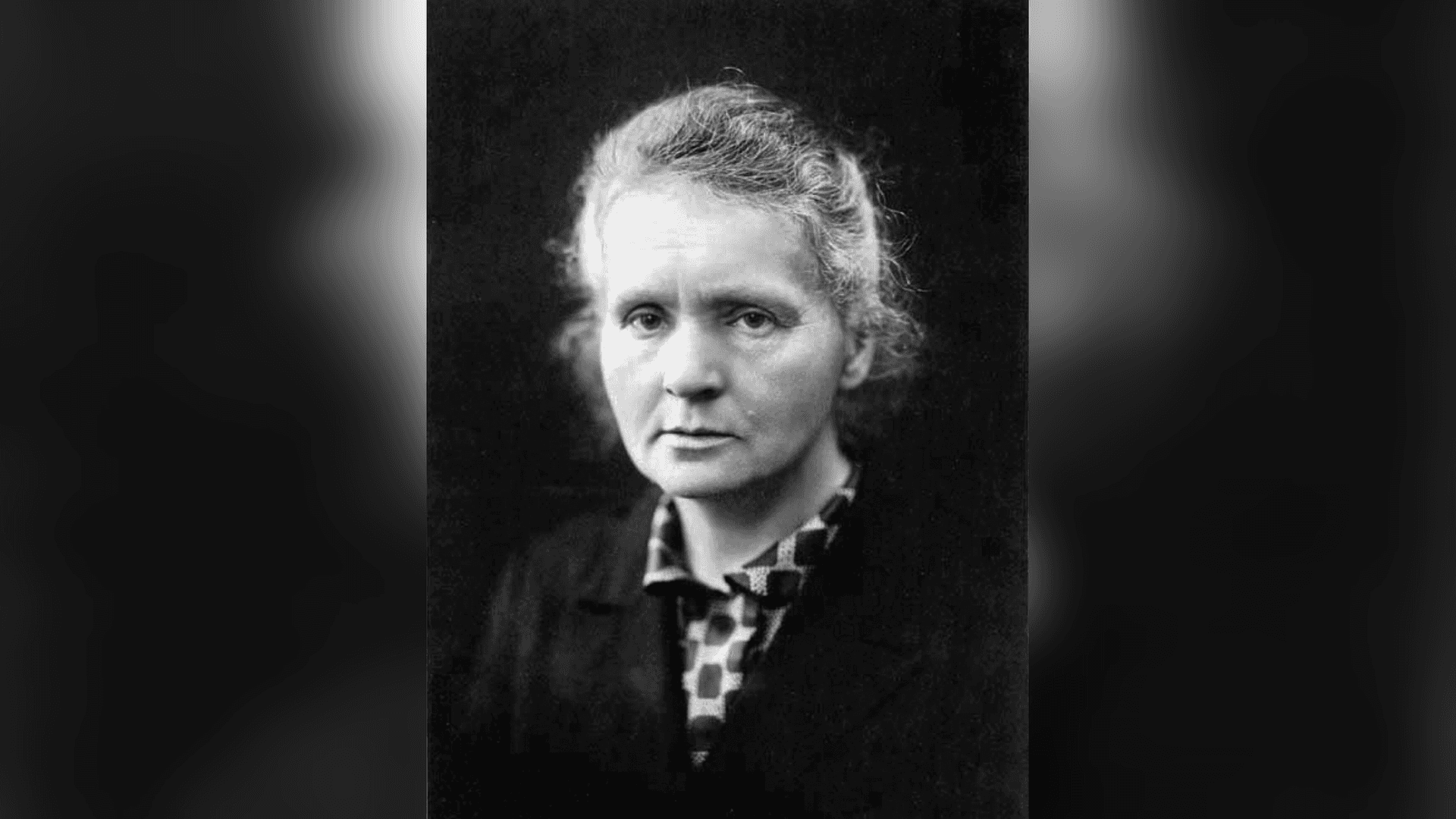
Hero image: Henri Manuel, c. 1920, public domain, via Wikimedia Commons.
Hero image: Marie Curie, c. 1920, by Henri Manuel, public domain. Via Wikimedia Commons.
Take our professional IQ test
Want to know your IQ? Try the first ever professional online IQ test.