Who is the smartest person in the world? No test can say: scores carry error margins, tests have ceilings, and most people are never tested. Here is why.
Dr. Russell T. WarneChief Scientist
Share
There is no scientifically valid way to name the smartest person in the world. IQ tests were built to compare people with their population, not to crown a single champion: every score carries a margin of error of several points, the tests stop measuring precisely at their upper ceiling, and nearly all of humanity has never taken a professionally administered test at all. What science can say is how rare extreme scores are, why familiar names like Einstein and Marilyn vos Savant keep circulating, and what a defensible answer to this question actually looks like.
Why No Test Can Name a Single Smartest Person
An IQ score is a comparison with a “norm group,” a large representative sample of test-takers, expressed on a scale where the average is 100 and the “standard deviation,” a measure of spread, is 15 points. Our guide to the IQ scale walks through that system in detail. Three of its features make a world ranking impossible.
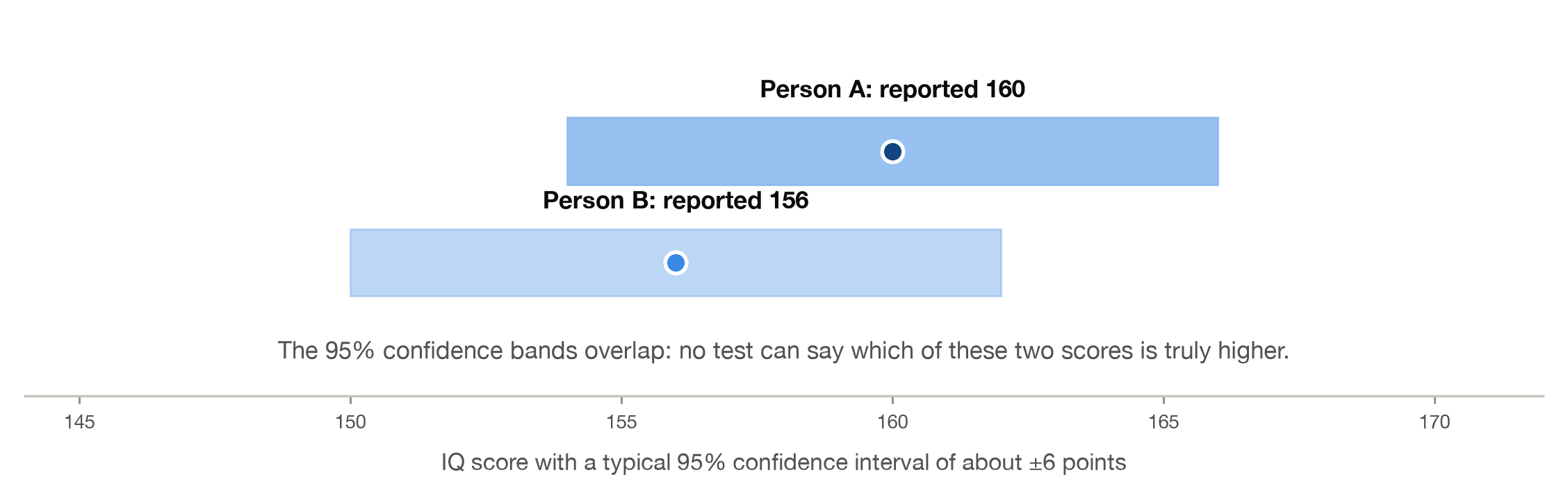
• Measurement error: No score is exact. A typical 95% confidence interval spans roughly plus or minus 6 points, so two people scoring 160 and 156 are statistically indistinguishable. Professional testing standards require reporting that uncertainty rather than treating one number as truth.
• Test ceilings: Standard tests simply run out of hard items around 160. Above that, there are too few items, and too few people in any norm sample, to place scores precisely. Claims of scores like 200 sit far outside what any modern, properly normed instrument can measure.
• Coverage: A ranking requires everyone to enter the race. Only a tiny share of the world's eight billion people has ever taken a full-scale IQ test, so the highest scorer on record and the smartest living person are almost certainly different people.
How Rare Are Extreme IQ Scores?
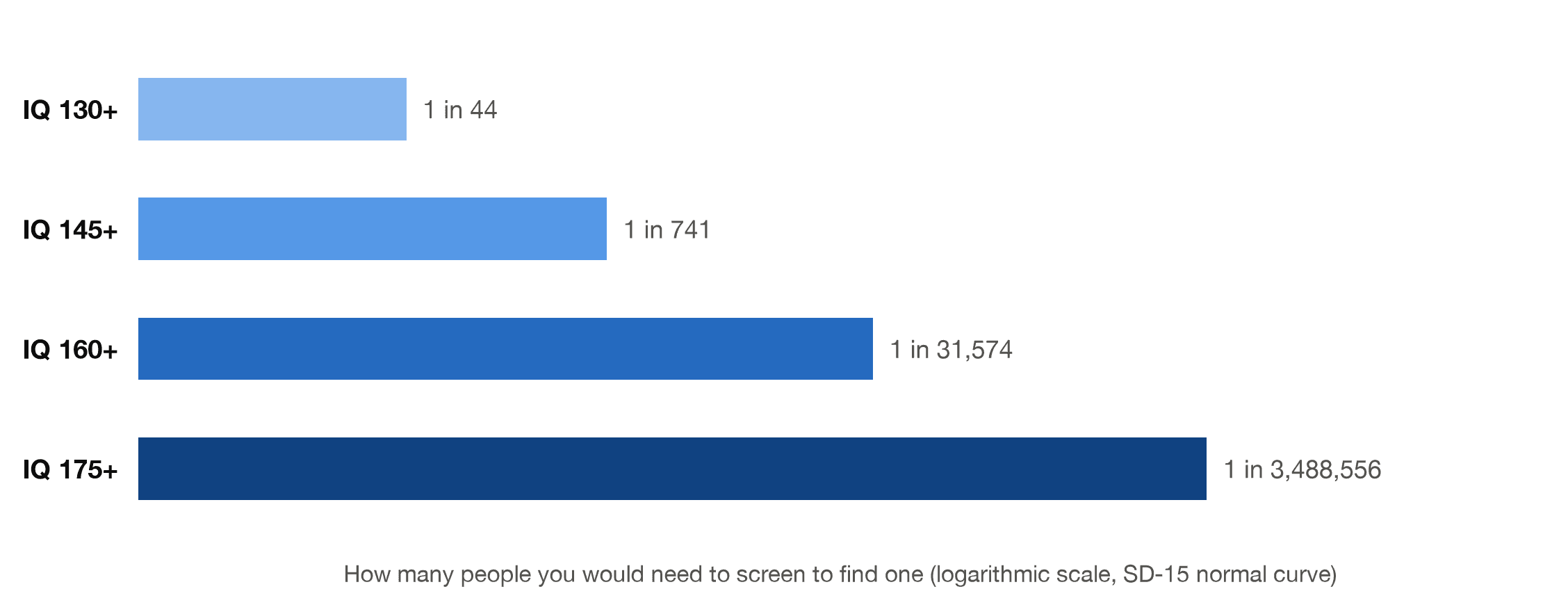
The normal curve makes rarity easy to calculate, and the numbers escalate quickly. A score of 130 puts you in roughly the top 2%. By 160, you are one in about 31,600. By 175, the expected frequency is about one in 3.5 million, which means only a couple of thousand people on Earth would be expected at that level, nearly none of whom have ever been tested.
Rarity is also why headline claims deserve skepticism. The difference between a reported 160 and a reported 156 is smaller than the measurement error of either score, as the chart below shows. For what tests can and cannot measure at the very top, see our article on the highest possible IQ.
Why the Old “Record” IQs Do Not Count
Historical record claims almost all trace to childhood “ratio IQs,” an obsolete scoring method that divided a child's “mental age” by their actual age and multiplied by 100. A ten-year-old performing like a typical 23-year-old scored 228 by that arithmetic. Ratio scores could soar to numbers a modern test can never produce, because today's “deviation IQ” instead reports how far you sit from your age group's average, and the population runs out long before such extremes.
This is precisely why Marilyn vos Savant's famous listing is disputed: her number came from a childhood ratio score taken decades before, converted across eras and methods that psychometricians agree are not comparable. It is also why any claim that some historical figure “had an IQ of 200” cannot be a measurement. On a modern scale, a score of 200 would imply a rarity beyond the human population; there has never been a norm sample that could support it.
The Names That Keep Coming Up
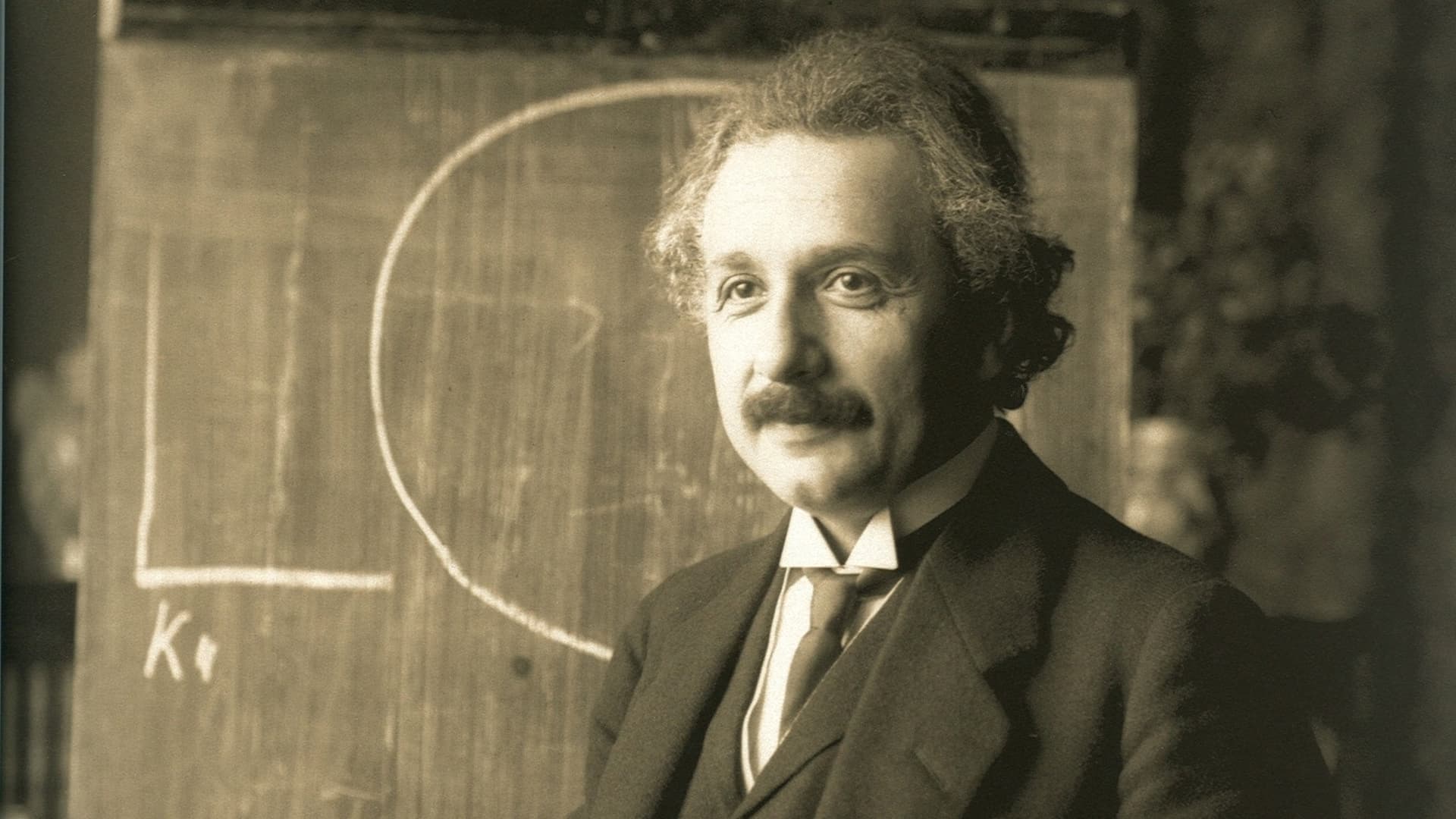
Because the question has no measured answer, public lists recycle a familiar cast. Marilyn vos Savant was listed under Guinness World Records' former “Highest IQ” category in the 1980s, based on childhood test results whose comparability modern psychometricians question; Guinness later retired the category. Albert Einstein never took an IQ test at all; every number attached to him is a posthumous guess. Mathematicians like Terence Tao are cited from prodigy records rather than adult scores. These names tell us who became famous for intellectual work, which is not the same as a measured ranking of intelligence.
The deeper point: beyond a certain level, accomplishment depends on far more than test scores. Research on high achievers finds that opportunity, training, persistence, and luck all shape who turns rare ability into rare work.
A Defensible Way to Think About the Question
If the question is who has the highest defensible test score, the honest answer is that nobody knows, because most people are untested and extreme scores are imprecise. If the question is who has done the most intellectually impressive work, that is a judgment about achievement, not a measurement. What IQ research does support is narrower and more useful: scores in the top fractions of a percent exist, they predict real outcomes on average, and they can be measured carefully up to a point. Our article on genius-level IQ scores covers what those levels mean in practice.
Measure Yourself Against a Modern Norm Instead
The meaningful version of this question is personal: where do you stand relative to a current, representative norm group? The Reasoning and Intelligence Online Test, developed by a team led by intelligence researcher Dr. Russell T. Warne, measures five cognitive domains and reports your full-scale score with its confidence interval, the same honesty about precision this article has been urging. Take the RIOT IQ test to see your own numbers.
Frequently Asked Questions
Who has the highest IQ ever recorded?
No single verified answer exists. Historical record claims relied on childhood ratio scores that cannot be compared with modern deviation IQs, and testing organizations no longer certify records.
Is there a smartest person in the world right now?
Someone alive today presumably has the highest true general ability, but no method exists to identify that person. Most of the world's population has never taken a full-scale test, tests lose precision at the extremes, and two candidates a few points apart cannot be told apart with confidence.
What was Marilyn vos Savant's IQ?
Guinness once listed her under its Highest IQ category based on childhood testing. Psychometricians question converting those results to the modern scale, and the category itself was retired.
Is Einstein the smartest person in history?
He is arguably the most celebrated scientist in history, but he never took an IQ test, so any number you see attached to his name is invented.
What IQ counts as genius?
“Genius” has no scientific definition. Scores of 140 or 145 and above are sometimes labeled that way informally, covering well under 1% of people. Researchers avoid the word because eminent achievement depends on much more than a test score.
References
1. American Educational Research Association, American Psychological Association, & National Council on Measurement in Education. (2014). Standards for educational and psychological testing. American Educational Research Association. testingstandards.net
2. Guinness World Records. (n.d.). Highest IQ [retired record category]. guinnessworldrecords.com
3. Warne, R. T. (2020). In the know: Debunking 35 myths about human intelligence. Cambridge University Press. doi.org/10.1017/9781108593298
5. Gottfredson, L. S. (1997). Mainstream science on intelligence: An editorial with 52 signatories, history, and bibliography. Intelligence, 24(1), 13–23. doi.org/10.1016/S0160-2896(97)90011-8
Hero image: Albert Einstein, 1921, by Ferdinand Schmutzer. Public domain, via Wikimedia Commons.
Take our professional IQ test
Want to know your IQ? Try the first ever professional online IQ test.