What Was Aristotle's IQ? What the Record Can and Cannot Show | Riot IQ
Nov 1, 2026·Famous People & IQ
What Was Aristotle's IQ? What the Record Can and Cannot Show
Aristotle's IQ is unknown. He lived 2,300 years before IQ tests, he is outside Cox's 1926 study, and the Aristotle IQ numbers online have no source.
Dr. Russell T. WarneChief Scientist
Share
Aristotle's IQ is unknown, and no credible estimate exists. He was born in 384 BCE, roughly 2,300 years before the first intelligence test, he falls outside the 1450 to 1850 window of Catharine Cox's 1926 study of geniuses, and the Aristotle IQ figures that circulate online have no traceable source.
The record of what he did is another matter. Aristotle wrote the first systematic treatment of logic and the first comprehensive study of animals, and he had definite ideas about intelligence and the brain, some of them right and some badly wrong. This page covers why no number exists, where the popular ones come from, what the record shows, Aristotle's own views on intelligence, and what his achievements can and cannot tell us.
Why no IQ number for Aristotle can exist
IQ testing began in 1905 with the scale published by Alfred Binet and Théodore Simon, so any judgment about an earlier person's intelligence is an estimate. The only estimates with a documented method come from Cox, who had raters judge recorded childhood achievements of 301 eminent people. She states that "eminent men born before 1450 were also omitted," which rules out Aristotle.
He appears in her book only as reading matter for later geniuses. In the entry for John Stuart Mill, for example, Cox notes that "a synoptic table of Aristotle's Rhetoric was made by Mill at 11." That tells us about Mill's precocity, not Aristotle's.
The method would also have nothing to work with. Almost nothing reliable is recorded about Aristotle's childhood, and our main ancient biographer, Diogenes Laertius, wrote centuries later and is, in the words of the Internet Encyclopedia of Philosophy, "of questionable reliability." Our article on Plato's IQ, Aristotle's teacher, runs into the same problem, as does any attempt to pin down Socrates' IQ.
Where the popular Aristotle IQ numbers come from
Search for Aristotle's IQ and you will find numbers anywhere from the 160s to the 190s, and sometimes higher, on celebrity-IQ lists, quiz pages and videos. We could not find a single one that names who produced it, what evidence it used or how it was calculated. These numbers have no traceable source.
Even the oldest attempt to rank ancient Greek ability skips him. In Hereditary Genius (1869), Francis Galton listed 14 illustrious Athenians born in the century from 530 to 430 BCE and graded several of them far above any modern European. Aristotle, born in Stagira in 384 BCE, is not on the list, and Galton's grades were reputational guesses, not test scores, in any case.
What the record shows about Aristotle
The Stanford Encyclopedia of Philosophy (SEP) gives Aristotle's dates as 384 to 322 BCE. He was born in Stagira, in the Macedonian region of northern Greece. Diogenes reports that his father, Nicomachus, was physician to the Macedonian king Amyntas. At about 17, Aristotle was sent to Athens to study at Plato's Academy, and he stayed until Plato's death in 347, about 20 years.
He then spent around three years in Assos, on the coast of what is now Turkey, and two more on the island of Lesbos, where he worked with Theophrastus. In 343, at the request of King Philip of Macedon, he went to tutor Philip's 13-year-old son, the future Alexander the Great. The SEP is careful here: "little concrete is known about their interaction," and the tutoring probably lasted only two or three years. In 335 Aristotle returned to Athens and founded his own school, the Lyceum. After Alexander's death in 323 he left Athens, and he died in Chalcis on the island of Euboea the following year.
His output was enormous. The SEP puts his body of work at "perhaps numbering as many as two-hundred treatises," of which about 31 survive, and describes them as largely lecture notes and working drafts. They span fields from logic and metaphysics to ethics, politics, rhetoric and natural science. Among his achievements, the SEP lists "the first systematic treatment of the principles of correct reasoning, the first logic."
His biology deserves special mention. According to the SEP entry on Aristotle's biology, his zoological writings make up roughly 25% of the surviving corpus and record "the first systematic and comprehensive study of animals." The entry adds: "There was nothing of similar scope and sophistication again until the 16th century."
Aristotle on intelligence, the brain and the hands
Aristotle also wrote about intelligence directly, which makes him an interesting case for an IQ site.
• Quick wit: In the Posterior Analytics (I.34), he defines quick wit as "a faculty of hitting upon the middle term instantaneously," that is, seeing at once the link that explains a fact. His example is a person who notices that the moon's bright side always faces the sun and quickly grasps that the moon borrows its light.
• Hands and minds: The philosopher Anaxagoras had argued that humans are the most intelligent animals because they have hands. In Parts of Animals (IV.10), Aristotle reverses the causation: man "does not owe his superior intelligence to his hands, but his hands to his superior intelligence."
• The brain: In Parts of Animals (II.7), Aristotle writes that "of all animals, man has the largest brain in proportion to his size." He then explains its job as a cooling device that "tempers the heat and seething of the heart." Aristotle placed the body's central organ of perception in the heart.
Whether he was right about brain proportions across species depends on how they are measured, but within our own species modern imaging does confirm a link between brain volume and intelligence, though a modest one: a 2015 meta-analysis of more than 8,000 people found a correlation of .24. Our article on brain size and IQ covers that research. The cooling theory was wrong, as was his claim, earlier in the same book, that the animals with thin, cold blood are the most intelligent. One of the ablest observers of the ancient world could misjudge the very organ that produces thought.
What Aristotle's achievements do and do not say about IQ
The SEP sums up his influence plainly: "Judged solely in terms of his philosophical influence, only Plato is his peer." That influence lasted through late antiquity, the Middle Ages and the Renaissance. It reflects enormous ability, but also the survival of his texts, the school he founded, and centuries of teachers who made his works the core of education. None of it can be converted into a point on the IQ scale or used to compare him with a modern person.
His long authority carries a lesson about evidence. For many centuries Aristotle's works were a starting point of learning, and an authority that respected carries its errors along with its insights. Modern psychology has its own version of the problem. A 2018 analysis of 29 popular introductory psychology textbooks, led by Russell T. Warne, found that 79.3% contained inaccurate statements about intelligence and 79.3% contained logical fallacies in their intelligence sections. A confident claim in an authoritative source still needs data behind it, and that applies to a textbook as much as to a viral IQ number for a philosopher.
Aristotle's career also shows what reasoning skill can do when it meets careful observation. People sometimes ask whether training in philosophy produces minds like his; our review of whether studying philosophy makes you smarter looks at what the research actually finds.
Frequently asked questions
What was Aristotle's IQ?
Nobody knows. Aristotle died in 322 BCE, more than 2,200 years before the first IQ test, he has no estimate in Cox's historiometric study, and the figures online have no documented source.
Is Aristotle in Cox's 1926 study of geniuses?
No. Cox studied eminent people born between 1450 and 1850 and excluded anyone born earlier. Aristotle appears in her book only as an author that later geniuses, such as John Stuart Mill, read as children.
Did Aristotle tutor Alexander the Great?
Yes. In 343 BCE King Philip of Macedon invited him to tutor the 13-year-old Alexander, but little is known about what the lessons involved, and they probably lasted only two or three years.
What did Aristotle think the brain was for?
He thought it cooled the body, tempering the heat of the heart, which he regarded as the central organ of perception. He did note correctly that humans have a large brain relative to body size.
The takeaway
There is no Aristotle IQ, and no credible one can be produced from the surviving evidence. The record shows a researcher of extraordinary range who wrote the first logic and still got the brain's purpose wrong, a useful reminder that even the greatest authority needs evidence. If you would like a measured result for your own reasoning, take a full-length online IQ test.
References
1. Shields, C. (2020). Aristotle. In E. N. Zalta (Ed.), The Stanford Encyclopedia of Philosophy. [plato.stanford.edu](. plato.stanford.edu
2. Lennox, J. (2026). Aristotle's biology. In E. N. Zalta & U. Nodelman (Eds.), The Stanford Encyclopedia of Philosophy. [plato.stanford.edu](. plato.stanford.edu
3. Humphreys, J. (n.d.). Aristotle (384-322 B.C.E.). Internet Encyclopedia of Philosophy. [iep.utm.edu](. iep.utm.edu
4. Aristotle. (n.d.). On the parts of animals (W. Ogle, Trans.). The Internet Classics Archive. [classics.mit.edu](. classics.mit.edu
5. Aristotle. (n.d.). Posterior analytics (G. R. G. Mure, Trans.). The Internet Classics Archive. [classics.mit.edu](. classics.mit.edu
6. Cox, C. M. (1926). Genetic studies of genius: Vol. II. The early mental traits of three hundred geniuses. Stanford University Press. [archive.org](. archive.org
7. Galton, F. (1869). Hereditary genius: An inquiry into its laws and consequences. Macmillan. [galton.org](. galton.org
8. Pietschnig, J., Penke, L., Wicherts, J. M., Zeiler, M., & Voracek, M. (2015). Meta-analysis of associations between human brain volume and intelligence differences: How strong are they and what do they mean? Neuroscience & Biobehavioral Reviews, 57, 411-432. [doi.org/10.1016/j.neubiorev.2015.09.017](. doi.org
9. Warne, R. T., Astle, M. C., & Hill, J. C. (2018). What do undergraduates learn about human intelligence? An analysis of introductory psychology textbooks. Archives of Scientific Psychology, 6(1), 32-50. [doi.org/10.1037/arc0000038](. doi.org
10. Binet, A., & Simon, T. (1905). Méthodes nouvelles pour le diagnostic du niveau intellectuel des anormaux. L'Année Psychologique, 11, 191-244. [doi.org/10.3406/psy.1904.3675](. doi.org
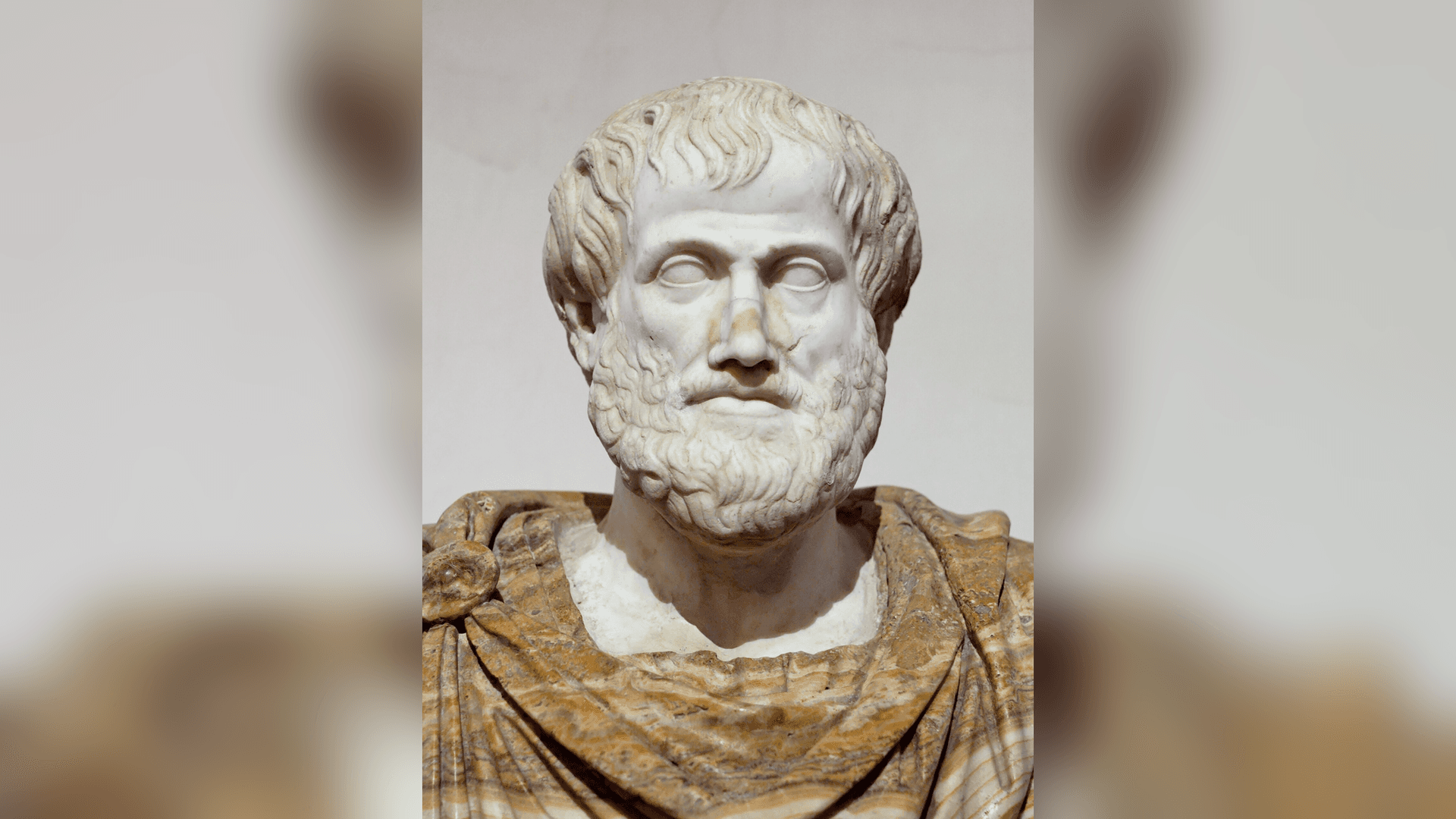
Hero image: Bust of Aristotle, Roman copy after Lysippos, Palazzo Altemps, Rome. Public domain, via Wikimedia Commons.
Take our professional IQ test
Want to know your IQ? Try the first ever professional online IQ test.