What is Magnus Carlsen's IQ? He has never released a tested score; viral numbers like 190 are invented. Here is what chess research actually shows about IQ.
Dr. Russell T. WarneChief Scientist
Share
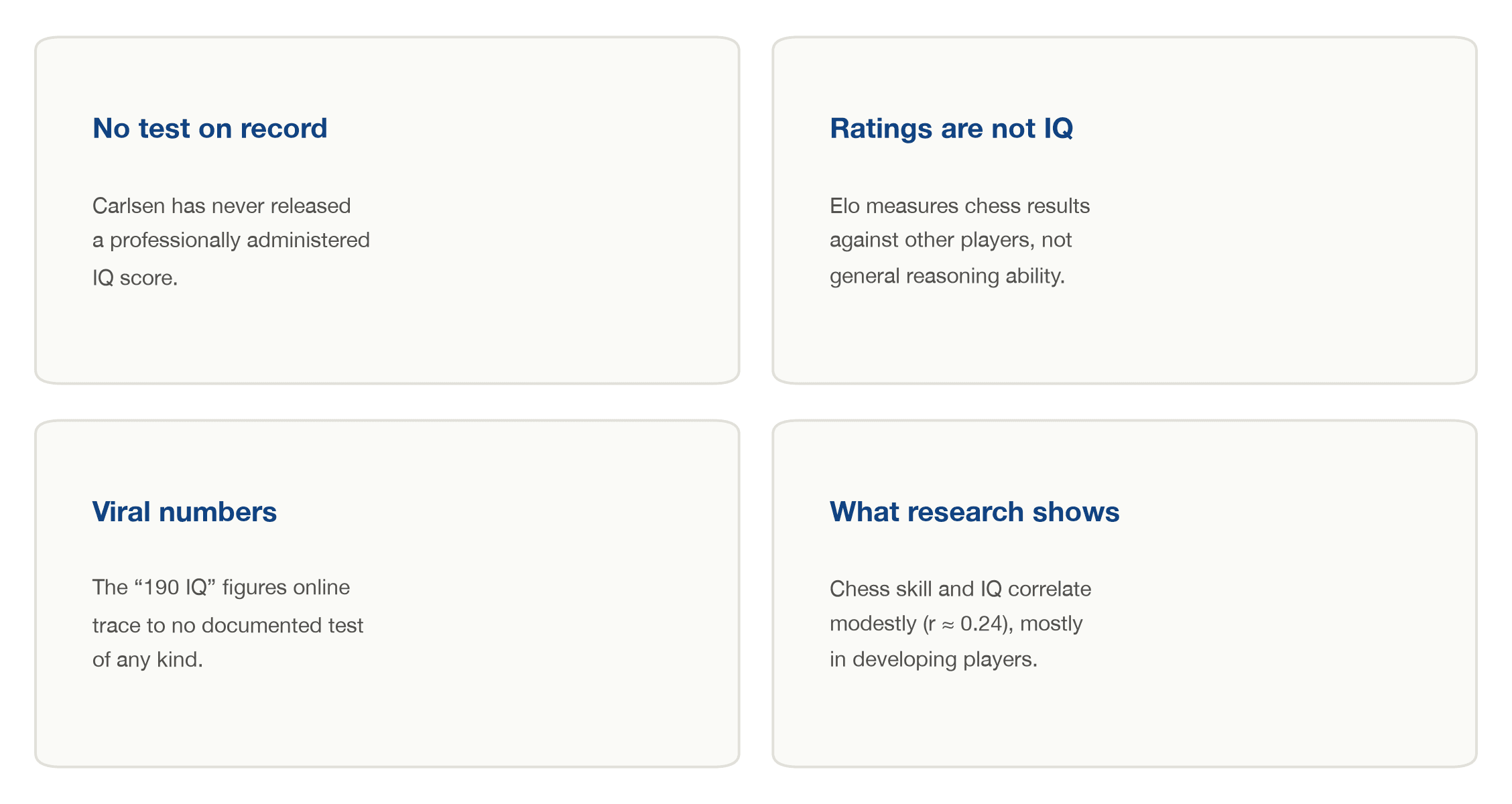
Magnus Carlsen has never released a professionally administered IQ score, so every specific number you see online, including the widely shared “190,” is invented. What is documented is his chess record: a peak FIDE rating of 2882 in May 2014, the highest in history, and five world championship titles. This article covers what is actually known, what research says about how chess skill relates to IQ, and why the two are not the same thing.
What Carlsen Has Actually Said and Done
Carlsen has repeatedly deflected IQ questions in interviews and has never published a tested score. The verifiable numbers about him are chess numbers: the record 2882 classical rating, the world's number one ranking held continuously since 2011, and world titles in classical, rapid, and blitz formats. None of those is an intelligence test result. The same pattern holds for most famous names; see our articles on Elon Musk's IQ and Albert Einstein's IQ for two more cases where viral numbers outrun the evidence.
What Chess Skill Actually Says About IQ
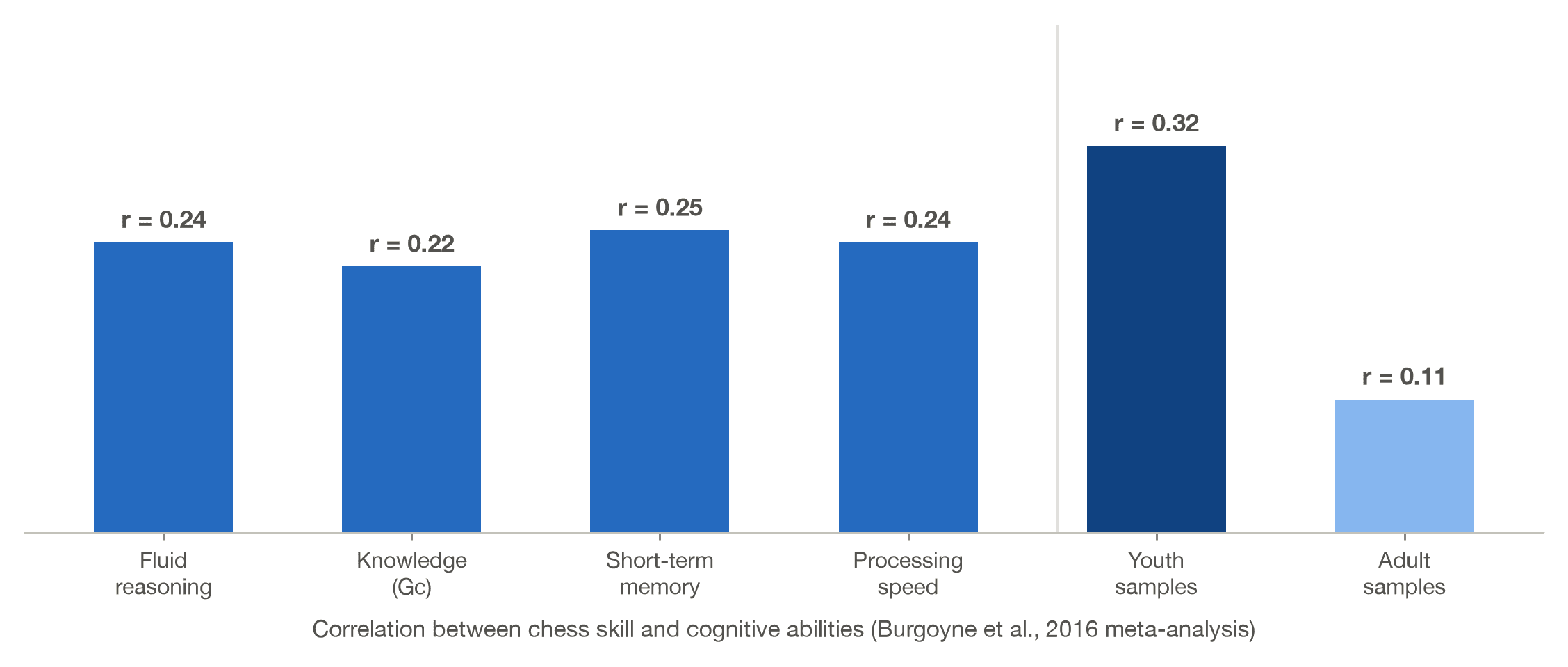
Chess feels like pure intelligence, so people assume the world's best player must have a stratospheric IQ. The research is more interesting. A comprehensive meta-analysis of 19 studies found chess skill correlates positively but modestly with cognitive abilities: about r = 0.24 with “fluid reasoning,” the ability to solve novel problems, and similarly with memory and processing speed.
Two details matter. The link is strongest in young and developing players (r = 0.32) and weakest in elite ranked players (r = 0.11 to 0.14). At the top, everyone is smart enough, and what separates champions is tens of thousands of hours of study, prodigious chess-specific memory, and temperament. Second, a correlation of 0.24 means cognitive ability explains only a few percent of the variance in chess skill. Grandmasters as a group score well above average, but chess rating is a poor ruler for measuring any individual's IQ.
The profile of abilities matters too. In the same meta-analysis, chess skill correlated more strongly with numerical ability (r = 0.35) than with verbal ability (r = 0.19) or visuospatial ability (r = 0.13), a surprise for a game everyone assumes is spatial. The authors' interpretation is that calculating variations resembles sequential numerical reasoning far more than mental rotation. Expertise research points the same direction: what makes a grandmaster is a vast library of memorized patterns built through decades of study, not raw IQ alone.
Where the “IQ 190” Number Came From
Try to trace the famous 190 to a source and you will find none: no test, no psychologist, no interview where Carlsen cites it. It appears to have been coined by a celebrity-IQ listicle and then copied between sites until repetition made it look like a fact. This is the standard life cycle of celebrity IQ numbers. A round, impressive figure is invented, aggregator sites cite each other in a circle, and search results fill with the same unsourced claim. The same laundering produced Einstein's mythical 160 and the various numbers attached to other billionaires and champions.
Why Elo Ratings Cannot Be Converted to IQ
An “Elo rating” measures one thing: your results against other rated chess players. It is domain-specific, it moves with practice and preparation, and it has no norm group of the general population behind it. An IQ score, by contrast, samples several cognitive domains and places you on a scale where the average person scores 100. Our guide to the IQ scale explains that scaling. There is no formula linking the two, and any site offering an Elo-to-IQ conversion is making it up.
How a Champion's Mind Actually Works
The classic experiment explaining chess genius was run by Chase and Simon in 1973. Masters shown a real game position for a few seconds reconstructed it almost perfectly, while novices could not. But when the pieces were scattered randomly, the masters' advantage nearly vanished. Their superpower was not general memory or raw processing; it was a huge mental library of meaningful chess patterns, built through years of study. Later work estimates strong masters hold tens of thousands of such “chunks.”
That finding reframes the Carlsen question. His legendary feats, like playing many simultaneous games blindfolded, are expressions of that trained pattern library operating on a domain he has studied since age five. They are astonishing, and they are chess-specific. An IQ test deliberately uses novel material precisely so that no one's trained library can carry them; that is why our guide to what IQ tests measure distinguishes trained expertise from general ability.
The Bottom Line on Carlsen
Carlsen is demonstrably one of the greatest chess players ever, and greatness at that level requires abilities IQ tests partly capture: pattern recognition, working memory, and calculation. It is reasonable to infer he would score well. It is not reasonable to attach a number to him, because no test result exists. When you see “Magnus Carlsen IQ 190,” you are looking at a fabricated statistic recycled between websites.
Curious Where You Stand?
Unlike celebrity guesses, your own score is measurable. The Reasoning and Intelligence Online Test, developed by a team led by intelligence researcher Dr. Russell T. Warne, measures fluid reasoning, working memory, and processing speed among its five domains, the same abilities the chess research examined. Take the RIOT IQ test and get a real number instead of a rumor.
Frequently Asked Questions
What is Magnus Carlsen's IQ?
Unknown. He has never released a tested score, and the numbers circulating online trace to no documented test.
Do you need a high IQ to be a chess grandmaster?
Grandmasters tend to score above average, but research shows chess skill depends far more on accumulated study and chess-specific memory than on IQ differences.
Does playing chess raise your IQ?
Reviews of chess instruction studies find little convincing transfer from chess training to broader cognitive ability once weak study designs are excluded. Chess makes you better at chess, which is a fine reason to play it.
Is a 2882 Elo rating like an IQ of 190?
No. Elo measures chess results against other players; IQ measures general cognitive ability against the population. The scales are not convertible.
Who is smarter, Carlsen or Kasparov?
Unanswerable. Neither has a published modern test score, and chess dominance in different eras cannot be converted into intelligence comparisons. Kasparov reportedly took a magazine-arranged battery in 1987 with strong but unexceptional results, which mostly proves the point: champions are chess experts first.
References
1. Burgoyne, A. P., Sala, G., Gobet, F., Macnamara, B. N., Campitelli, G., & Hambrick, D. Z. (2016). The relationship between cognitive ability and chess skill: A comprehensive meta-analysis. Intelligence, 59, 72–83. doi.org/10.1016/j.intell.2016.08.002
3. American Educational Research Association, American Psychological Association, & National Council on Measurement in Education. (2014). Standards for educational and psychological testing. American Educational Research Association. testingstandards.net
4. Warne, R. T. (2020). In the know: Debunking 35 myths about human intelligence. Cambridge University Press. doi.org/10.1017/9781108593298
5. Gottfredson, L. S. (1997). Mainstream science on intelligence: An editorial with 52 signatories, history, and bibliography. Intelligence, 24(1), 13–23. doi.org/10.1016/S0160-2896(97)90011-8
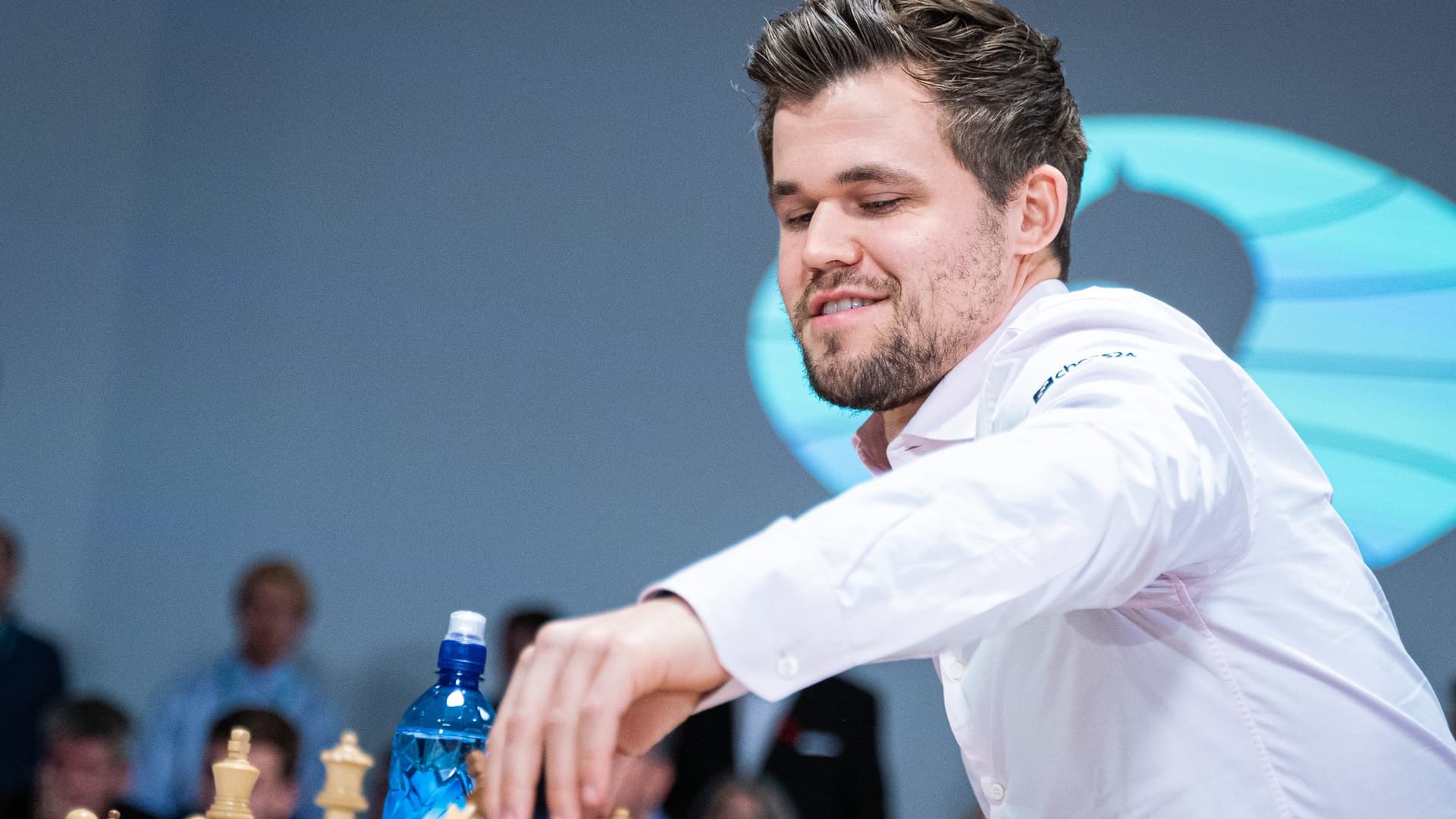
Hero image: Magnus Carlsen at the FIDE World Fischer Random Chess Championship 2019, by Lennart Ootes, CC BY-SA 4.0, via Wikimedia Commons.
Take our professional IQ test
Want to know your IQ? Try the first ever professional online IQ test.