Who Is Marilyn vos Savant? The Highest Recorded IQ and What It Means
Marilyn vos Savant held the Guinness record for the highest IQ, 228, until the category retired in 1990. Her real story, the Monty Hall furor, and more.
Dr. Russell T. WarneChief Scientist
Share
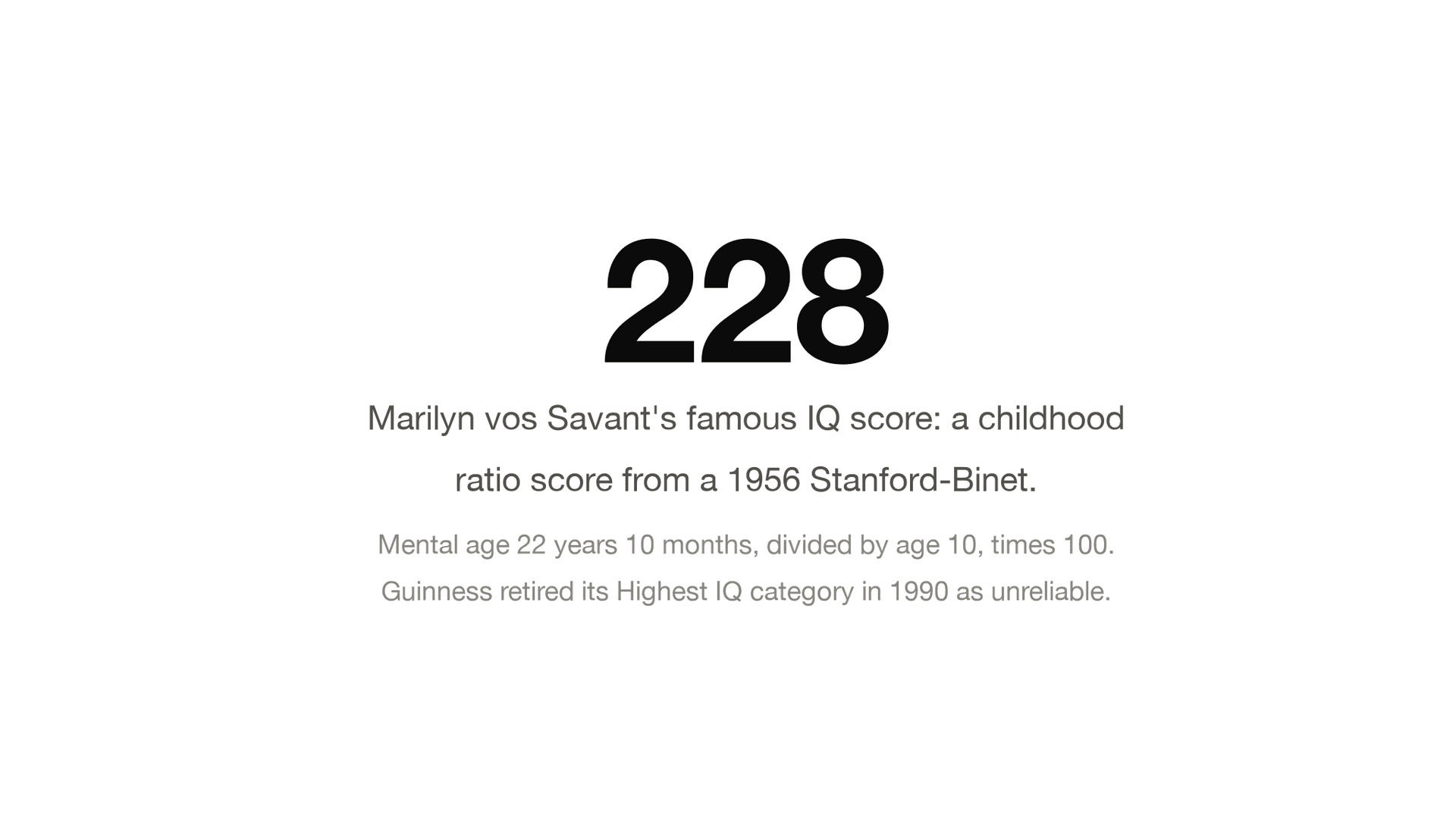
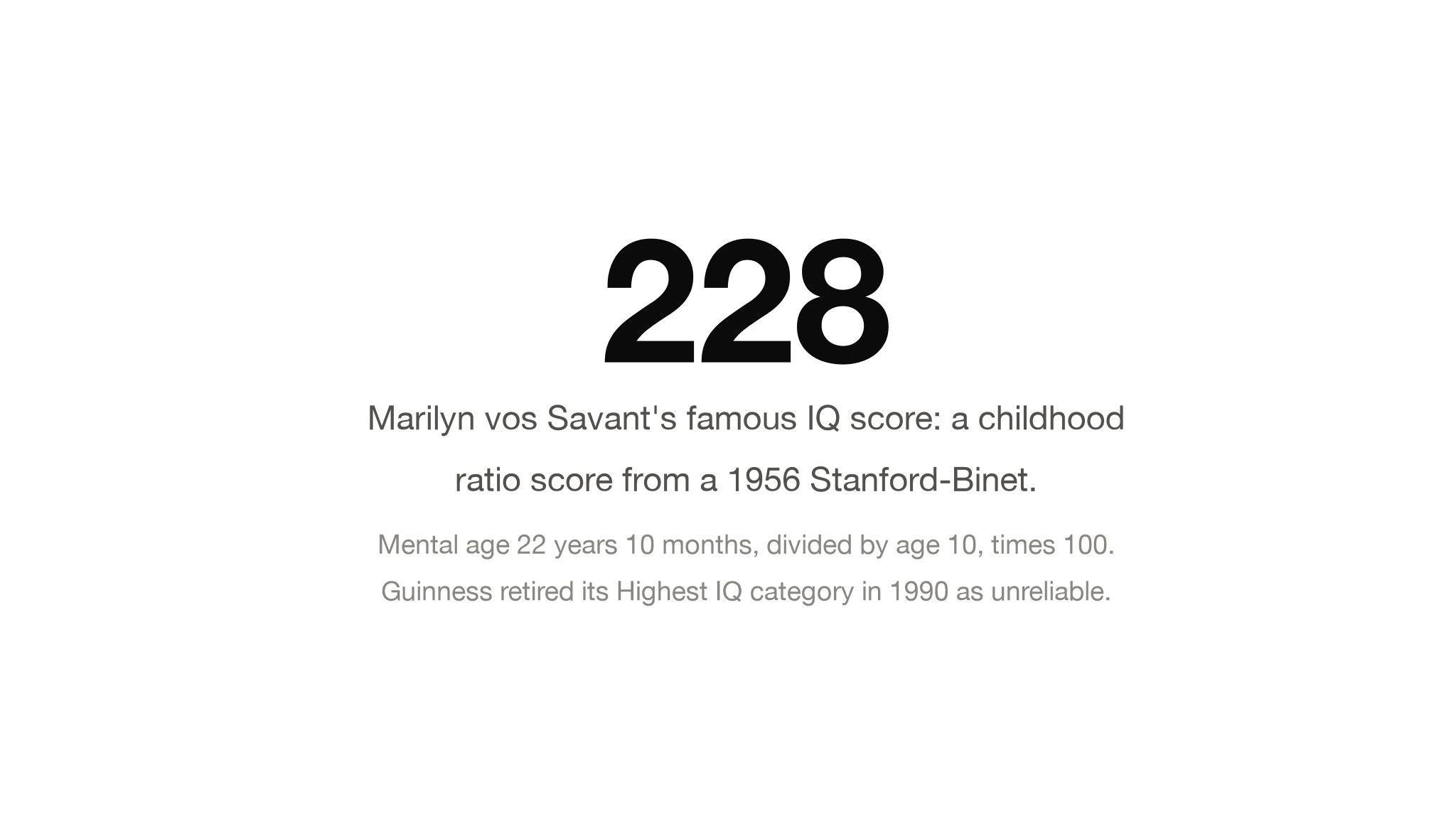
Marilyn vos Savant is an American columnist who was listed in the Guinness Book of World Records under "Highest IQ" from 1985 to 1989, with a reported score of 228. That number is real in one narrow sense: it comes from a Stanford-Binet test she took in 1956, at age 10. It is also, by modern standards, not a score anyone could earn today. Guinness itself retired the Highest IQ category in 1990 after concluding that IQ tests are too unreliable to crown a single record holder. Her story is the best short course available in what extreme IQ numbers do, and do not, mean.
Who is Marilyn vos Savant?
Born Marilyn Mach in St. Louis, Missouri, in 1946, she studied philosophy at Washington University in St. Louis before leaving to work in the family business. Fame arrived in the mid-1980s, when Guinness listed her under Highest IQ and magazine profiles followed. A 1986 Parade magazine feature drew so much reader mail that the magazine hired her, and she has written the Sunday question-and-answer column "Ask Marilyn" ever since.
In the column she answers logic puzzles, probability questions, and vocabulary disputes from readers. One of those answers became one of the most famous episodes in the history of popular mathematics.
Where the 228 score came from
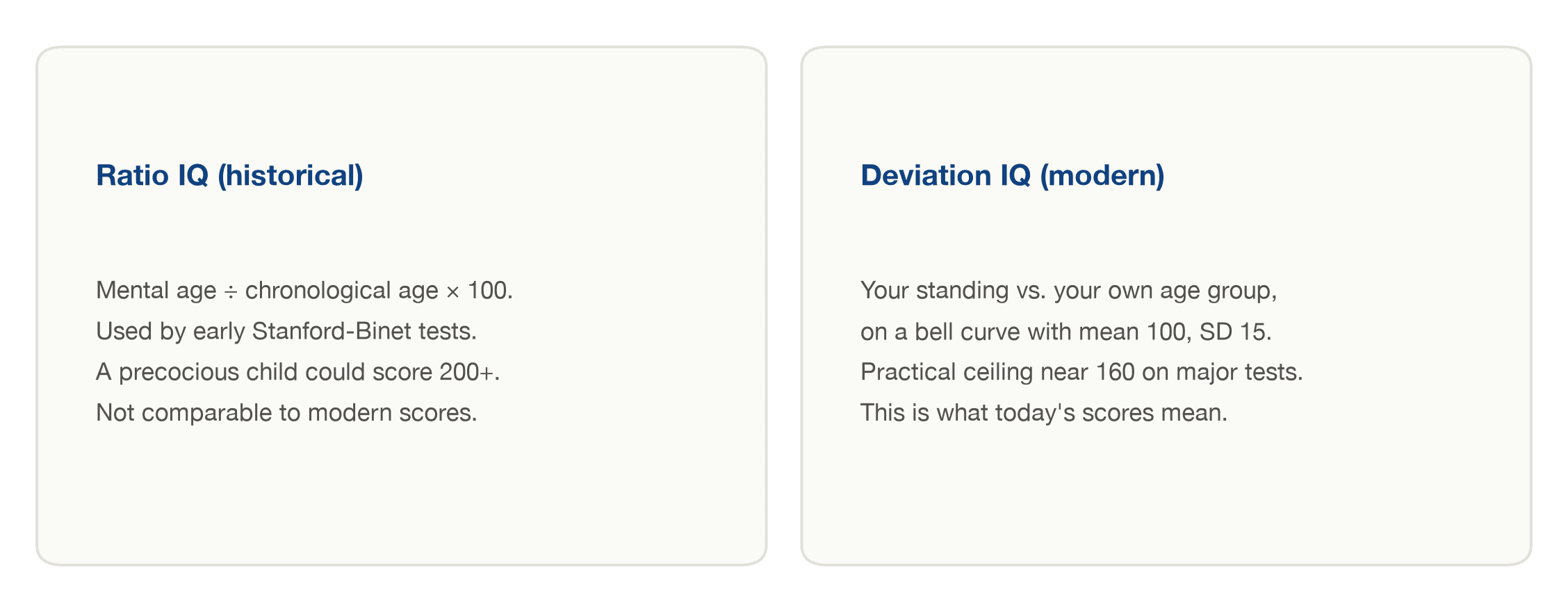
The number has a precise origin. In September 1956, at age 10, she took the 1937 Stanford-Binet, Second Revision. The test scored her at a "mental age" of 22 years and 10 months. Dividing mental age by chronological age and multiplying by 100 gives a "ratio IQ": 22.83 over 10, times 100, is about 228.
Ratio scoring was abandoned decades ago, for good reason. Modern tests use "deviation IQ," which measures how far a person stands from the average of their own age group, on a bell curve with a mean of 100 and a standard deviation of 15. On that scale, 228 would sit more than 8.5 standard deviations above the mean. Scores like that are effectively impossible; no test has ever been normed on enough people to measure them. Guinness also cited a second score, a 186 from the unsupervised, mail-in Mega Test, which professional psychologists criticized as improperly designed and scored.
Why Guinness retired the record
In 1990, Guinness removed the Highest IQ category entirely, concluding that intelligence tests at the extreme high end are too unreliable to designate a single record holder. That judgment matches mainstream psychometrics. Every score carries "measurement error," the small variation you would see if the same person took the test on different days, and error grows at the extremes, where tests run out of hard questions and norm samples run out of people. The psychologist Elaine Castles has noted that vos Savant's celebrity rests on a non-standardized instrument, and that her fame came, in a biographer's words, "only because of the glory of that number." We cover the ceiling problem in detail in our guide to the highest possible IQ.
The Monty Hall problem
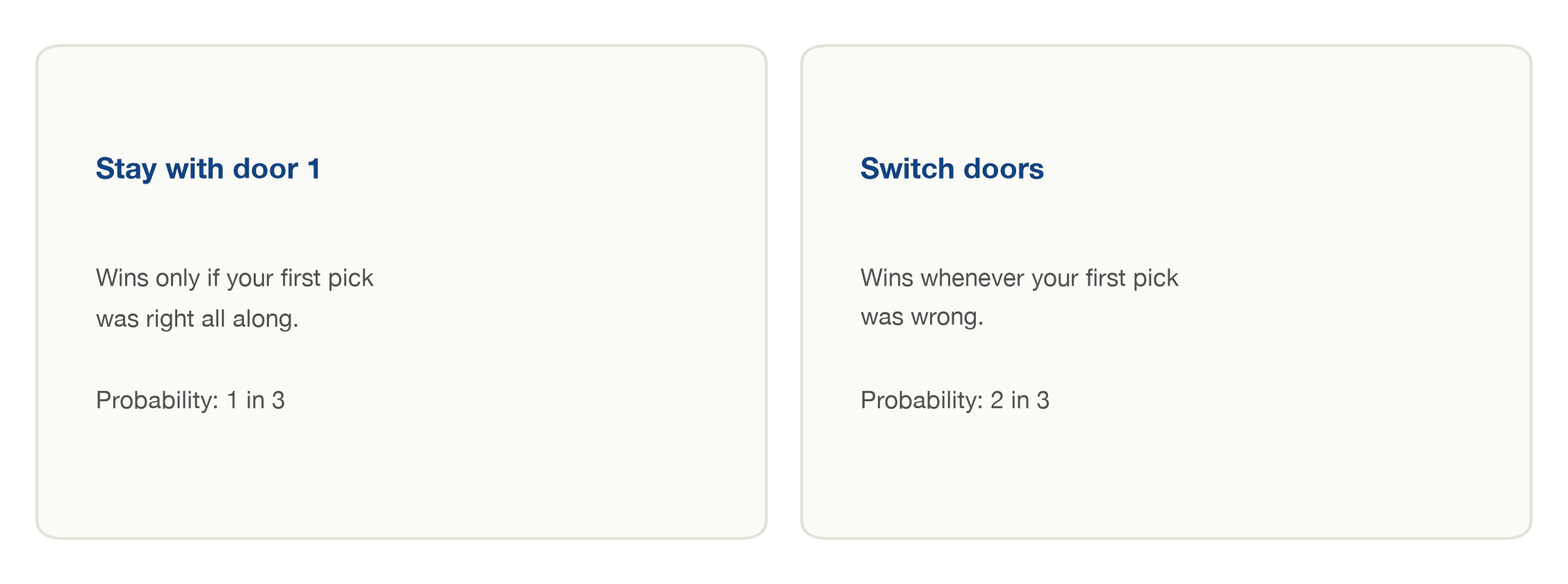
In September 1990, a reader asked her a probability question based on the game show Let's Make a Deal. You pick one of three doors; a car is behind one, goats behind the other two. The host, who knows what is where, opens a different door to reveal a goat and offers to let you switch. Vos Savant answered that you should switch, because switching wins two times out of three.
The reaction was extraordinary. Parade received roughly 10,000 letters, and by Steven Pinker's account about a thousand of them came from PhDs, mainly in mathematics and statistics, most insisting she was wrong. She was right. Your first pick is wrong two-thirds of the time, and whenever it is wrong, switching wins. The episode reached the front page of The New York Times in 1991.
There is a quiet irony in the affair: the strongest evidence of her ability on public record is not the 228, it is the fact that she out-reasoned a stadium's worth of credentialed critics, in print, and held her ground.
What her story says about extreme IQ scores
• Childhood ratio scores inflate: A precocious 10-year-old can post a ratio number no adult test would ever produce. Ratio and deviation scores are different currencies, and headlines rarely convert them.
• Records need reliability: A world record requires measurement precise enough to rank the top few individuals on Earth. IQ tests are excellent instruments across the normal range, and blunt ones past about 160.
• Reasoning is the better exhibit: The Monty Hall episode shows real intellectual quality directly, no conversion table required.
Her recorded scores are a 228 childhood ratio IQ from a 1956 Stanford-Binet and a 186 from the unsupervised Mega Test. Neither converts to a modern deviation IQ; no current standardized test reports scores in that range.
Why did Guinness retire the Highest IQ category?
In 1990 Guinness concluded that IQ tests at the extreme high end are too unreliable to designate a single record holder, so the category was dropped and no one has held it since.
Was her Monty Hall answer really correct?
Yes. Switching wins two-thirds of the time. The result is standard probability and is easy to confirm by simulation, though thousands of readers, including many PhDs, initially disputed it.
Is a 228 IQ possible on a modern test?
No. Modern tests top out around 160, and a deviation score of 228 would imply a rarity far beyond the human population. The 228 is a historical ratio calculation, not a modern score.
Who holds the highest IQ record now?
No one. Since Guinness retired the category in 1990 there has been no recognized world record for IQ, and mainstream psychology does not attempt to rank individuals at the extreme.
The takeaway
Marilyn vos Savant is a genuinely formidable thinker whose famous number belongs to a scoring system psychology retired nearly a century ago. If you want to know where you stand on the scale that testing actually uses today, a properly normed assessment such as the Reasoning and Intelligence Online Test from RIOT IQ reports modern deviation scores with stated precision, which is exactly what a defensible IQ number looks like.
References
1. Tierney, J. (1991, July 21). Behind Monty Hall's doors: Puzzle, debate and answer? The New York Times. nytimes.com
2. Pinker, S. (2021). Why you should always switch: The Monty Hall problem (finally) explained. Behavioral Scientist. behavioralscientist.org
3. Knight, S. (2009, April 10). Is a high IQ a burden as much as a blessing? Financial Times. ft.com
4. Crockett, Z. (2015). The time everyone "corrected" the world's smartest woman. Priceonomics. priceonomics.com
5. Castles, E. E. (2012). Inventing intelligence: How America came to worship IQ. Praeger. books.google.com
6. Feldman, D. H. (1984). A follow-up of subjects scoring above 180 IQ in Terman's "Genetic Studies of Genius." Exceptional Children, 50(6), 518-523. doi.org
Take our professional IQ test
Want to know your IQ? Try the first ever professional online IQ test.