What Is Grigori Perelman's IQ? The Untraceable 238 and the Documented Record | Riot IQ
Nov 1, 2026·Famous People & IQ
What Is Grigori Perelman's IQ? The Untraceable 238 and the Documented Record
Grigori Perelman's IQ has never been published, and the "IQ 238" figure online has no traceable source. Here is what his documented record shows instead.
Dr. Russell T. WarneChief Scientist
Share
Grigori Perelman has never published an IQ score, and no test result for him appears in any reliable source. The "IQ 238" figure repeated on websites and social media has no traceable origin and should be treated as invented. What is on the record is a mathematical career that needs no inflation, from a perfect score at the 1982 International Mathematical Olympiad to a proof of the century-old Poincaré conjecture, for which he declined both a Fields Medal and a $1 million Millennium Prize. This article looks at where the number comes from, what the documented record shows, and what that record can and cannot tell us about IQ.
Where the "IQ 238" figure comes from
I could not find any interview, biography, newspaper report or research paper in which anyone, Perelman included, reports an IQ score for him. The figure of 238 appears on list-style websites and in social media posts, usually with no source at all, and it is copied from one page to the next. The standard biographical sources, including the MacTutor History of Mathematics archive, do not mention an IQ score for him.
The number is also implausible on its face. Modern IQ tests report "deviation IQs," an approach David Wechsler brought to adult testing in the late 1930s, which place a person on a bell curve with a mean of 100 and a standard deviation of 15, compared with people of the same age. A score of 238 would sit more than nine standard deviations above the mean. No test has a norm sample large enough to locate anyone that far out, as our article on the highest IQ ever recorded explains. Very high numbers like this usually come from old "ratio IQ" arithmetic applied to young children, or are simply made up.
Because Perelman is a living person, the responsible position is simple. Unless he or a documented source reports a score, there is no Perelman IQ to cite.
What the documented record shows
Perelman was born in Leningrad (now St Petersburg) in 1966. The record of his schooling and early career comes from MacTutor, the official IMO results database and the citations of the prizes he was offered.
• Mathematics club: By about age 10 he was taking part in district mathematics competitions, and he joined a mathematics club run by the coach Sergei Rukshin at the Leningrad Palace of Pioneers.
• Specialist school: In 1980 he entered Leningrad's Special Mathematics and Physics School Number 239.
• Perfect Olympiad score: At the 1982 International Mathematical Olympiad in Budapest, aged 16, he scored 7 out of 7 on all six problems, a total of 42 out of 42, and won a gold medal while tied for first place.
• University and doctorate: He entered Leningrad State University in 1982, graduated in 1987, and defended his graduate thesis, Saddle Surfaces in Euclidean Spaces, in 1990 at the Steklov Mathematical Institute's Leningrad branch.
• Early research: In 1994 he published a proof of the soul conjecture of Jeff Cheeger and Detlef Gromoll, an open question for about 20 years, and spoke at the International Congress of Mathematicians in Zürich.
The Olympiad result is worth a closer look, because it is the closest thing to a standardized test score in his public record. A perfect IMO paper shows exceptional mathematical problem solving under time pressure. It is still a different instrument from an IQ test, with different content and no IQ norms, so it cannot be converted into an IQ number.
The Poincaré proof and the prizes
In 1904 Henri Poincaré asked whether the three-dimensional sphere is the only closed three-dimensional shape in which every loop can be shrunk to a point. Perelman posted his solution as three preprints on arXiv in November 2002, March 2003 and July 2003. Building on Richard Hamilton's theory of Ricci flow, the papers also proved William Thurston's more general geometrization conjecture, of which Poincaré's question is a special case.
Other mathematicians spent several years checking the argument. Bruce Kleiner and John Lott published more than 260 pages of detailed notes on the papers in Geometry & Topology in 2008, and Science named the proof its Breakthrough of the Year for 2006.
The honors followed, and Perelman turned them down.
• Fields Medal (2006): The International Mathematical Union awarded him the Fields Medal "for his contributions to geometry and his revolutionary insights into the analytical and geometric structure of the Ricci flow." Its official record notes that he "declined to accept the award."
• Millennium Prize (2010): On 18 March 2010 the Clay Mathematics Institute announced that he had been awarded its $1 million Millennium Prize for resolving the Poincaré conjecture, the first of its seven prizes to be awarded. On 1 July 2010 the institute's president confirmed that Perelman would not accept it. The Associated Press reported that Perelman told the Interfax news agency that he considered his contribution no greater than Hamilton's, and that "the main reason is my disagreement with the organized mathematical community."
Those are his own public statements, and they are the only explanation on the record. Anything beyond them is speculation, and this article does not engage in it.
What his achievements do and do not say about IQ
A perfect Olympiad score at 16 and the solution of a problem that resisted the best mathematicians for nearly a century both point to reasoning ability far above average. It is reasonable to infer that Perelman would score very high on a well-normed test of general reasoning. Inferring an exact number is something no responsible psychologist would do, and that is the gap the 238 figure fills with invention.
His case also shows how much more than raw ability goes into a result like the Poincaré proof. The proof built on Hamilton's two decades of work on Ricci flow and took Perelman years of focused effort, and several teams then needed years more to verify it. Our article on Terence Tao's IQ, the other mathematician of this generation most often named in online rankings, finds the same pattern: a widely repeated number with no test behind it, next to a documented record that is impressive on its own terms. Historical mathematicians such as Leonhard Euler raise the same problem in a different form, since they died long before any intelligence test existed.
Frequently asked questions
What is Grigori Perelman's IQ?
No IQ score for Perelman has ever been published by him or by any documented source. The 238 figure that circulates online has no traceable origin.
Did Perelman get a perfect score at the International Mathematical Olympiad?
Yes. At the 1982 IMO in Budapest he scored 42 out of 42, full marks on all six problems, and won a gold medal at age 16.
What did Perelman prove?
He proved the Poincaré conjecture and Thurston's broader geometrization conjecture, in three preprints posted in 2002 and 2003. His argument built on Richard Hamilton's Ricci flow.
Why did Perelman turn down the Fields Medal and the $1 million prize?
The IMU's record says only that he declined the Fields Medal in 2006. When he declined the Clay prize in 2010, he told Interfax that he considered Hamilton's contribution no less than his own and that he disagreed with the organized mathematical community.
Can an Olympiad score be converted into an IQ?
No. Olympiad problems test advanced mathematical problem solving and have no IQ norms, so there is no valid way to translate a score of 42 into an IQ number.
The takeaway
There is no Perelman IQ to report: he has never published a score, and the 238 figure online has no source. His documented record, from a perfect Olympiad paper at 16 to the proof of the Poincaré conjecture, is a better guide to his abilities than any invented number. If you want a number of your own that comes from real measurement, you can take a full-length online IQ test normed on adults.
2. O'Connor, J. J., & Robertson, E. F. (2011). Grigori Yakovlevich Perelman. MacTutor History of Mathematics Archive, University of St Andrews. [mathshistory.st-andrews.ac.uk](. mathshistory.st-andrews.ac.uk
3. Perelman, G. (2002). The entropy formula for the Ricci flow and its geometric applications. arXiv preprint math/0211159. [arxiv.org](. arxiv.org
4. Perelman, G. (2003). Ricci flow with surgery on three-manifolds. arXiv preprint math/0303109. [arxiv.org](. arxiv.org
5. Perelman, G. (2003). Finite extinction time for the solutions to the Ricci flow on certain three-manifolds. arXiv preprint math/0307245. [arxiv.org](. arxiv.org
6. Kleiner, B., & Lott, J. (2008). Notes on Perelman's papers. Geometry & Topology, 12(5), 2587-2855. [doi.org/10.2140/gt.2008.12.2587](. doi.org
7. Mackenzie, D. (2006). The Poincaré conjecture--proved. Science, 314(5807), 1848-1849. [doi.org/10.1126/science.314.5807.1848](. doi.org
8. International Mathematical Union. (2006). Fields Medals 2006. [mathunion.org](. mathunion.org
9. Clay Mathematics Institute. (2010, March 18). Prize for resolution of the Poincaré conjecture awarded to Dr. Grigoriy Perelman [Press release]. [claymath.org](. claymath.org
10. Associated Press. (2010, July 1). Russian mathematician rejects $1 million prize. NBC News. [nbcnews.com](. nbcnews.com
11. Wechsler, D. (1944). The measurement of adult intelligence (3rd ed.). Williams & Wilkins. [archive.org](. archive.org
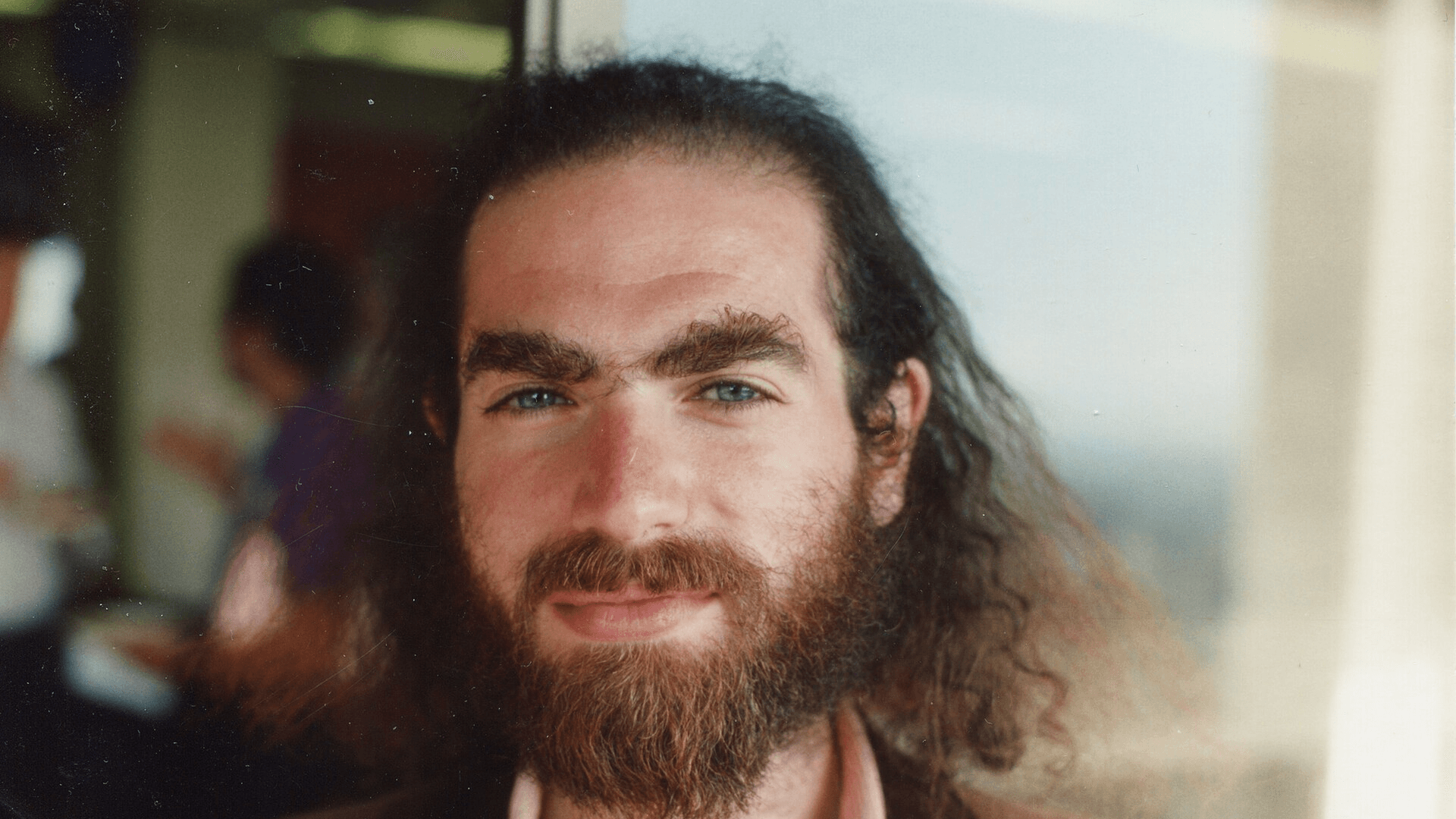
Hero image: Grigori Perelman (1993), photo by George M. Bergman, CC BY-SA 4.0. Via Wikimedia Commons.
Take our professional IQ test
Want to know your IQ? Try the first ever professional online IQ test.