What Is Michael Kearney's IQ? The "200-Plus" Figures and the Documented Record
Michael Kearney's IQ has never been published in a test report; the 200 to 325 figures trace to press and family accounts. His record: college graduate at 10.
Dr. Russell T. WarneChief Scientist
Share
Michael Kearney's IQ has never been published in a test report, so the "200-plus" figures attached to his name cannot be checked. The numbers in circulation range from "over 200" to 325, and the earliest one I could verify is a 1995 Associated Press story that called him "the boy with the 300-plus IQ" without naming a test. What is documented is his record: Guinness World Records lists him as the youngest male university graduate, with a bachelor's degree in anthropology from the University of South Alabama in June 1994 at 10 years and 4 months. This article traces the numbers, explains why childhood IQs can run so high, and sets out what his record does and does not say about intelligence.
Where the 200-plus numbers come from
Three versions of the Kearney IQ circulate, and they disagree with each other.
• "300-plus": The Associated Press, in a November 1995 story about his plans for graduate school, described him as "the boy with the 300-plus IQ." The story gives no test name, examiner or date, and it does not attribute the number to anyone.
• "Over 200": Online biographies say a Stanford-Binet test put him over 200, "seven standard deviations" above the norm, and credit the claim to Accidental Genius, a 1995 book by his parents, Kevin and Cassidy Kearney. The book exists, but the only digitized copy I found is lending-restricted, so I could not confirm the wording.
• 325: Several list sites give an exact score of 325 on a Stanford-Binet at age 6. I found no newspaper, research paper or family statement that supports it.
Kearney himself has not, as far as I could find, published a score. The fair summary is that a very high childhood test result was probably reported within the family, and that the exact figure changed as it was repeated.
Why childhood IQ scores can reach 200
The answer goes back to how IQ testing began. In October 1904, France's Minister of Public Instruction set up a commission to study how children who were struggling in school could receive appropriate instruction. Alfred Binet and Théodore Simon responded with a scale of tasks arranged by the age at which typical children pass them, which let a psychologist describe a child's "mental level."
Lewis Terman's 1916 Stanford revision of the scale turned that into a single number. The "intelligence quotient," Terman wrote, is the ratio between mental age and real age: divide one by the other and multiply by 100. Under this "ratio IQ," a 5-year-old who performs like a typical 10-year-old scores 200. A child who, like Kearney in the AP's account, was doing algebra as a toddler and entered college at about 6½ can produce an enormous quotient. The number measures how far ahead of age-mates the child is at that moment. Our explainer on mental age covers the idea in more detail.
Ratio IQs had a serious flaw. David Wechsler pointed out that the spread of scores was not the same at every age: on the 1937 Stanford-Binet (Form L), the standard deviation was 20.0 at age 12 but only 12.5 at age 6, so the same relative standing produced different IQs depending on when a child was tested. Wechsler's tests scored people against others of their own age instead, and that "deviation IQ" is how modern tests work: a mean of 100 and a standard deviation of 15.
On the deviation scale, a score of 200 would sit 6.7 standard deviations above the mean, a rarity of about 1 in 76 billion, roughly nine times the number of people alive. No test has a norm sample large enough to locate anyone there, and 300 is further still. That is why the very high numbers in popular lists are almost always childhood ratio scores, a point our article on the highest IQ ever recorded develops.
The documented record
The following facts come from Guinness World Records and contemporary news coverage.
• Early schooling: Kearney was taught mostly at home by his parents, according to the AP. The same report says he entered college at about 6½, the youngest on record at the time.
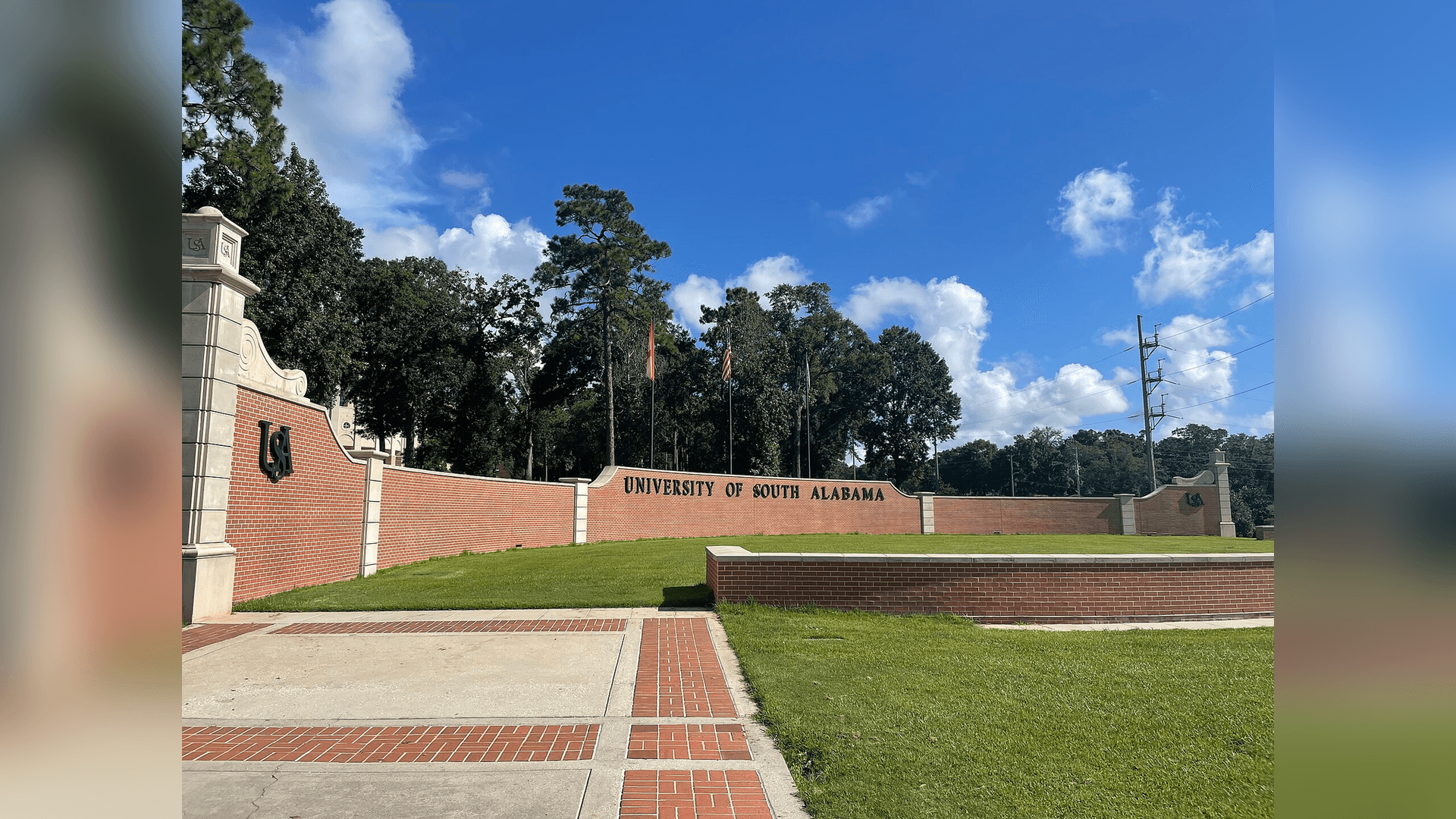
• Bachelor's degree at 10: Guinness World Records lists him as the youngest male graduate. He completed a bachelor's degree in anthropology at the University of South Alabama in June 1994, aged 10 years and 4 months.
• Master's degree at 14: Four years later, Guinness reports, he finished a master's program in chemistry at Middle Tennessee State University at 14 years and 8 months.
• Game-show ambitions: As a boy he told interviewers he wanted to host a game show. "I've learned all of Bob Barker's mannerisms, all of Alex Trebek's mannerisms," he said on ABC's Turning Point, as ABC News recalled in 2005.
• Adult career: In 2016, Nashville Public Radio's Neighbors series profiled him at 32 as running an improv comedy company in Nashville.
What his record does and does not say about IQ
Finishing a university degree at 10 is strong evidence of exceptional intellectual precocity. It is not a measurement. A degree records courses passed at a particular institution under particular conditions, and it cannot be converted into a score on a normed test. Competitive fields come closer to continuous measurement: Judit Polgar's chess rating ranked her against other players throughout her career, but even that is a chess scale, and an academic degree has no equivalent at all.
Research on children like Kearney is more useful than any single number. Miraca Gross (2006) followed 60 young Australians with IQs of 160 and above for 20 years and found that most of those who were radically accelerated reported high life satisfaction and went on to research degrees and professional careers. In the United States, Lubinski and colleagues (2001) tracked 320 adolescents identified before age 13 as the top 1 in 10,000 in mathematical or verbal reasoning; they earned doctorates at more than 50 times the base rate, and 95% had used some form of acceleration. Our article on child giftedness covers how such children are identified.
Those studies point to the real lesson of a case like Kearney's. Early, fast learning is real and measurable in childhood, and schools can match it with acceleration. A precise lifetime IQ is something no childhood test can deliver, and the famous figures attached to him are best read as a record of how far ahead he was as a young child.
Frequently asked questions
What is Michael Kearney's IQ?
No verified test report has been published. Press and family accounts put a childhood score anywhere from over 200 to 325, which suggests a very high childhood ratio IQ but not a precise figure.
How old was Michael Kearney when he graduated from college?
He was 10 years and 4 months old when he received a bachelor's degree in anthropology from the University of South Alabama in June 1994, according to Guinness World Records.
Is an IQ of 200 possible?
On a childhood ratio scale, yes, because a young child performing at twice his age scores 200. On the modern deviation scale it would mean a rarity of about 1 in 76 billion, beyond the reach of any test's norms.
What is the difference between a ratio IQ and a deviation IQ?
A ratio IQ divides mental age by chronological age and multiplies by 100. A deviation IQ compares a person with others the same age on a bell curve with a mean of 100 and a standard deviation of 15.
What does Michael Kearney do now?
The most recent profile I could verify, from Nashville Public Radio in 2016, described him running an improv comedy company in Nashville.
The takeaway
There is no published Michael Kearney IQ score, and the 200-plus figures differ so much that none can be taken at face value. His documented achievements need no inflation: a college degree at 10 and a master's degree at 14. The numbers mostly show how the old mental-age formula works for a child who is years ahead of his peers. If you are curious where your own reasoning stands on the modern deviation scale, you can take a full-length online IQ test normed against adults.
References
1. Guinness World Records. (2026, April). Breaking records before adulthood: Youngest DJ to fashion show designer. [guinnessworldrecords.com](. guinnessworldrecords.com
2. Associated Press. (1995, November 13). Is this young genius in real "Jeopardy"? Deseret News. [deseret.com](. deseret.com
3. ABC News. (2005, November 11). What are child geniuses like as adults? [abcnews.com](. abcnews.com
4. Lewis, J. (2016, May 19). Neighbors: The genius improviser (Season 3, Episode 5). WPLN Nashville Public Radio. [wpln.org](. wpln.org
5. Kearney, K. J., & Kearney, C. Y. (1995). Accidental genius. Woodshed Press. [archive.org](. archive.org
6. Binet, A., & Simon, T. (1916). The development of intelligence in children (The Binet-Simon scale) (E. S. Kite, Trans.). Williams & Wilkins. [archive.org](. archive.org
7. Terman, L. M. (1916). The measurement of intelligence. Houghton Mifflin. [archive.org](. archive.org
8. Wechsler, D. (1944). The measurement of adult intelligence (3rd ed.). Williams & Wilkins. [archive.org](. archive.org
9. Gross, M. U. M. (2006). Exceptionally gifted children: Long-term outcomes of academic acceleration and nonacceleration. Journal for the Education of the Gifted, 29(4), 404-429. [doi.org/10.4219/jeg-2006-247](. doi.org
10. Lubinski, D., Webb, R. M., Morelock, M. J., & Benbow, C. P. (2001). Top 1 in 10,000: A 10-year follow-up of the profoundly gifted. Journal of Applied Psychology, 86(4), 718-729. [doi.org/10.1037/0021-9010.86.4.718](. doi.org
Hero image: University of South Alabama gateway sign, photo by Tyler Lahti, CC BY-SA 4.0. Via Wikimedia Commons.
Take our professional IQ test
Want to know your IQ? Try the first ever professional online IQ test.