🇺🇸The official website of Riot IQ
Log in
  • Home
  • About

Measure your
intelligence online.

Google

Assessments

  • All IQ Tests
  • Basic IQ Test
  • Full IQ Test
  • Custom IQ Test
  • Free IQ Test

Our Socials

  • X
  • YouTube
  • Facebook
  • LinkedIn

Other IQ Tests

  • WAIS-V
  • SB-5
  • Raven's 2
  • RIAS-2
  • CogAT 9
  • WISC-V

Community

  • Join Subreddit
  • Join Discord

Other Pages

  • Test Manual
  • Administer IQ Tests
  • About Us
  • Articles
  • Data
  • FAQ

Research

  • What do polygenic scores really predict?
  • Working speed and ability on the RIOT

Intelligence Journals & Organizations

  • Human Intelligence Research & Education (HIRE) Foundation
  • International Society for Intelligence Research (ISIR)
  • Intelligence & Cognitive Abilities Journal (ICA)
  • Intelligence Journal
  • Mensa Foundation

Contact

  • Email
  • Support

News & Press

  • International Society for Intelligence Research
  • American Thinker
  • Mensa Foundation (1/2)
  • Mensa Northern New Jersey
  • The University of Western Australia
  • Prolific
  • Quillette
  • Brainz

Our Articles

  • Gmatclub (1/2)
  • ApolloTechnical
  • LessWrong
  • Psychreg
  • Study in Switzerland
  • SuccessConsciousness
  • Creative Organizational Design (1/2)
  • ABNewsWire
  • Vanderbilt University

Our Articles

  • The Globe and Mail
  • Barchart
  • Journal
  • Mensa Foundation (2/2)
  • Psychologs
  • Creative Organizational Design (2/2)
  • AZBigMedia
  • Thoughts on Life and Love
  • Anxiety and Depression Association of America

Our Articles

  • Before It's News
  • Siglo XXI
  • TechBullion
  • Medium
  • Gmatclub (2/2)
  • MSN
  • National Review
  • Minding the Campus
  • Launching Next

Our Articles

  • Comparing Cronbach’s Alpha and McDonald’s Omega Reliability
  • Breaking the Intelligence & IQ Taboo
  • What is the Flynn Effect?
  • A Comprehensive History of IQ Tests
  • The 15 Subtests of the RIOT

Our Articles

  • How to Take an IQ Test
  • How to Calculate IQ
  • What is the RIOT IQ Test?
  • The Pro-Human Aspects of Intelligence Research
  • What is an IQ Test? A Beginner's Guide.

Our Articles

  • 5 Best IQ Tests in 2025
  • Cognitive Profiles on the RIOT IQ Test Results
  • 6 Cognitive Abilities of the RIOT
  • Are There Any Professional and Real Online IQ Tests?

Our Articles

  • Resources to Learn About IQ and Intelligence
  • Studying IQ Matters
  • The Search for Albert Einstein's IQ
  • Do Non-g Gains from the Flynn Effect Matter?

Riot IQ © 2026

  • Terms of Service
  • Privacy Policy
  • BAA Agreement
  • Test Administrator Terms
  • Terms of Service
  • •Privacy Policy
  • •BAA Agreement
  • •Test Administrator Terms

Table of Contents

  • What the PDMS-3 measures
  • Who takes the PDMS-3, and who gives it
  • How PDMS-3 scores work
  • How the PDMS-3 differs from the PDMS-2
  • Does early motor development predict later outcomes?
  • Motor tests and cognitive tests answer different questions
  • Frequently asked questions
  • What ages is the PDMS-3 for?
  • How long does the PDMS-3 take?
  • What is a motor quotient on the Peabody scales?
  • What counts as a low score on the PDMS-3?
  • Is the PDMS-3 an IQ test?
  • Who can administer the PDMS-3?
  • References
Sep 7, 2026·Specific IQ Tests & Formats

What is the PDMS-3? The Peabody Developmental Motor Scales explained

The PDMS-3 (Peabody Developmental Motor Scales, Third Edition) measures gross and fine motor skills from birth through age 5. See its subtests and scores. (154 chars)

Dr. Russell T. WarneChief Scientist
Share
What is the PDMS-3? The Peabody Developmental Motor Scales explained
The PDMS-3, or Peabody Developmental Motor Scales, Third Edition, is an individually administered test of gross and fine motor development for children from birth through 5 years, 11 months. Published by PRO-ED in 2023 and authored by M. Rhonda Folio and Rebecca R. Fewell, it uses five core subtests to produce a Gross Motor Index, a Fine Motor Index, and a Total Motor Index, each on the familiar mean-100 scale. Physical therapists, occupational therapists, and early intervention teams use it to identify motor delays, plan therapy, and track progress. This article explains what the PDMS-3 measures, how its scores work, what changed from the PDMS-2, and what early motor skills can and cannot tell you about a child's later development.


What the PDMS-3 measures

The PDMS-3 divides early motor development into two broad domains. "Gross motor" skills involve the large muscles of the trunk and limbs, the movements a child uses to sit, stand, walk, and throw. "Fine motor" skills involve the small muscles of the hands and fingers, the movements used to grasp a crayon, stack blocks, or string beads.

According to PRO-ED, the test organizes these domains into five core subtests.

• Body Control: measures the child's ability to move the limbs and trunk while keeping the body stable, including postural reactions, standing, bending, stooping, balancing, and jumping upward. The publisher describes it as an estimate of how well a child sustains control of the body within its center of gravity.

• Body Transport: covers movements that carry the child from one place to another, such as rolling, crawling, creeping, walking, running, jumping forward, sliding, hopping, and skipping.

• Object Control: assesses movements that combine perception with action, such as throwing, catching, bouncing, and kicking a ball.

• Hand Manipulation: measures the ability to move the hands and fingers to complete tasks, an index of dexterity.

• Eye-Hand Coordination: measures the ability to interpret visual information and coordinate it with hand and finger movements, such as copying shapes or building with blocks.

The first three subtests feed the gross motor domain and the last two feed the fine motor domain. A sixth, supplemental subtest called Physical Fitness samples activities like push-ups, sit-ups, repetitive jumps, running speed, throwing for distance, and sit-and-reach flexibility. It is optional and sits outside the core composites.

The Eye-Hand Coordination subtest overlaps conceptually with "visual-motor integration," the skill measured in more depth by tests like the Beery VMI. Children who struggle with pencil-and-paper tasks are often assessed with both instruments.


Who takes the PDMS-3, and who gives it

The PDMS-3 covers children from birth through 5 years, 11 months. PRO-ED lists its typical users as occupational therapists, physical therapists, diagnosticians, early intervention specialists, adapted physical education teachers, and psychologists. It is a staple of early intervention programs, where results help determine whether an infant or toddler qualifies for services, and of preschool special education evaluations.

Administration is one on one and hands on. The examiner presents standardized tasks with real materials (balls, blocks, beads, shape cards) and scores the quality of each response, usually on a scale from no credit to full credit. The publisher estimates 60 to 90 minutes for the full battery, though examiners can administer only the gross motor or only the fine motor subtests when a narrower question is being asked. Pearson, which distributes the test, classifies it at qualification level B, meaning purchasers need relevant training or credentials in assessment.

It helps to place the PDMS-3 among its neighbors. Brief screeners such as the Denver II flag possible delays in a few minutes but do not yield precise scores. Broad developmental batteries such as the Bayley-4 cover cognition, language, and motor skills together. The PDMS-3 sits between these tools as a deep, norm-referenced examination of motor development specifically, which is why therapists reach for it when the referral question is about movement.


How PDMS-3 scores work

The PDMS-3 produces four types of normative scores, and its online scoring and report system generates them automatically from raw item scores.

• Subtest scaled scores: each subtest is reported on a scale with a mean of 10 and a "standard deviation" (a measure of how spread out scores are) of 3. Scaled scores of 8 to 12 are broadly average.

• Composite index scores: the Gross Motor Index combines Body Control, Body Transport, and Object Control; the Fine Motor Index combines Hand Manipulation and Eye-Hand Coordination; and the Total Motor Index combines all five core subtests. Each index has a mean of 100 and a standard deviation of 15, the same metric used by IQ tests, and the publisher describes the Total Motor Index as the best single estimate of overall motor ability.

• Percentile ranks: the percentage of same-age children in the norm sample scoring at or below the child's score.

• Age equivalents: the age at which a given raw score is typical. These are popular in early intervention reports but are the least precise score type, and careful examiners interpret them cautiously.

If you have seen older Peabody reports, you may know the composites as "motor quotients." The PDMS-2 called its composites the Gross Motor Quotient, Fine Motor Quotient, and Total Motor Quotient. The third edition renamed them indexes, but the scale and interpretation are the same, so many clinicians still say "motor quotient" informally.

The norms deserve attention because they are what turn raw performance into a meaningful score. According to PRO-ED, the PDMS-3 was normed on 1,452 children tested from spring 2016 through spring 2021, with the sample stratified by age, geographic region, race, ethnicity, gender, parent education, and household income to match the 2021 United States population under age 5.


How the PDMS-3 differs from the PDMS-2

The previous edition, published in 2000 by the same authors, remained in wide use for over two decades, so the differences matter for anyone comparing reports across years. The PDMS-2 had six subtests: Reflexes, Stationary, Locomotion, Object Manipulation, Grasping, and Visual-Motor Integration. The third edition reorganized and renamed this structure. Reflexes was dropped as a separate subtest, Stationary became Body Control, Locomotion became Body Transport, Object Manipulation became Object Control, Grasping became Hand Manipulation, and Visual-Motor Integration became Eye-Hand Coordination.

Beyond the relabeling, the 2023 revision brought fully updated norms (the PDMS-2 normed sample was collected in the late 1990s), the optional Physical Fitness subtest, and an online scoring and report system that computes scores, confidence intervals, and suggested intervention goals. Because norms age as populations change, scores from the two editions are not interchangeable, and a child retested on the PDMS-3 may earn somewhat different standard scores than on the PDMS-2 even with no real change in ability.


Does early motor development predict later outcomes?

Parents often ask whether a low motor score in toddlerhood forecasts problems later. The honest answer is that early motor development relates to later cognitive and academic outcomes, but the association is modest, and a single early score is a weak crystal ball.

The best evidence comes from long-term cohort studies. In a British cohort of over 5,000 people followed from 1946, Murray and colleagues reported that the age of reaching infant milestones was associated with cognitive performance at ages 8, 26, and even 53. The effect was real but small: on average, each month earlier a child learned to stand corresponded to about half an IQ point at age 8, and the authors themselves characterized the association as small. In the American Upstate KIDS cohort, Ghassabian and colleagues found that later achievement of standing with assistance predicted lower developmental scores at age 4 among singletons, yet the association vanished among twins once gestational age and birth weight were taken into account, a reminder that perinatal factors drive much of the link.

For practice, this means two things. First, motor assessment is worthwhile: meaningful delays are worth catching because early intervention services target skills that respond to therapy, and pronounced delay can be an early sign of broader neurodevelopmental conditions. Second, an average or slow start does not fix a child's trajectory. Most children with mildly late milestones develop typically, and the PDMS-3 is designed to describe current motor functioning and guide treatment rather than to predict adult outcomes.


Motor tests and cognitive tests answer different questions

The PDMS-3 tells you how a young child moves. It does not measure reasoning, vocabulary, memory, or the other abilities that make up intelligence, and a motor index of 85 or 115 says little about how a child will eventually score on a cognitive measure. Families navigating an evaluation will often see both kinds of tests in one report, each answering its own question.

For older test takers curious about the cognitive side, options have improved. Adults 18 and over can take the Reasoning and Intelligence Online Test, the RIOT IQ test, developed by RIOT IQ with psychometrician Dr. Russell T. Warne. It includes 15 subtests across six cognitive indices (verbal reasoning, fluid reasoning, spatial ability, working memory, processing speed, and reaction time), takes about 52 minutes, and reports scores on the same mean-100, standard-deviation-15 scale the PDMS-3 uses for its motor indexes. Like any online measure, it does not replace an individually administered diagnostic evaluation, but it offers a rigorous, normed picture of adult cognitive ability.


Frequently asked questions

What ages is the PDMS-3 for?

Birth through 5 years, 11 months. For older children, examiners switch to motor tests with older norms, such as the Bruininks-Oseretsky Test of Motor Proficiency (BOT-3), which Pearson norms for ages 4 through 25.

How long does the PDMS-3 take?

The publisher estimates 60 to 90 minutes for the full battery. Giving only the gross motor or only the fine motor subtests takes less time.

What is a motor quotient on the Peabody scales?

"Motor quotient" is the PDMS-2 term for its composite scores (Gross, Fine, and Total Motor Quotients). The PDMS-3 calls these indexes, but they use the same mean-100, standard-deviation-15 scale.

What counts as a low score on the PDMS-3?

There is no single cutoff. Many early intervention programs use criteria such as scores well below the mean (for example, 1.5 to 2 standard deviations) to establish eligibility, and rules vary by state and program. Interpretation should always account for measurement error.

Is the PDMS-3 an IQ test?

No. It measures gross and fine motor development only. Cognitive ability in young children is measured with instruments like the Bayley-4 or preschool intelligence scales, and motor scores correlate only modestly with later cognitive scores.

Who can administer the PDMS-3?

Professionals trained in standardized assessment, most commonly physical and occupational therapists, early intervention specialists, adapted physical education teachers, diagnosticians, and psychologists.


References

1. PRO-ED. (2023). PDMS-3: Peabody Developmental Motor Scales, Third Edition, Complete Kit.. proedinc.com

2. Pearson Assessments. (2023). PDMS-3: Peabody Developmental Motor Scales, Third Edition.. pearsonassessments.com

3. PAR, Inc. (2023). Peabody Developmental Motor Scales, Third Edition (PDMS-3).. parinc.com

4. Western Psychological Services. (2000). PDMS-2: Peabody Developmental Motor Scales, Second Edition.. wpspublish.com

5. Murray, G. K., Jones, P. B., Kuh, D., & Richards, M. (2007). Infant developmental milestones and subsequent cognitive function. Annals of Neurology, 62(2), 128-136. pmc.ncbi.nlm.nih.gov

6. Ghassabian, A., Sundaram, R., Bell, E., Bello, S. C., Kus, C., & Yeung, E. (2016). Gross motor milestones and subsequent development. Pediatrics, 138(1), e20154372. pmc.ncbi.nlm.nih.gov

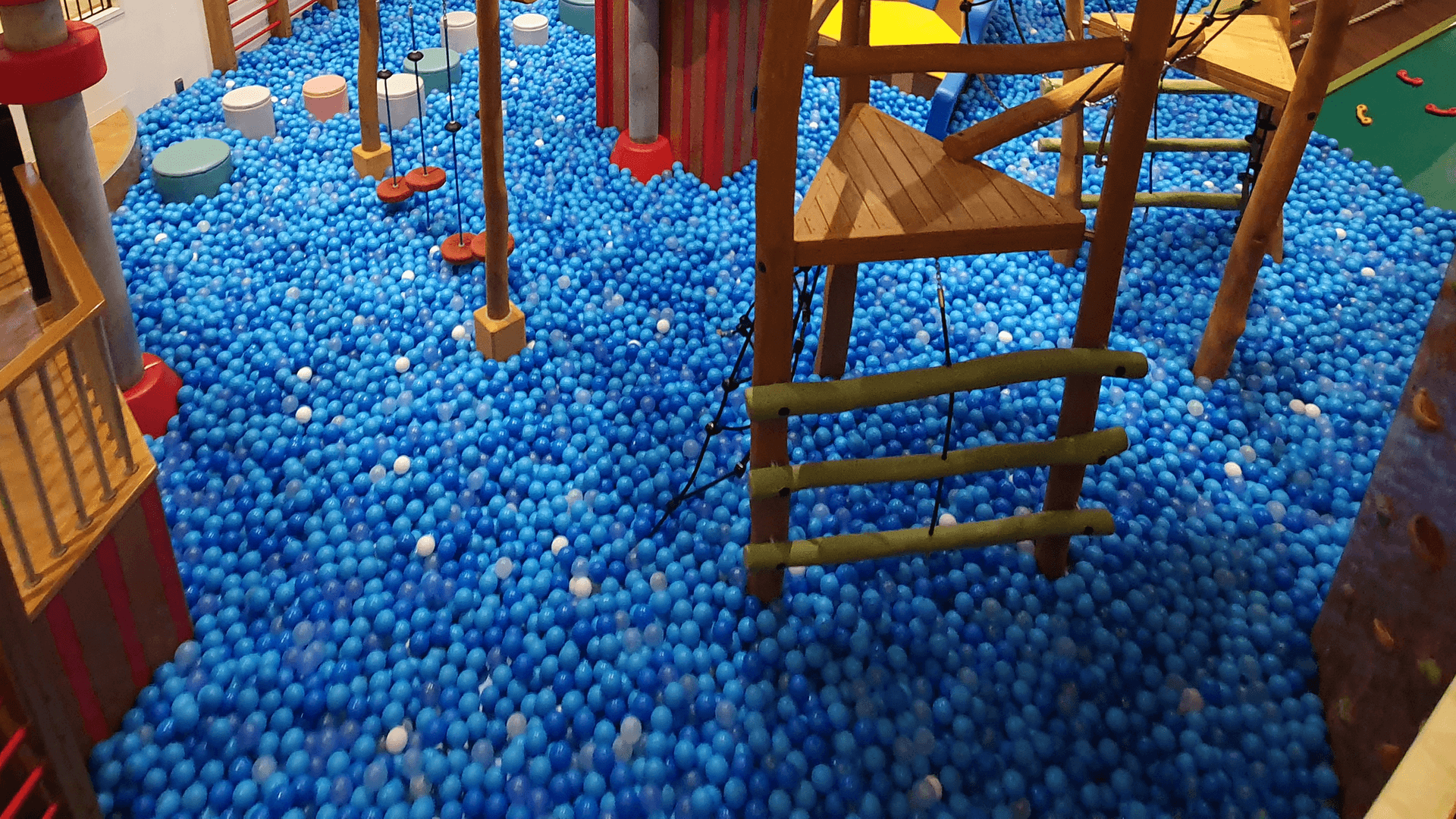
Hero photo: An empty indoor soft-play gym with a blue ball pit, wooden climbing frame, and stepping-stone platforms. Photo by Syced, CC0, via Wikimedia Commons (cropped).

Take our professional IQ test

Want to know your IQ? Try the first ever professional online IQ test.

Try our IQ test
Author
Dr. Russell T. WarneChief Scientist

Contact

Table of Contents

  • What the PDMS-3 measures
  • Who takes the PDMS-3, and who gives it
  • How PDMS-3 scores work
  • How the PDMS-3 differs from the PDMS-2
  • Does early motor development predict later outcomes?
  • Motor tests and cognitive tests answer different questions
  • Frequently asked questions
  • What ages is the PDMS-3 for?
  • How long does the PDMS-3 take?
  • What is a motor quotient on the Peabody scales?
  • What counts as a low score on the PDMS-3?
  • Is the PDMS-3 an IQ test?
  • Who can administer the PDMS-3?
  • References
Article Categories
All ArticlesUnderstanding IQ ScoresTaking an IQ TestRIOT-Specific InformationGeneral IQ & IntelligenceAdvanced Topics & ResearchIQ Scores & InterpretationMensa & High-IQ SocietiesOnline IQ Tests IQ Test Basics & FundamentalsAverage IQ & DemographicsFamous People & IQHistory & Origins Of IQ TestingAccuracy, Reliability & CriticismSpecial Population & Related ConditionsImproving IQ / PreparationSpecific IQ Tests & FormatsIQ Testing for HR & RecruitmentSkills Assessment
Related Articles
What is the TEMA-3? The Test of Early Mathematics Ability explainedWhat is the BOT-2? The Bruininks-Oseretsky motor proficiency test explainedWhat is the PDMS-3? The Peabody Developmental Motor Scales explainedWhat is the M-CHAT? The toddler autism screening questionnaire explainedWhat is the CASL-2? The Comprehensive Assessment of Spoken Language explainedWhat is the DAYC-2? The Developmental Assessment of Young Children explainedWhat is the Brigance screener? The Early Childhood Screens III explainedWhat is the DIAL-4? The preschool developmental screener explainedWhat is the PLS-5? The Preschool Language Scales explainedWhat is the WRMT-III? The Woodcock Reading Mastery Tests explainedWhat is the KeyMath-3? The diagnostic math assessment explainedWhat is the Seashore Rhythm Test? A classic measure of auditory attentionWhat is the Bender-Gestalt Test?What is the TVPS-4? The Test of Visual Perceptual Skills explainedWhat is the EOWPVT? The Expressive One-Word Picture Vocabulary Test explainedWhat Is the Boston Diagnostic Aphasia Examination?What Is the Token Test?What is the Halstead Category Test?What Is the Finger Tapping Test? Motor Speed Measurement ExplainedWhat is the Purdue Pegboard Test? The classic measure of finger and hand dexterityWhat Is the Grooved Pegboard Test?What Is the Hooper Visual Organization Test?What Is the Rey Auditory Verbal Learning Test?What is the CVLT-3? Inside the California Verbal Learning TestWhat is the WRAML-3? Inside the Wide Range Assessment of Memory and LearningWhat is the OWLS-II? The Oral and Written Language Scales explainedWhat is the TOWL-4? A guide to the Test of Written LanguageWhat is the CTOPP-2? The Comprehensive Test of Phonological Processing explainedWhat is the Luria-Nebraska Neuropsychological Battery?What is the PASAT test? The paced auditory serial addition test explainedWhat is the Halstead-Reitan battery? The classic fixed neuropsychological test setWhat is the Conners test? The Conners 4 ADHD rating scales explainedWhat is the BASC-3? A guide to Pearson's behavior rating systemWhat is the GORT-5? The Gray Oral Reading Tests explainedWhat is the KTEA-3? The Kaufman Test of Educational Achievement explainedWhat is the GFTA-3? The Goldman-Fristoe articulation test explainedWhat is the CELF-5? Pearson's language fundamentals test explainedWhat is the Beery VMI? The visual-motor integration test explainedWhat Is the Rey-Osterrieth Complex Figure Test?What is the Wisconsin Card Sorting Test?What is the Wechsler Memory Scale? A guide to the WMS-IVWhat is the D-KEFS? The Delis-Kaplan Executive Function System explainedWhat is the NEPSY-II? A guide to the child neuropsychological assessmentWhat is the Boston Naming Test?What is the RBANS? Pearson's brief neuropsychological battery explainedWhat is the ABAS-3? The adaptive behavior assessment explainedWhat is the Bracken School Readiness Assessment?What is the Denver II? The Denver Developmental Screening Test explainedWhat Is the CCAT Test? Format, Scoring, and How It Compares to an IQ TestWhat is the MMSE test? The classic 30-point cognitive screening examWhat is the Vineland-3? The adaptive behavior assessment explainedWhat Is the TACHS Test? The Catholic High School Admissions Exam ExplainedWhat is the SHSAT test? New York City's specialized high school exam explainedWhat is the RIAS-2? The Reynolds Intellectual Assessment Scales explainedWhat is the PSAT test? Format, scores, and National Merit explainedWhat Is the Nelson-Denny Reading Test?What Is the ERB Test? The CTP ExplainedWhat is the DAT test? The Dental Admission Test explainedWhat is the CTONI-2? The Comprehensive Test of Nonverbal Intelligence explainedWhat is the Stanford 10 test? A guide to the SAT10 achievement batteryWhat are the Mullen Scales of Early Learning?What is the AFCT test? The in-service ASVAB retest explainedWhat is the WRAT-5? Pearson's brief achievement test explainedWhat is the Wechsler Nonverbal Scale of Ability (WNV)?What is the Slosson Intelligence Test?What is the NAPT test? The Navy Advanced Programs Test explainedWhat is the HSPT test? Sections, scoring, and how schools use itWhat is the CLT exam? Sections, scoring, and who accepts itWhat is the Bayley-4? How the infant and toddler development scales workWhat Is the TONI-4 Test? The Language-Free Intelligence Test ExplainedWhat Is the TerraNova Test? A Guide to the Achievement BatteryWhat Is the KABC-II? A Guide to the Kaufman Assessment Battery for ChildrenWhat Is the Universal Nonverbal Intelligence Test (UNIT2)?What Is the DAS-II Test? The Differential Ability Scales ExplainedWhat Is the ASTB Test? The Navy's Aviation Selection Battery ExplainedWhat Is the SIFT Test? The Army's Flight Aptitude Test ExplainedWhat Is the DLAB Test? The Military's Language Aptitude Battery ExplainedWhat Is an AFQT Score? The Military's Enlistment Score ExplainedWhat Is the CAS2 Test? The Cognitive Assessment System and PASS TheoryWhat Is the WIAT Test? The Wechsler Individual Achievement Test ExplainedWhat Is the WASI Test? The Wechsler Abbreviated Scale of IntelligenceWhat Is the SCAT Test? Johns Hopkins CTY's Qualifying Test ExplainedWhat Is the SSAT Test? The Secondary School Admission Test ExplainedWhat Is the ISEE Test? The Independent School Entrance Exam ExplainedMCAT to IQ: What MCAT Scores Really Say About IntelligenceGMAT to IQ: What GMAT Scores Really Say About IntelligenceWhat Is the Leiter Test? The Nonverbal IQ Scale ExplainedWhat Is the RIAS Test? The Reynolds Intellectual Assessment Scales ExplainedWhat Is a GT Score? The Army's General Technical Score ExplainedWhat Is the AFOQT? The Air Force Officer Qualifying Test ExplainedWhat Is the Iowa Test? The ITBS and Iowa Assessments ExplainedWhat Is the Star Test? Renaissance Star Assessments ExplainedWhat Is the MAP Test? NWEA MAP Growth ExplainedWhat Is the Vervoe Assessment?What Is the Harver Assessment?What Is the Plum Assessment? The Discovery Survey ExplainedWhat Is the Saville Swift Test?What Is the Mettl Test? Mercer | Mettl Assessments ExplainedWhat Is TestGorilla? The Skills Testing Platform ExplainedWhat Is the Matrigma Test?What Is the Thomas GIA Test?What Is the HireVue Assessment?What Is the CASPer Test?What Is the UCAT? The University Clinical Aptitude Test ExplainedWhat Is the Beta-III Test? Beta-4 and the Nonverbal IQ LineWhat Is the Cognitive Reflection Test?What Is the McQuaig Mental Agility Test?What Is the Talent Q Elements Test?What Is the Kenexa Assessment?IQ Test Questions: What Real Tests Actually AskWhat Is the TABE Test?What Is the ACCUPLACER Test?What Is the HESI A2 Exam?What Is the ATI TEAS Test?What Is the Pymetrics Test?What Is the cut-e Test?What Is the Caliper Assessment?What Is a Deductive Reasoning Test?What Is an Inductive Reasoning Test?What Is a Quantitative Reasoning Test?What Is the Civil Service Exam?What Is the Cubiks Logiks Test?What Is the Wiesen Test of Mechanical Aptitude?What Is the Bennett Mechanical Comprehension Test?What Is the Ramsay Mechanical Aptitude Test?What Is a Clerical Aptitude Test?LSAT to IQ: What LSAT Scores Really Say About IntelligenceGRE to IQ: What GRE Scores Really Say About IntelligenceWhat Is a Situational Judgement Test?What Is the Korn Ferry Assessment?What Is the Hogan Assessment?What Is the Firefighter Aptitude Test?What Is the Police Written Exam?What Is a Mechanical Aptitude Test?What Is a Numerical Reasoning Test?What Is an Abstract Reasoning Test?What Is the Watson Glaser Test? The Law-Firm Screen ExplainedWhat Is the SHL Test? The Verify G+ ExplainedWhat Is the Predictive Index Cognitive Assessment?What Is the Peabody Picture Vocabulary Test? The PPVT-5 ExplainedWhat Is the WPPSI Test? The Wechsler IQ Test for Young ChildrenWhat Is the KBIT Test? The Kaufman Brief Intelligence Test ExplainedWhat Is the OLSAT Test? The Otis-Lennon School Ability Test ExplainedWhat Is the NNAT Test? The Naglieri Nonverbal Ability Test ExplainedWhat Is the Average Wonderlic Score? Overall, by Job, and by NFL PositionWhat Is the Wonderlic Test? Scoring, NFL History, and How It Relates to IQWhat Is the Digit Span Test?What Is the Trail Making Test?What Is the Clock Drawing Test?What Is the Mini-Mental State Exam (MMSE)?What Is the Stroop Test?What Do Vocabulary Tests Measure?What Is a Reaction Time Test?What Is the Woodcock-Johnson Test?What Is the WISC Test?What Is the CogAT Test?Memory Tests: How Memory Is Actually MeasuredWhat Is Neuropsychological Testing?What Is the Mini-Cog Test?What Is the SAGE Test?What Is the MoCA Test?What Is a Pattern Recognition Test?How to Solve 3x3 Visual Matrix Reasoning Puzzles Step by StepWhat Are IQ Tests and How Do They Work?A Guide to the Different Types of IQ Tests AvailableWhat Are Professional IQ Tests and How Do They Work?5 Types of IQ Tests ExplainedWhat Is a Matrix Reasoning Test? What the Pattern Puzzles MeasureTop 10 Online IQ Tests: A Comprehensive ComparisonRIOT IQ vs. Wonderlic Test Prep: Professional Assessment or Test Coaching?RIOT IQ vs. Wonderlic Test Practice: Which Cognitive Assessment Serves Your Needs?RIOT IQ vs. Assessment Day: Which CCAT Approach Delivers Real Value?RIOT IQ vs. Prepopedia: Which CCAT Solution Fits Your Needs?RIOT IQ vs. Job Test Prep: Which CCAT Preparation Approach Makes Sense?RIOT IQ vs. 12 Min Prep: Which CCAT Preparation Option Works Best?How Is the Stanford-Binet Intelligence Scale Used?How Does the Stanford-Binet IQ Test Work?What Is the WAIS IQ Test?Which IQ Test Should I Take?Military IQ and the ASVABIQ Tests for KidsThe Stanford–Binet Intelligence TestIs the SAT an IQ Test?What Are Reliable IQ Tests?The Wechsler IQ Tests
Take our IQ tests

Basic IQ Test

5 subtests + 5 cognitive abilities

Take the IQ test

Features

  • ~13 Minutes
  • IQ score
  • Cognitive abilities breakdown
  • ±5.6 IQ margin of error

5/15 Subtests

Learn more
Vocabulary
Matrix Reasoning
SToVeS
Visual Reversal
Symbol Search
Most comprehensive

Full IQ Test

15 subtests + all cognitive abilities

Take the IQ test

Features

  • ~52 Minutes
  • IQ score
  • Cognitive abilities breakdown
  • ±3.7 IQ margin of error

15/15 Subtests

Learn more
Vocabulary, Information, Analogies
Matrix Reasoning, Visual Puzzles, Figure Weights
Object Rotation, SToVeS, Spatial Orientation
Computation Span, Exposure Memory, Visual Reversal
Symbol Search, Abstract Matching
Simple Reaction Time, Choice Reaction Time
Compare all tests