🇺🇸The official website of Riot IQ
Log in
  • Home
  • About

Measure your
intelligence online.

Google

Assessments

  • All IQ Tests
  • Basic IQ Test
  • Full IQ Test
  • Custom IQ Test
  • Free IQ Test

Our Socials

  • X
  • YouTube
  • Facebook
  • LinkedIn

Other IQ Tests

  • WAIS-V
  • SB-5
  • Raven's 2
  • RIAS-2
  • CogAT 9
  • WISC-V

Community

  • Join Subreddit
  • Join Discord

Other Pages

  • Test Manual
  • Administer IQ Tests
  • About Us
  • Articles
  • Data
  • FAQ

Research

  • What do polygenic scores really predict?
  • Working speed and ability on the RIOT

Intelligence Journals & Organizations

  • Human Intelligence Research & Education (HIRE) Foundation
  • International Society for Intelligence Research (ISIR)
  • Intelligence & Cognitive Abilities Journal (ICA)
  • Intelligence Journal
  • Mensa Foundation

Contact

  • Email
  • Support

News & Press

  • International Society for Intelligence Research
  • American Thinker
  • Mensa Foundation (1/2)
  • Mensa Northern New Jersey
  • The University of Western Australia
  • Prolific
  • Quillette
  • Brainz

Our Articles

  • Gmatclub (1/2)
  • ApolloTechnical
  • LessWrong
  • Psychreg
  • Study in Switzerland
  • SuccessConsciousness
  • Creative Organizational Design (1/2)
  • ABNewsWire
  • Vanderbilt University

Our Articles

  • The Globe and Mail
  • Barchart
  • Journal
  • Mensa Foundation (2/2)
  • Psychologs
  • Creative Organizational Design (2/2)
  • AZBigMedia
  • Thoughts on Life and Love
  • Anxiety and Depression Association of America

Our Articles

  • Before It's News
  • Siglo XXI
  • TechBullion
  • Medium
  • Gmatclub (2/2)
  • MSN
  • National Review
  • Minding the Campus
  • Launching Next

Our Articles

  • Comparing Cronbach’s Alpha and McDonald’s Omega Reliability
  • Breaking the Intelligence & IQ Taboo
  • What is the Flynn Effect?
  • A Comprehensive History of IQ Tests
  • The 15 Subtests of the RIOT

Our Articles

  • How to Take an IQ Test
  • How to Calculate IQ
  • What is the RIOT IQ Test?
  • The Pro-Human Aspects of Intelligence Research
  • What is an IQ Test? A Beginner's Guide.

Our Articles

  • 5 Best IQ Tests in 2025
  • Cognitive Profiles on the RIOT IQ Test Results
  • 6 Cognitive Abilities of the RIOT
  • Are There Any Professional and Real Online IQ Tests?

Our Articles

  • Resources to Learn About IQ and Intelligence
  • Studying IQ Matters
  • The Search for Albert Einstein's IQ
  • Do Non-g Gains from the Flynn Effect Matter?

Riot IQ © 2026

  • Terms of Service
  • Privacy Policy
  • BAA Agreement
  • Test Administrator Terms
  • Terms of Service
  • •Privacy Policy
  • •BAA Agreement
  • •Test Administrator Terms

Table of Contents

  • What the RIAS-2 measures
  • Memory, processing speed, and the RIST-2 screener
  • How the RIAS-2 is scored
  • Who uses the RIAS-2 and why
  • How the RIAS-2 compares with the Wechsler scales
  • Where the RIOT IQ test fits for adults
  • Frequently asked questions
  • What does RIAS-2 stand for?
  • What ages does the RIAS-2 cover?
  • How long does the RIAS-2 take?
  • What is the difference between the RIAS-2 and the RIST-2?
  • Is the RIAS-2 a real IQ test?
  • Can I take the RIAS-2 online at home?
  • References
Aug 31, 2026·Specific IQ Tests & Formats

What is the RIAS-2? The Reynolds Intellectual Assessment Scales explained

The RIAS-2 is an individually administered intelligence test for ages 3 to 94, published by PAR, with verbal and nonverbal indexes and a brief format.

Dr. Russell T. WarneChief Scientist
Share
What is the RIAS-2? The Reynolds Intellectual Assessment Scales explained
The RIAS-2 (Reynolds Intellectual Assessment Scales, Second Edition) is an individually administered intelligence test published by PAR and written by psychologists Cecil R. Reynolds and Randy W. Kamphaus. It measures general intelligence in people ages 3 to 94 using a four-subtest core battery that yields verbal, nonverbal, and composite intelligence indexes, with optional memory and processing speed subtests. Its main selling points are speed and simplicity: the publisher reports that all eight subtests can be completed in under an hour, and the tasks place little demand on reading or fine motor skills. This article covers how the RIAS-2 is structured, how it is scored, who uses it, how it compares with the Wechsler scales, and what adults curious about their own IQ can do instead of booking a clinical appointment.


What the RIAS-2 measures

The heart of the RIAS-2 is a brief battery built to estimate "g", the general intelligence factor that underlies performance across many different mental tasks. According to PAR, the four core subtests provide a highly reliable estimate of g while deliberately avoiding tasks that depend on reading skill or quick hand movements.

The core battery contains two verbal and two nonverbal subtests:

• Guess What: the examiner reads a set of verbal clues and the examinee names the object or concept being described. This subtest draws on vocabulary and general knowledge.

• Verbal Reasoning: the examinee completes verbal analogies and relationships, a classic measure of reasoning with words.

• Odd-Item Out: the examinee views a set of pictures or figures and identifies the one that does not belong, a nonverbal reasoning task.

• What's Missing: the examinee looks at a picture and identifies the essential missing element, which requires visual analysis rather than verbal knowledge.

The two verbal subtests combine into the Verbal Intelligence Index (VIX), and the two nonverbal subtests combine into the Nonverbal Intelligence Index (NIX). Together they form the Composite Intelligence Index (CIX), the RIAS-2 equivalent of a full-scale IQ. PAR's interpretive materials note that the VIX serves as a reasonable approximation of "crystallized intelligence" (accumulated knowledge and verbal skill) while the NIX approximates "fluid intelligence" (reasoning through novel problems).


Memory, processing speed, and the RIST-2 screener

Beyond the core battery, the RIAS-2 includes four supplemental subtests. Verbal Memory and Nonverbal Memory combine into a Composite Memory Index (CMX), and two speeded tasks, the Speeded Naming Task and the Speeded Picture Search, combine into a Speeded Processing Index (SPI). The speeded processing subtests were new additions in the second edition, and the publisher notes they were designed to require minimal reliance on motor skills. Examiners can administer these supplemental measures when a referral question involves memory or slow processing, or skip them when a straightforward intelligence estimate is all that is needed.

The RIAS-2 also has a companion screener, the RIST-2 (Reynolds Intellectual Screening Test, Second Edition). The RIST-2 uses just two subtests from the battery, Guess What and Odd-Item Out, to produce a single composite score in about 10 to 15 minutes. According to PAR, the RIST-2 provides a valid estimate of g and serves as an indicator of risk for intellectual impairment, making it useful for deciding whether a fuller evaluation is warranted. In that role it competes with other brief measures such as the KBIT-2, which I have written about in an article on the KBIT test.

The current published versions are the RIAS-2 Normative Update (RIAS-2 NU) and RIST-2 Normative Update, which PAR released with a new "norm sample" (the reference group against which scores are compared) of 2,793 people based on 2023 U.S. Census data. The original RIAS-2 became available in 2016 with norms built on a sample of 2,154 individuals matched to 2012 Census proportions.


How the RIAS-2 is scored

RIAS-2 index scores use the familiar IQ metric: each index is an age-corrected "standard score" scaled to a mean of 100 with a standard deviation of 15. A CIX of 100 sits exactly at the average for the examinee's age group, and about two thirds of people score between 85 and 115. Individual subtests are reported as "T scores", a scale with a mean of 50 and a standard deviation of 10.

The publisher's reporting materials also provide percentile ranks, 90% and 95% confidence intervals, z scores, normal curve equivalents, and stanines for the indexes. Confidence intervals matter because no test measures intelligence without error; a reported CIX of 112 is best read as a range of plausible scores rather than a single fixed number. The Normative Update added a Profile Validity Index, which flags unusual variability across an examinee's subtest scores compared with others the same age.

Scoring for the Normative Update runs through PARiConnect, PAR's online scoring platform, and the test can be administered from paper materials, a tablet-based digital record form, or (with modifications, and excluding the speeded subtests) by videoconference. The RIAS-2 is a C-level instrument, which means purchase and use are restricted to professionals with advanced training in psychological assessment.


Who uses the RIAS-2 and why

The RIAS-2 shows up in schools, clinics, private practices, and neuropsychology settings. PAR lists identification of intellectual disability, learning disabilities, giftedness, memory impairment, and neuropsychological conditions among its applications, and the fact sheet specifically mentions school gifted and talented programs.

Two claimed advantages drive its popularity:

• Speed: the publisher lists 20 to 25 minutes for the core intelligence battery, 8 to 10 minutes for the memory subtests, and 8 to 10 minutes for speeded processing, so even the full eight-subtest battery fits inside an hour. When schools need to evaluate many children for gifted programs or re-evaluate students for special education eligibility, that time savings adds up.

• Low motor and reading demands: according to PAR, reduced dependence on reading and fine motor skills makes the RIAS-2 a more precise measure of g. A child with a motor impairment, or an older adult with arthritis or tremor, is not penalized for slow hands the way they can be on tasks that require rapidly assembling blocks or filling in symbols with a pencil.

The tradeoff is breadth. A four-subtest core samples fewer distinct abilities than a ten-subtest battery, so an examiner who needs a detailed profile of cognitive strengths and weaknesses may prefer a longer instrument or may supplement the RIAS-2 with other measures.


How the RIAS-2 compares with the Wechsler scales

The Wechsler tests remain the most widely used clinical IQ measures, with the WISC covering children ages 6 to 16 and the WAIS covering adolescents and adults. Pearson lists the current WAIS-5 as suitable for ages 16 through 90 and reports about 45 minutes of testing for the seven-subtest full-scale IQ, or about 60 minutes for all ten primary subtests.

The practical differences come down to structure and philosophy. A single RIAS-2 kit spans ages 3 to 94, while the Wechsler approach splits that range across three separate instruments. The Wechsler scales build their full-scale IQ from a wider set of ability domains, including working memory and processing speed as standard components, which produces a richer profile at the cost of more testing time. The RIAS-2 treats memory and processing speed as optional add-ons and keeps its intelligence estimate focused on verbal and nonverbal reasoning. PAR reports strong correlations between RIAS-2 indexes and Wechsler scores, and the Normative Update gathered concurrent data with the WISC-V and WAIS-5, so the two families of tests clearly measure much of the same construct.

Neither approach is simply better. An evaluator who needs a defensible, efficient estimate of general intelligence often reaches for the RIAS-2; one who needs a fine-grained cognitive profile for a complex diagnostic question often prefers a Wechsler battery.


Where the RIOT IQ test fits for adults

The RIAS-2 is a clinical tool. You cannot buy it, take it at home, or administer it to yourself, and an evaluation with a qualified examiner can cost hundreds of dollars. That is appropriate for high-stakes decisions such as disability determinations or special education eligibility, but many adults simply want an accurate, well-normed measure of their own cognitive ability.

For that purpose, the RIOT IQ test (the Reasoning and Intelligence Online Test) offers a research-grade alternative for adults 18 and older. Developed by RIOT IQ with psychometrician Dr. Russell T. Warne, it includes 15 subtests across six cognitive indices: verbal reasoning, fluid reasoning, spatial ability, working memory, processing speed, and reaction time. The full battery takes about 52 minutes and reports scores on the same mean-100, standard-deviation-15 scale the RIAS-2 uses, so results are directly comparable to familiar IQ metrics. It does not replace an individually administered diagnostic evaluation like the RIAS-2, but for self-knowledge it delivers far more than the unnormed quizzes that dominate the internet. You can take it at riotiq.com.


Frequently asked questions

What does RIAS-2 stand for?

RIAS-2 stands for the Reynolds Intellectual Assessment Scales, Second Edition, named for its lead author, psychologist Cecil R. Reynolds. It is published by PAR.

What ages does the RIAS-2 cover?

The RIAS-2 is normed for ages 3 through 94, one of the widest age ranges of any individually administered intelligence test.

How long does the RIAS-2 take?

The publisher lists 20 to 25 minutes for the core intelligence subtests, with optional memory and speeded processing subtests adding roughly 8 to 10 minutes each. All eight subtests can be completed in under an hour.

What is the difference between the RIAS-2 and the RIST-2?

The RIST-2 is a screening test built from two RIAS-2 subtests, Guess What and Odd-Item Out. It produces one composite score in 10 to 15 minutes, while the full RIAS-2 yields separate verbal, nonverbal, composite, memory, and speeded processing indexes.

Is the RIAS-2 a real IQ test?

Yes. The RIAS-2 is a professionally developed, individually administered intelligence test with national norms, and its Composite Intelligence Index uses the standard IQ scale with a mean of 100 and a standard deviation of 15.

Can I take the RIAS-2 online at home?

No. The RIAS-2 requires a qualified professional examiner, and remote administration is limited to modified videoconference procedures conducted by that examiner. Adults who want a normed self-administered measure can consider the RIOT IQ test.


References

1. PAR, Inc. (2026). Reynolds Intellectual Assessment Scales, Second Edition, Normative Update (RIAS-2 NU). parinc.com

2. PAR, Inc. (2026). RIAS-2 and RIST-2: Reynolds Intellectual Assessment Scales, Second Edition, and Reynolds Intellectual Screening Test, Second Edition (legacy product information). parinc.com

3. PAR, Inc. (2026). Reynolds Intellectual Screening Test, Second Edition, Normative Update (RIST-2 NU). parinc.com

4. PAR, Inc. (2016). Reynolds Intellectual Assessment Scales, Second Edition (RIAS-2) and Reynolds Intellectual Screening Test, Second Edition (RIST-2): Fact sheet. parinc.com

5. Reynolds, C. R., %26 Kamphaus, R. W. (2026). RIAS-2 NU Interpretive Report (sample). PAR, Inc. parinc.com

6. Pearson. (2024). Wechsler Adult Intelligence Scale, Fifth Edition (WAIS-5). pearsonassessments.com

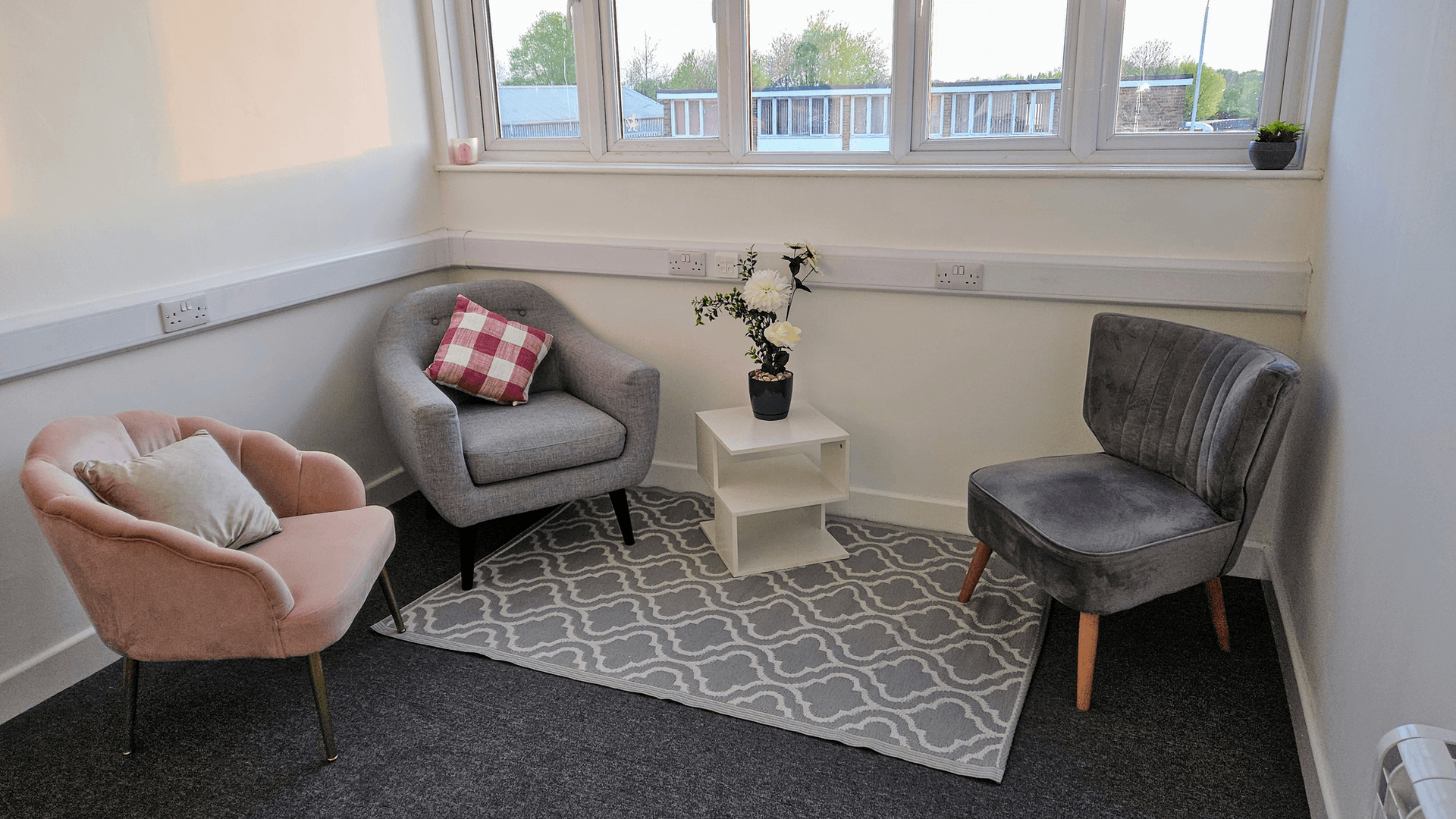
Hero photo: A calm, empty therapy room with armchairs and a side table, the kind of quiet clinical setting where a psychologist administers an assessment like the RIAS-2. Photo by RMtherapies, CC BY-SA 4.0, via Wikimedia Commons; cropped from the original.

Take our professional IQ test

Want to know your IQ? Try the first ever professional online IQ test.

Try our IQ test
Author
Dr. Russell T. WarneChief Scientist

Contact

Table of Contents

  • What the RIAS-2 measures
  • Memory, processing speed, and the RIST-2 screener
  • How the RIAS-2 is scored
  • Who uses the RIAS-2 and why
  • How the RIAS-2 compares with the Wechsler scales
  • Where the RIOT IQ test fits for adults
  • Frequently asked questions
  • What does RIAS-2 stand for?
  • What ages does the RIAS-2 cover?
  • How long does the RIAS-2 take?
  • What is the difference between the RIAS-2 and the RIST-2?
  • Is the RIAS-2 a real IQ test?
  • Can I take the RIAS-2 online at home?
  • References
Article Categories
All ArticlesUnderstanding IQ ScoresTaking an IQ TestRIOT-Specific InformationGeneral IQ & IntelligenceAdvanced Topics & ResearchIQ Scores & InterpretationMensa & High-IQ SocietiesOnline IQ Tests IQ Test Basics & FundamentalsAverage IQ & DemographicsFamous People & IQHistory & Origins Of IQ TestingAccuracy, Reliability & CriticismSpecial Population & Related ConditionsImproving IQ / PreparationSpecific IQ Tests & FormatsIQ Testing for HR & RecruitmentSkills Assessment
Related Articles
What is the Halstead-Reitan battery? The classic fixed neuropsychological test setWhat is the Conners test? The Conners 4 ADHD rating scales explainedWhat is the BASC-3? A guide to Pearson's behavior rating systemWhat is the GORT-5? The Gray Oral Reading Tests explainedWhat is the KTEA-3? The Kaufman Test of Educational Achievement explainedWhat is the GFTA-3? The Goldman-Fristoe articulation test explainedWhat is the CELF-5? Pearson's language fundamentals test explainedWhat is the Beery VMI? The visual-motor integration test explainedWhat Is the Rey-Osterrieth Complex Figure Test?What is the Wisconsin Card Sorting Test?What is the Wechsler Memory Scale? A guide to the WMS-IVWhat is the D-KEFS? The Delis-Kaplan Executive Function System explainedWhat is the NEPSY-II? A guide to the child neuropsychological assessmentWhat is the Boston Naming Test?What is the RBANS? Pearson's brief neuropsychological battery explainedWhat is the ABAS-3? The adaptive behavior assessment explainedWhat is the Bracken School Readiness Assessment?What is the Denver II? The Denver Developmental Screening Test explainedWhat Is the CCAT Test? Format, Scoring, and How It Compares to an IQ TestWhat is the MMSE test? The classic 30-point cognitive screening examWhat is the Vineland-3? The adaptive behavior assessment explainedWhat Is the TACHS Test? The Catholic High School Admissions Exam ExplainedWhat is the SHSAT test? New York City's specialized high school exam explainedWhat is the RIAS-2? The Reynolds Intellectual Assessment Scales explainedWhat is the PSAT test? Format, scores, and National Merit explainedWhat Is the Nelson-Denny Reading Test?What Is the ERB Test? The CTP ExplainedWhat is the DAT test? The Dental Admission Test explainedWhat is the CTONI-2? The Comprehensive Test of Nonverbal Intelligence explainedWhat is the Stanford 10 test? A guide to the SAT10 achievement batteryWhat are the Mullen Scales of Early Learning?What is the AFCT test? The in-service ASVAB retest explainedWhat is the WRAT-5? Pearson's brief achievement test explainedWhat is the Wechsler Nonverbal Scale of Ability (WNV)?What is the Slosson Intelligence Test?What is the NAPT test? The Navy Advanced Programs Test explainedWhat is the HSPT test? Sections, scoring, and how schools use itWhat is the CLT exam? Sections, scoring, and who accepts itWhat is the Bayley-4? How the infant and toddler development scales workWhat Is the TONI-4 Test? The Language-Free Intelligence Test ExplainedWhat Is the TerraNova Test? A Guide to the Achievement BatteryWhat Is the KABC-II? A Guide to the Kaufman Assessment Battery for ChildrenWhat Is the Universal Nonverbal Intelligence Test (UNIT2)?What Is the DAS-II Test? The Differential Ability Scales ExplainedWhat Is the ASTB Test? The Navy's Aviation Selection Battery ExplainedWhat Is the SIFT Test? The Army's Flight Aptitude Test ExplainedWhat Is the DLAB Test? The Military's Language Aptitude Battery ExplainedWhat Is an AFQT Score? The Military's Enlistment Score ExplainedWhat Is the CAS2 Test? The Cognitive Assessment System and PASS TheoryWhat Is the WIAT Test? The Wechsler Individual Achievement Test ExplainedWhat Is the WASI Test? The Wechsler Abbreviated Scale of IntelligenceWhat Is the SCAT Test? Johns Hopkins CTY's Qualifying Test ExplainedWhat Is the SSAT Test? The Secondary School Admission Test ExplainedWhat Is the ISEE Test? The Independent School Entrance Exam ExplainedMCAT to IQ: What MCAT Scores Really Say About IntelligenceGMAT to IQ: What GMAT Scores Really Say About IntelligenceWhat Is the Leiter Test? The Nonverbal IQ Scale ExplainedWhat Is the RIAS Test? The Reynolds Intellectual Assessment Scales ExplainedWhat Is a GT Score? The Army's General Technical Score ExplainedWhat Is the AFOQT? The Air Force Officer Qualifying Test ExplainedWhat Is the Iowa Test? The ITBS and Iowa Assessments ExplainedWhat Is the Star Test? Renaissance Star Assessments ExplainedWhat Is the MAP Test? NWEA MAP Growth ExplainedWhat Is the Vervoe Assessment?What Is the Harver Assessment?What Is the Plum Assessment? The Discovery Survey ExplainedWhat Is the Saville Swift Test?What Is the Mettl Test? Mercer | Mettl Assessments ExplainedWhat Is TestGorilla? The Skills Testing Platform ExplainedWhat Is the Matrigma Test?What Is the Thomas GIA Test?What Is the HireVue Assessment?What Is the CASPer Test?What Is the UCAT? The University Clinical Aptitude Test ExplainedWhat Is the Beta-III Test? Beta-4 and the Nonverbal IQ LineWhat Is the Cognitive Reflection Test?What Is the McQuaig Mental Agility Test?What Is the Talent Q Elements Test?What Is the Kenexa Assessment?IQ Test Questions: What Real Tests Actually AskWhat Is the TABE Test?What Is the ACCUPLACER Test?What Is the HESI A2 Exam?What Is the ATI TEAS Test?What Is the Pymetrics Test?What Is the cut-e Test?What Is the Caliper Assessment?What Is a Deductive Reasoning Test?What Is an Inductive Reasoning Test?What Is a Quantitative Reasoning Test?What Is the Civil Service Exam?What Is the Cubiks Logiks Test?What Is the Wiesen Test of Mechanical Aptitude?What Is the Bennett Mechanical Comprehension Test?What Is the Ramsay Mechanical Aptitude Test?What Is a Clerical Aptitude Test?LSAT to IQ: What LSAT Scores Really Say About IntelligenceGRE to IQ: What GRE Scores Really Say About IntelligenceWhat Is a Situational Judgement Test?What Is the Korn Ferry Assessment?What Is the Hogan Assessment?What Is the Firefighter Aptitude Test?What Is the Police Written Exam?What Is a Mechanical Aptitude Test?What Is a Numerical Reasoning Test?What Is an Abstract Reasoning Test?What Is the Watson Glaser Test? The Law-Firm Screen ExplainedWhat Is the SHL Test? The Verify G+ ExplainedWhat Is the Predictive Index Cognitive Assessment?What Is the Peabody Picture Vocabulary Test? The PPVT-5 ExplainedWhat Is the WPPSI Test? The Wechsler IQ Test for Young ChildrenWhat Is the KBIT Test? The Kaufman Brief Intelligence Test ExplainedWhat Is the OLSAT Test? The Otis-Lennon School Ability Test ExplainedWhat Is the NNAT Test? The Naglieri Nonverbal Ability Test ExplainedWhat Is the Average Wonderlic Score? Overall, by Job, and by NFL PositionWhat Is the Wonderlic Test? Scoring, NFL History, and How It Relates to IQWhat Is the Digit Span Test?What Is the Trail Making Test?What Is the Clock Drawing Test?What Is the Mini-Mental State Exam (MMSE)?What Is the Stroop Test?What Do Vocabulary Tests Measure?What Is a Reaction Time Test?What Is the Woodcock-Johnson Test?What Is the WISC Test?What Is the CogAT Test?Memory Tests: How Memory Is Actually MeasuredWhat Is Neuropsychological Testing?What Is the Mini-Cog Test?What Is the SAGE Test?What Is the MoCA Test?What Is a Pattern Recognition Test?How to Solve 3x3 Visual Matrix Reasoning Puzzles Step by StepWhat Are IQ Tests and How Do They Work?A Guide to the Different Types of IQ Tests AvailableWhat Are Professional IQ Tests and How Do They Work?5 Types of IQ Tests ExplainedWhat Is a Matrix Reasoning Test? What the Pattern Puzzles MeasureTop 10 Online IQ Tests: A Comprehensive ComparisonRIOT IQ vs. Wonderlic Test Prep: Professional Assessment or Test Coaching?RIOT IQ vs. Wonderlic Test Practice: Which Cognitive Assessment Serves Your Needs?RIOT IQ vs. Assessment Day: Which CCAT Approach Delivers Real Value?RIOT IQ vs. Prepopedia: Which CCAT Solution Fits Your Needs?RIOT IQ vs. Job Test Prep: Which CCAT Preparation Approach Makes Sense?RIOT IQ vs. 12 Min Prep: Which CCAT Preparation Option Works Best?How Is the Stanford-Binet Intelligence Scale Used?How Does the Stanford-Binet IQ Test Work?What Is the WAIS IQ Test?Which IQ Test Should I Take?Military IQ and the ASVABIQ Tests for KidsThe Stanford–Binet Intelligence TestIs the SAT an IQ Test?What Are Reliable IQ Tests?The Wechsler IQ Tests
Take our IQ tests

Basic IQ Test

5 subtests + 5 cognitive abilities

Take the IQ test

Features

  • ~13 Minutes
  • IQ score
  • Cognitive abilities breakdown
  • ±5.6 IQ margin of error

5/15 Subtests

Learn more
Vocabulary
Matrix Reasoning
SToVeS
Visual Reversal
Symbol Search
Most comprehensive

Full IQ Test

15 subtests + all cognitive abilities

Take the IQ test

Features

  • ~52 Minutes
  • IQ score
  • Cognitive abilities breakdown
  • ±3.7 IQ margin of error

15/15 Subtests

Learn more
Vocabulary, Information, Analogies
Matrix Reasoning, Visual Puzzles, Figure Weights
Object Rotation, SToVeS, Spatial Orientation
Computation Span, Exposure Memory, Visual Reversal
Symbol Search, Abstract Matching
Simple Reaction Time, Choice Reaction Time
Compare all tests