What is the DRA3? The Developmental Reading Assessment, Third Edition explained
The DRA3 (Developmental Reading Assessment, Third Edition) is Pearson's K-8 classroom reading benchmark. What it measures and why it is not an IQ test.
The DRA3, short for the Developmental Reading Assessment, Third Edition, is a teacher-administered reading assessment published by Pearson for students in kindergarten through grade 8. A teacher listens to a child read a leveled book, records the oral reading, checks comprehension, and assigns a reading level plus instructional next steps. It is a classroom "benchmark assessment," a tool for placing students in suitably difficult texts and tracking growth two or three times a year. It is not an IQ test, and it is not a diagnostic instrument for dyslexia or any other disorder. This article explains what the DRA3 measures, how it is scored, how it evolved from the DRA2, and where it sits in the current debate over reading assessment.
What the DRA3 measures
According to Pearson's product page, the DRA3 is a "criterion-based" benchmark assessment. Criterion-based means a student's performance is judged against a fixed description of skilled reading rather than against a national sample of same-age children, which is how norm-referenced tests such as IQ tests work. The publisher lists three components:
• Oral reading fluency: the teacher records accuracy, rate, phrasing, and expression as the student reads aloud. At the earliest levels the teacher also observes printed language concepts such as book handling and directionality.
• Comprehension: depending on the level, the student retells the story, answers literal and interpretive questions, or writes a summary and reflection in a student booklet.
• Reading engagement: an optional component covering the student's reading attitudes and preferences.
Each component is rated on a continuum, and the publisher's research white paper states that oral reading fluency and comprehension are each assigned one of four categories: Intervention/Emerging, Instructional/Developing, Independent, or Advanced. The overall outcome is a DRA3 reading level on a scale that runs from level A through level 80 across 23 levels.
How a DRA3 benchmark assessment works
The DRA3 is sold as two kits, one for grades K-3 and one for grades 4-8. Pearson's listings describe a K-3 book set covering levels A-16 and 18-40, and a 4-8 set with "bridge" books at levels 20-38 plus books at levels 40-80; the publisher's white paper counts 102 fiction and nonfiction benchmark books in total. Each book has its own Teacher Observation Guide, the record form on which the teacher codes the oral reading and scores the continuum.
Pearson states that the teacher portion of a benchmark administration takes 5 to 15 minutes and the student portion 15 to 40 minutes, depending on the book and the student. That makes the DRA3 far more time-intensive per student than the one-minute probes used in curriculum-based screeners such as DIBELS. The trade-off is that the teacher watches the student read a whole text and can observe behaviors a timed probe cannot capture.
Administration can be done on paper or through the DRA3 digital platform, which handles scoring and reporting. The publisher lists the qualification level as A, meaning classroom teachers are the intended users. Under the "Norms" heading the product page lists rate and accuracy charts rather than a standardization sample, consistent with a criterion-referenced design.
Word Analysis, Progress Monitoring, and the Level Estimator
The benchmark assessment is the core of the DRA3, but the kit contains three supporting tools.
• Word Analysis: Pearson describes this as "a collection of brief structured literacy assessment tasks with scripted lessons for instruction." The publisher's measures chart groups the tasks under phonological awareness, metalanguage, letter and high-frequency word recognition, phonics, and syllabication and structural analysis. It is meant for struggling readers whose benchmark results do not explain why reading is hard.
• Progress Monitoring: brief checks, which Pearson says take three minutes or less, covering oral reading rate and accuracy, word reading, vocabulary, and comprehension. These are designed for students who are falling behind and who need more frequent measurement between benchmark windows.
• Level Estimator: new in the third edition, a 40-item word list used to pick a starting book for a student with no prior DRA record. Pearson's white paper reports split-half reliability of .98 and a correlation of .94 with a one-minute oral reading passage in a sample of 194 students in grades 1 through 5.
From DRA to DRA2 to DRA3
The DRA has a long history in American elementary classrooms. Connecticut's State Board of Education adopted the original Developmental Reading Assessment in December 1999 as its approved measure for identifying substantially deficient readers in priority school districts, according to the state's 2012 guidance. The second edition, the DRA2, by Joetta Beaver and Mark Carter, was published by Pearson in 2006; a test review in Assessment for Effective Intervention notes that it added oral reading rate and an instructional-level placement to the original design.
Pearson released the DRA3 on August 1, 2019, and retired the DRA2 and DRA2+ on July 1, 2022, per the publisher's retirement FAQ. The same authors are credited on the third edition. Pearson describes the changes as redesigned Teacher Observation Guides, updated comprehension scoring criteria, a larger book set, the new Level Estimator, and a browser-based digital platform. In a publisher equivalence study, 48 students were rated by 8 teachers using either DRA2 or DRA3 guides, and total scores did not differ significantly, which Pearson takes as evidence that a level earned on the DRA2 means roughly the same thing on the DRA3.
Reliability, validity, and the reading-science debate
Because teachers do the rating, the key technical questions are whether different teachers agree and whether the assigned level reflects the student's reading. Pearson's white paper reports "coefficient alpha," a measure of internal consistency, ranging from .84 to .94 for oral reading fluency and from .78 to .88 for comprehension across the sampled continuums. Inter-rater agreement on the four performance categories ranged from 76 to 91 percent for oral reading fluency and from 69 to 80 percent for comprehension. Among 213 students in grades 2 through 5, DRA3 oral reading fluency correlated .72 to .79 with the aimswebPlus oral reading fluency measure, and comprehension correlated .62 to .67.
Those numbers are respectable for a teacher-scored classroom tool. The comprehension figures are lower than the fluency figures, which the publisher attributes to the more subjective nature of comprehension ratings, and the evidence comes from Pearson's own technical manual rather than independent replication.
The DRA family has also been caught up in the broader "science of reading" debate. Connecticut's 2012 guidance states plainly that the DRA2 "does not meet all of the technical requirements of a universal screen," even while the state required it in priority districts. The same document notes that the DRA's running-record coding conventions come from Marie Clay and from Fountas and Pinnell, the tradition critics associate with "three-cueing," the practice of encouraging children to guess words from context and pictures. Colorado's approved interim assessments under its READ Act for 2023-2024 and beyond include Acadience Reading, DIBELS 8th Edition, i-Ready, ISIP, and Star Early Learning; the DRA3 is not among them. A 2015 study in the Journal of School Psychology led by Matthew Burns found that when 64 second- and third-graders read leveled books rated at their "instructional level" by a reading inventory, the level categories agreed across three books only 67 to 70 percent of the time, and more than half of the weakest readers were actually at frustration level. Education Week reported in 2024 on The Reading League's objection that leveled texts encourage guessing rather than decoding. Pearson's structured-literacy Word Analysis tasks can be read as a response to those criticisms, though the benchmark component still rests on leveled texts.
The practical conclusion is that the DRA3 is best understood as an instructional placement and progress tool, while schools that need a universal screener with documented sensitivity for reading risk generally turn to other instruments.
How the DRA3 differs from an IQ test
Parents sometimes see a DRA3 level on a report card next to a standardized test score and assume the two measure similar things. They do not. The DRA3 measures how well a child reads a particular kind of text at a particular moment, and the level is designed to rise with instruction. A norm-referenced reading battery such as the WRMT-III or a broad achievement test such as the KTEA-3 also measures reading, but with standard scores that compare a child to a national sample of the same age. An IQ test measures general reasoning ability across verbal, spatial, quantitative, and memory tasks, and its scores are built to be relatively stable across years. Reading skill and general ability are correlated, but a low DRA3 level in second grade says little about a child's reasoning ability, and a high one is not evidence of giftedness.
When a DRA3 result raises concern about a possible reading disorder, the appropriate next step is a referral to a school psychologist or reading specialist for an individually administered diagnostic evaluation. Diagnosis belongs to qualified clinicians, and no classroom benchmark or online test can substitute for that process.
For adults who want a measure of general cognitive ability rather than reading placement, the RIOT IQ test (the Reasoning and Intelligence Online Test) was developed by RIOT IQ with psychometrician Dr. Russell T. Warne for people 18 and older. It includes 15 subtests across six cognitive indices (verbal reasoning, fluid reasoning, spatial ability, working memory, processing speed, and reaction time), takes about 52 minutes, and reports scores on the mean-100, standard-deviation-15 scale. Like the DRA3, it does not replace an individually administered diagnostic evaluation. You can learn more at RIOT IQ.
Frequently asked questions
What grades does the DRA3 cover?
Kindergarten through grade 8, sold as a K-3 kit and a 4-8 kit, with reading levels from A through 80.
Is the DRA3 an IQ test?
No. The DRA3 is a criterion-based classroom reading assessment. It compares a student's reading to a description of skilled reading at each level and does not measure reasoning ability.
Can the DRA3 diagnose dyslexia?
No. The DRA3 is a benchmark and progress-monitoring tool for instruction. Identifying a reading disorder requires an individually administered diagnostic evaluation by a qualified professional.
How long does a DRA3 assessment take?
Pearson reports 5 to 15 minutes for the teacher portion and 15 to 40 minutes for the student portion of a benchmark assessment. Progress Monitoring checks take three minutes or less.
What is the difference between the DRA2 and the DRA3?
The DRA3, released in 2019, added a Level Estimator word list, a larger book set, redesigned Teacher Observation Guides, updated comprehension scoring, and a digital platform. Pearson retired the DRA2 in July 2022.
Is the DRA3 aligned with the science of reading?
Pearson describes the Word Analysis component as structured-literacy tasks. The benchmark component still uses leveled texts and running-record conventions that reading-science critics question, and some state screener lists, such as Colorado's, do not include the DRA3.
2. Altmann, R. (2019). The research behind the DRA3 benchmark assessments [White paper]. NCS Pearson. pearsonassessments.com
3. Pearson. (2022). FAQs: DRA2 and DRA2+ are retiring! Pearson Assessments. pearsonassessments.com
4. McCarty, A. M., & Christ, T. J. (2010). Test review: Beaver, J. M., & Carter, M. A. (2006). The Developmental Reading Assessment, Second Edition (DRA2). Assessment for Effective Intervention, 35(3), 182-185. eric.ed.gov
5. Connecticut State Department of Education. (2012). Developmental Reading Assessment, Second Edition: Questions and answers. portal.ct.gov
6. Colorado Department of Education. (n.d.). Approved assessments: Colorado READ Act. ed.cde.state.co.us
7. Burns, M. K., Pulles, S. M., Maki, K. E., Kanive, R., Hodgson, J., Helman, L. A., McComas, J. J., & Preast, J. L. (2015). Accuracy of student performance while reading leveled books rated at their instructional level by a reading inventory. Journal of School Psychology, 53(6), 437-445. doi.org
8. Schwartz, S. (2024, October 14). Do leveled books have any place in the classroom? Education Week. edweek.org
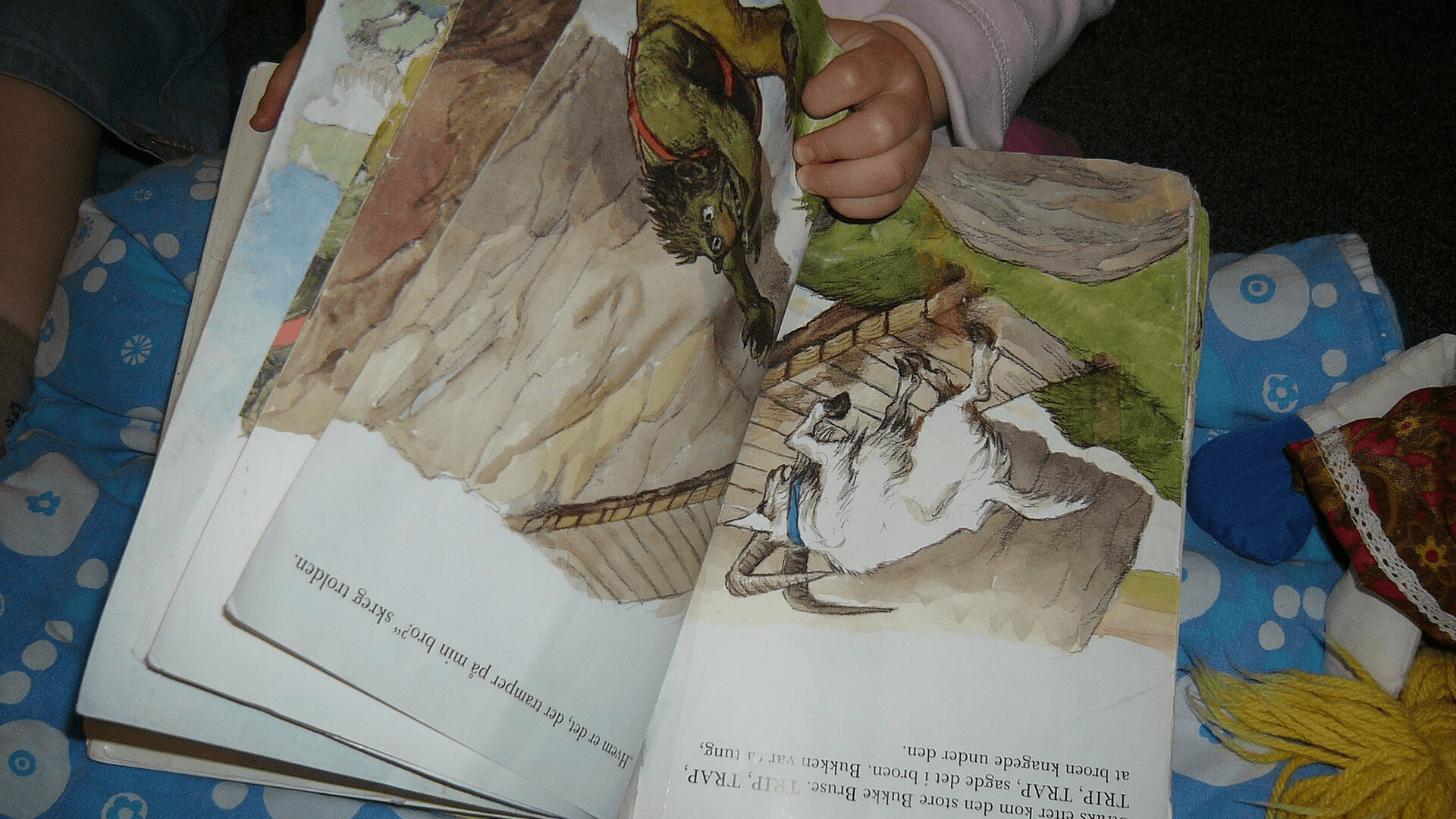
Hero photo: A young child's hands on an open picture book. Via Wikimedia Commons, public domain (cropped).
Take our professional IQ test
Want to know your IQ? Try the first ever professional online IQ test.