What is the NEPSY-II? A guide to the child neuropsychological assessment
The NEPSY-II is Pearson's child neuropsychological assessment for ages 3 to 16, with 32 subtests in six domains that clinicians tailor to each referral. (152 chars)
Dr. Russell T. WarneChief Scientist
Share
The NEPSY-II is a "developmental neuropsychological assessment," a battery of tasks designed to map how a child's brain-based abilities are developing, published by Pearson for children and adolescents ages 3 through 16. According to Pearson, it contains 32 subtests organized into six domains, and clinicians select whichever subtests fit the question in front of them rather than administering a fixed test from start to finish. This article explains what the NEPSY-II measures, how its flexible design works, how it is scored, who uses it, and how the profile it produces differs from an IQ score.
What is the NEPSY-II?
The NEPSY-II is the second edition of the NEPSY, authored by Marit Korkman, Ursula Kirk, and Sally Kemp and published by Pearson in 2007. The first American edition appeared in 1998, and the instrument's approach traces back further to the diagnostic principles of the Russian neuropsychologist Alexander Luria. In a 1999 paper in Neuropsychology Review, Korkman described the NEPSY as an effort to integrate Luria's views with contemporary child neuropsychological methods: instead of asking only how well a child performs overall, the examiner asks which underlying processes are driving a weak performance.
The test is individually administered by a trained examiner using physical materials, including stimulus books, record forms, picture cards, and a set of red blocks. Pearson publishes two forms, one for ages 3 to 4 and one for ages 5 to 16, and reports that the instrument is nationally normed. It is a restricted clinical tool: Pearson lists it at qualification level C, which generally means a doctoral-level professional with formal training in assessment, and a complete kit costs over $1,300. Parents cannot buy or administer it themselves.
The six domains the NEPSY-II measures
According to the publisher's manual, the 32 subtests and four delayed tasks are divided into six content domains. The domains are theoretical groupings rather than statistically derived factors, which matters for how scores are interpreted later.
• Attention and executive functioning: subtests such as Animal Sorting, Auditory Attention and Response Set, Clocks, Design Fluency, Inhibition, and Statue measure self-regulation, vigilance, selective and sustained attention, planning, and the ability to inhibit automatic responses.
• Language: subtests such as Comprehension of Instructions, Phonological Processing, Speeded Naming, and Word Generation assess how a child processes speech sounds, follows oral directions, retrieves words quickly, and produces language.
• Memory and learning: tasks such as Memory for Designs, Memory for Faces, and Narrative Memory measure immediate and delayed recall for visual and verbal material, including how much a child retains after a delay.
• Sensorimotor: tasks such as Fingertip Tapping, Imitating Hand Positions, and Manual Motor Sequences assess fine motor speed, coordination, and the ability to reproduce movements.
• Social perception: Affect Recognition asks children to read emotions in faces, and Theory of Mind assesses understanding of other people's beliefs and intentions. This domain was new in the second edition, which expanded coverage from five domains to six, partly because of its relevance to autism evaluations.
• Visuospatial processing: subtests such as Arrows, Block Construction, Design Copying, Geometric Puzzles, Picture Puzzles, and Route Finding measure the ability to judge spatial relations, copy figures, and mentally manipulate visual information.
A flexible battery, not a fixed test
The most distinctive feature of the NEPSY-II is its "tailored assessment" design. Pearson describes it as the only single measure that lets clinicians build customized batteries across six domains specific to a child's situation. The publisher outlines three broad ways to use it. A general assessment gives an overview of neuropsychological status and takes about 45 minutes for preschoolers or about an hour for school-age children. A diagnostic or selective assessment targets a specific referral question, so its length varies. A full assessment covers the instrument comprehensively and takes roughly 90 minutes at preschool ages and 2 to 3 hours at school ages.
To guide subtest selection, the manual provides prebuilt "referral batteries" keyed to common reasons children are evaluated, including reading difficulties, math difficulties, attention and concentration concerns, behavior management, language delays, perceptual or motor delays, school readiness, and social or interpersonal problems. This organization replaced the fixed administration order of the 1998 edition, and the second edition's norms are valid regardless of the order in which subtests are given. On Pearson's digital Q-interactive platform, examiners can also combine selected NEPSY-II subtests with other instruments, such as the WISC-V, in a single custom battery.
How the NEPSY-II is scored
NEPSY-II subtests are reported as "scaled scores," age-adjusted scores with a mean of 10 and a standard deviation of 3, ranging from 1 to 19. A scaled score of 10 is exactly average for the child's age, while a 7 falls one standard deviation below the mean. Researchers who use the instrument, such as a 2025 team publishing in the Journal of Intellectual Disability Research, convert raw performance to this metric using the normative tables in the scoring manual.
Beyond the primary scaled scores, the manual describes several supplementary score types: process scores that isolate components of performance (for example, speed versus accuracy), contrast scores that compare performance across conditions, and quantified behavioral observations recorded during testing, such as how often a child needed prompting. Notably, the NEPSY-II does not produce domain composites or an overall score. The authors deliberately kept interpretation at the subtest level because subtests within a domain do not always correlate highly with one another, so a single domain number could hide clinically meaningful patterns.
A peer-reviewed evaluation by Brooks, Sherman, and Strauss in Child Neuropsychology described the NEPSY-II as one of the few child neuropsychological batteries with very good psychometric properties, with test-retest reliability above .70 for most tasks. The same review noted honest limitations: the instrument is complex, takes time to learn to administer well, and had relatively few independent validation studies at the time of the review.
Who uses the NEPSY-II and why
The NEPSY-II is used by pediatric neuropsychologists, clinical psychologists, and school psychologists as part of comprehensive evaluations. Pearson reports that its batteries are suited to clinical populations including ADHD, autism spectrum disorders, learning differences, and traumatic brain injury, and the standardization research included special group studies of children with diagnoses such as reading disorder, language disorder, and mild intellectual disability. In school settings, results help teams link cognitive findings to educational difficulties and plan interventions; in clinics, they contribute to differential diagnosis, for example distinguishing an attention problem from a language comprehension problem that produces similar classroom behavior.
For a broader picture of this category of testing, see our overview of what neuropsychological testing involves (https://www.riotiq.com/articles/specific-iq-tests-and-formats/what-is-neuropsychological-testing). Readers interested in how attention disorders relate to measured intelligence may also find our article on IQ and ADHD useful (https://www.riotiq.com/articles/special-populations-and-related-conditions/iq-and-adhd).
No single test diagnoses ADHD, autism, or a learning disorder by itself. The NEPSY-II supplies one stream of evidence, and Pearson itself frames results as something to combine with behavioral observations and information from home and school.
How a neuropsychological profile differs from an IQ score
An intelligence test such as the WISC (https://www.riotiq.com/articles/specific-iq-tests-and-formats/what-is-the-wisc-test) is built to estimate general cognitive ability and summarize it in a full-scale IQ plus a handful of index scores. That summary is extremely useful: general ability predicts academic and life outcomes better than almost any other psychological measure. A neuropsychological battery like the NEPSY-II serves a different purpose. It deliberately avoids computing an overall score and instead maps strengths and weaknesses across specific brain-based functions, such as inhibition, phonological processing, fine motor speed, and face memory.
The two approaches complement each other. An IQ score tells you where a child stands relative to peers on general ability; a neuropsychological profile helps explain why a particular child struggles despite adequate general ability, or which specific processes an intervention should target. In practice, evaluators often administer both, and Pearson's validity research linked the NEPSY-II to measures such as the WISC-IV and the DAS-II for exactly this reason. Neither replaces the other, and a scattered profile of subtest scores should never be read as if it were an IQ.
Frequently asked questions
What ages does the NEPSY-II cover?
Pearson publishes the NEPSY-II for ages 3 through 16, with separate record forms for ages 3 to 4 and ages 5 to 16.
How long does the NEPSY-II take?
It depends on the battery. Pearson lists about 45 to 60 minutes for a general assessment and 90 minutes to 3 hours for a full assessment, with selective batteries varying by referral question.
Is the NEPSY-II an IQ test?
No. It measures neuropsychological functions across six domains and reports subtest-level scaled scores. It produces no overall IQ or domain composite.
Can the NEPSY-II diagnose ADHD or autism?
Not by itself. It provides evidence about attention, executive functioning, and social perception that clinicians weigh alongside interviews, rating scales, and observations from home and school.
Who can administer the NEPSY-II?
Pearson restricts it to qualification level C, generally doctoral-level professionals with formal training in psychological assessment, such as psychologists and neuropsychologists.
Is there a newer version than the NEPSY-II?
As of this writing, the second edition, published in 2007, is the current version listed by Pearson.
Where the RIOT IQ test fits
The NEPSY-II is a pediatric clinical instrument, so it is not something adults take to learn about their own cognitive abilities. Adults who want a rigorous measure of general reasoning ability can take the Reasoning and Intelligence Online Test, the RIOT IQ test, developed by RIOT IQ with psychometrician Dr. Russell T. Warne. It is designed for adults 18 and older, includes 15 subtests across six cognitive indices (verbal reasoning, fluid reasoning, spatial ability, working memory, processing speed, and reaction time), takes about 52 minutes, and reports scores on the familiar mean-100, standard-deviation-15 scale. Like any online measure, it does not replace an individually administered diagnostic evaluation, but it offers a well-normed reasoning profile for adults. You can take the RIOT IQ test at https://www.riotiq.com/.
2. Korkman, M., Kirk, U., & Kemp, S. (2007). NEPSY-II Clinical and Interpretive Manual: Chapter 2, Design and Purpose of the NEPSY-II. Harcourt Assessment. pearsonclinical.ca
3. Brooks, B. L., Sherman, E. M. S., & Strauss, E. (2010). NEPSY-II: A developmental neuropsychological assessment, second edition. Child Neuropsychology, 16(1), 80-101. doi.org
4. Korkman, M. (1999). Applying Luria's diagnostic principles in the neuropsychological assessment of children. Neuropsychology Review, 9(2), 89-105. doi.org
5. Butti, N., Urgesi, C., Decio, A., Pezzani, L., Milani, D., & Montirosso, R. (2025). A further characterisation of the neuropsychological profile, social perception, and academic skills in Sotos syndrome. Journal of Intellectual Disability Research. pmc.ncbi.nlm.nih.gov
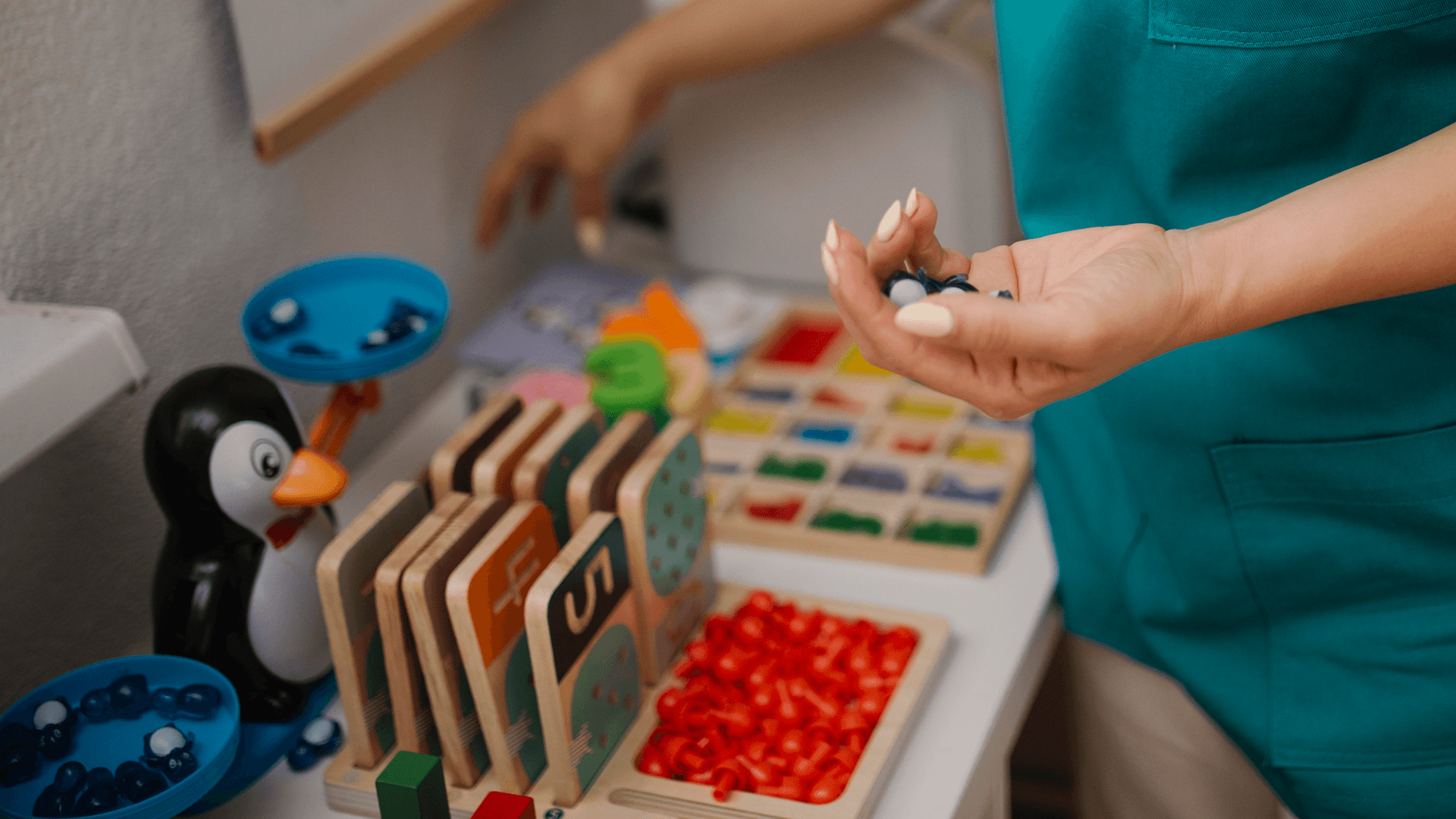
Hero photo: A clinician in scrubs holds counting pieces over trays of structured child-assessment materials in a clinic room. Photo by Shixart1985, CC BY 2.0, via Wikimedia Commons (cropped).
Take our professional IQ test
Want to know your IQ? Try the first ever professional online IQ test.