The Halstead Category Test measures abstraction and concept formation with 208 visual items in seven subtests. Learn its scoring, versions, and IQ links. (153 chars)
The Halstead Category Test is a neuropsychological measure of "abstraction" (drawing general rules from specific examples) and "concept formation" (figuring out the principle that ties a set of items together). In its standard adult form, it presents 208 visual items organized into seven subtests. For each item, the test taker chooses a number from 1 to 4 and gets immediate feedback: a chime for a correct answer and a buzzer for a wrong one. The test is part of the Halstead-Reitan battery, where it has long been regarded as the single most effective measure for detecting brain damage. This article covers how the test works, what it measures, its booklet and computerized versions, and how it relates to IQ.
What the Halstead Category Test is
The Category Test was developed by psychologist Ward Halstead, who worked at the University of Chicago and, according to a clinical reference entry on Encyclopedia.com, wanted an evaluation of brain functioning that went beyond ordinary intelligence testing. His student Ralph Reitan later validated and extended Halstead's tests into what is now called the Halstead-Reitan Neuropsychological Battery, a fixed set of measures that takes five to six hours to administer in full.
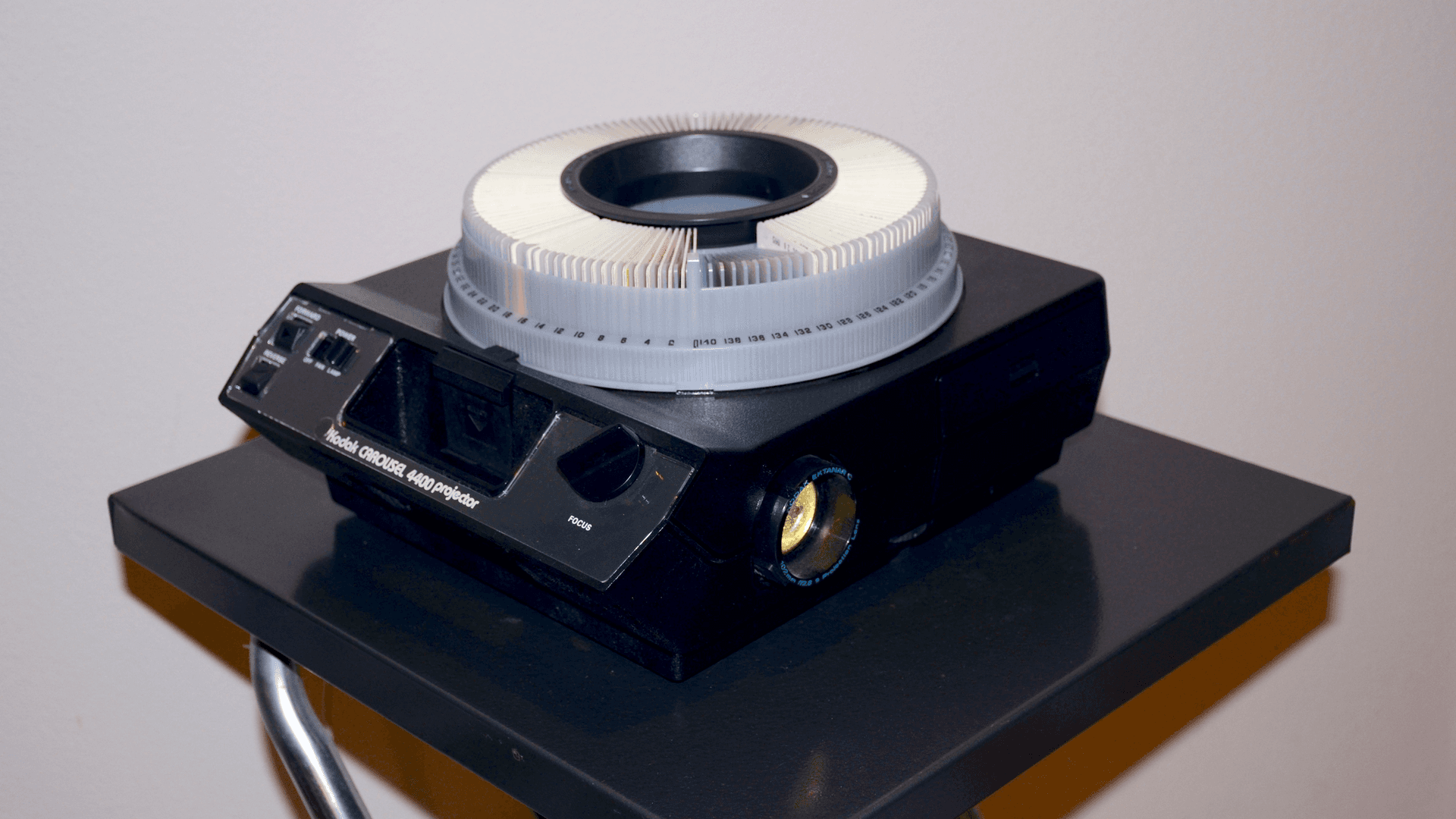
Halstead's original Category Test was longer than the version used today. According to test archives at the TCS Education System library, the original contained 360 items across nine subtests and was presented in slide format, with images projected onto a screen while the examinee responded on an answer console. The standard version that survives in the battery presents 208 pictures of geometric figures in seven subtests.
The test's premise is simple to state and hard to fake. Each subtest is built around one underlying principle. Nobody tells the examinee what the principle is. The only way to discover it is to make a choice, hear the feedback, and adjust. In that sense the Category Test is as much a test of learning from experience as it is a test of reasoning.
How the test works
Every item shows a visual display, usually geometric shapes, lines, or figures that vary in number, size, position, color, or completeness. The examinee decides which number from 1 to 4 the display suggests and responds by pressing a key or pointing to a number strip, depending on the version. A chime signals a correct choice and a buzzer signals an error, and the next item appears.
• Seven subtests, seven rules: each subtest is organized around a single principle. Early subtests use obvious rules, such as matching the roman numeral shown on screen. Later subtests demand more complex reasoning, such as responding to the proportion of a figure that is missing.
• Feedback is the only teacher: because the rule is never stated, the examinee must form a hypothesis, test it against the chime or buzzer, and abandon it when it stops working. This shift between rules taxes "mental flexibility," the capacity to change strategy when circumstances change.
• Scoring by errors: the score is the total number of errors across all 208 items. According to the Encyclopedia.com entry, error totals above 41 suggest impairment for adults aged 15 to 45, with a slightly higher threshold above age 46, and Reitan himself suggested cutoffs around 50 or 51 errors adjusted for age and education.
Children have their own adaptations. The same reference reports that the children's versions use 80 items in five subtests for younger children and 168 items in six subtests for older children.
Sensitivity to brain damage
The Category Test earned its reputation as the flagship measure of the Halstead-Reitan battery. The Encyclopedia.com entry describes it as the battery's most effective test for detecting brain damage, while noting an honest limitation: a poor score signals that something is wrong without indicating where in the brain the problem lies.
The empirical record supports meaningful but bounded sensitivity. Neuropsychologists David Loring and Glenn Larrabee reanalyzed Reitan's original validation data in a 2006 article in The Clinical Neuropsychologist. They found that eight of the ten tests in Halstead's "Impairment Index" (a summary count of how many battery scores fall in the impaired range) statistically differentiated patients with unequivocal brain damage from controls. They also found that 13 of 14 Wechsler intelligence measures did the same, with the brain-damaged group averaging a Full Scale IQ of 96.2 against 112.6 for controls. Their conclusion was measured: both batteries detect brain dysfunction, and the relative sensitivity of neuropsychological versus intelligence measures remains a topic of debate.
In practice, clinicians rarely interpret the Category Test alone. It contributes to the Impairment Index and is read alongside the rest of a neuropsychological evaluation, which weighs history, imaging, and multiple test scores before any conclusion about brain function is drawn.
Booklet, short, and computerized versions
The original projection apparatus was expensive and immobile, so simpler formats followed. All keep the essential task: infer the rule, respond 1 to 4, learn from feedback.
• Booklet Category Test (BCT): according to the publisher, PAR, the BCT by Nick DeFilippis and Elizabeth McCampbell is a portable version of the Halstead Category Test with task demands "essentially equivalent" to the original. It uses 208 stimulus plates in easel binders, is normed for ages 15 to 80, takes 30 to 60 minutes, and measures concept formation and abstract reasoning.
• Short Category Test, Booklet Format (SCT): published by Western Psychological Services in 1987, the Wetzel and Boll adaptation trims the test to 100 items in five subtests for adults aged 20 and older, according to the TCS library test archive. Shorter forms trade some information for practicality, and research on the SCT after traumatic brain injury has found its suggested cutoff scores less sensitive than first reported.
• Computerized versions: the test has been adapted for computer administration, which automates item presentation, response recording, and feedback. A 2013 study in Archives of Clinical Neuropsychology by Nici and Hom compared 25 patients tested with the Halstead Category Test-Computer Version to 25 matched patients tested with the original apparatus and found mean score differences under two points, with comparable correlations to the rest of the battery. PAR likewise distributes a computer version for scoring and research use.
How the Category Test relates to IQ and executive function
The Category Test is usually classified as a measure of "executive functions," the umbrella term for processes that organize thinking, such as forming concepts, shifting strategies, and using feedback. In that family it sits close to the Wisconsin Card Sorting Test, another rule-discovery task with trial-by-trial feedback.
Executive measures overlap with intelligence tests without duplicating them. In a 1999 study in The Clinical Neuropsychologist, Dugbartey and colleagues reported a moderate correlation of -.58 between Category Test errors and scores on the WAIS-III Matrix Reasoning subtest in an English-speaking clinical sample, meaning people who made fewer errors tended to score higher on that nonverbal reasoning measure. The size of the relationship matters: it is strong enough to show that both tasks draw on shared reasoning ability, yet far from strong enough to treat one as a substitute for the other.
The same pattern appears for related tests. A 2019 meta-analysis in Brain Sciences by Kopp and colleagues found that Wisconsin Card Sorting scores correlated with Full Scale IQ in the .3 to .44 range, and estimated that about one third of the variability in the executive ability measured by that test could be accounted for by intelligence indicators. A reasonable summary is that concept-formation tests measure something related to general intelligence, plus something of their own, which is exactly why neuropsychologists administer both kinds of instruments.
Abstract reasoning and modern IQ testing
The mental work at the heart of the Category Test, inducing rules from patterns, is what psychologists call "fluid reasoning," and it remains central to modern intelligence testing. If you are curious how your own reasoning measures up on a normed instrument rather than a clinical one, the RIOT IQ test is an option built for that purpose. Developed by RIOT IQ with psychometrician Dr. Russell T. Warne, the Reasoning and Intelligence Online Test is designed for adults 18 and older, includes 15 subtests across six cognitive indices (verbal reasoning, fluid reasoning, spatial ability, working memory, processing speed, and reaction time), takes about 52 minutes, and reports scores on the familiar mean-100, standard-deviation-15 scale. Its fluid reasoning index samples the same kind of pattern induction the Category Test made famous. It is an IQ measure rather than a medical tool, and it does not replace an individually administered diagnostic evaluation when brain injury or disease is a concern.
Frequently asked questions
How many items does the Halstead Category Test have?
The standard adult version has 208 items in seven subtests. Halstead's original slide version had 360 items in nine subtests, and children's adaptations use 80 or 168 items depending on age.
What do the bell and buzzer mean?
A chime (bell) sounds after a correct response and a buzzer after an incorrect one. This feedback is the only guidance given, so the test measures how well a person learns rules from experience.
How long does the Category Test take?
The publisher of the booklet version lists 30 to 60 minutes for most examinees. Testing can run longer for people with significant impairment, which is one reason short forms were developed.
What does a high error score mean?
Published guidelines treat error totals above roughly 41 to 51, adjusted for age and education, as suggestive of brain dysfunction. A high score flags a problem without localizing it, and it should always be interpreted within a full evaluation.
Is the Category Test an IQ test?
No. It correlates moderately with IQ measures (around -.58 with WAIS-III Matrix Reasoning in one clinical study), but it is designed to detect brain dysfunction through concept formation and flexibility, while IQ tests estimate broader cognitive ability.
References
1. Encyclopedia.com. (2019). Halstead-Reitan Battery. Gale Encyclopedia of Mental Disorders. encyclopedia.com
2. PAR. (n.d.). Booklet Category Test, Second Edition.. parinc.com
3. TCS Education System Libraries. (n.d.). Short Category Test, Booklet Format (SCT).. tcsedsystem.libguides.com
4. Nici, J., & Hom, J. (2013). Comparability of the computerized Halstead Category Test with the original version. Archives of Clinical Neuropsychology, 28(8), 824-828. pubmed.ncbi.nlm.nih.gov
5. Dugbartey, A. T., Sanchez, P. N., Rosenbaum, J. G., Mahurin, R. K., Davis, J. M., & Townes, B. D. (1999). WAIS-III Matrix Reasoning test performance in a mixed clinical sample. The Clinical Neuropsychologist, 13(4), 396-404. pubmed.ncbi.nlm.nih.gov
6. Loring, D. W., & Larrabee, G. J. (2006). Sensitivity of the Halstead and Wechsler test batteries to brain damage: Evidence from Reitan's original validation sample. The Clinical Neuropsychologist, 20(2), 221-229. pubmed.ncbi.nlm.nih.gov
7. Kopp, B., Maldonado, N., Scheffels, J. F., Hendel, M., & Lange, F. (2019). A meta-analysis of relationships between measures of Wisconsin Card Sorting and intelligence. Brain Sciences, 9(12), 349. pmc.ncbi.nlm.nih.gov
Steve Morgan, CC BY-SA 4.0, via Wikimedia Commons
Take our professional IQ test
Want to know your IQ? Try the first ever professional online IQ test.