What is the Seashore Rhythm Test? A classic measure of auditory attention | Riot IQ
Sep 6, 2026·Specific IQ Tests & Formats
What is the Seashore Rhythm Test? A classic measure of auditory attention
The Seashore Rhythm Test asks whether 30 pairs of rhythmic beats sound the same or different, measuring auditory attention in the Halstead-Reitan battery. (154 chars)
Dr. Russell T. WarneChief Scientist
Share
The Seashore Rhythm Test is a brief auditory test in which a person listens to 30 pairs of recorded rhythmic patterns and decides, for each pair, whether the two patterns are the same or different. It is best known as one of the core tests of the Halstead-Reitan Neuropsychological Battery, where it serves as a measure of auditory perception, sustained attention, and concentration rather than musical skill. This article covers where the test came from, how it works, what it actually measures, and why many neuropsychologists now view it as one of the weaker links in the classic battery.
Where the Seashore Rhythm Test came from
The test has an unusual pedigree for a clinical instrument: it began as a music aptitude measure. Carl E. Seashore, an American psychologist who lived from 1866 to 1949, started publishing work on the measurement of musical talent in the 1910s, including a widely read 1915 paper in The Musical Quarterly. His program of research grew into the Seashore Measures of Musical Talents, a battery of recorded listening tests covering abilities such as pitch, loudness, time, and rhythm discrimination. The rhythm test used in clinical settings today follows the principles of the 1939 revision of Seashore's measures, and a revised manual by Seashore, Lewis, and Saetveit was later published by The Psychological Corporation in 1960.
The test crossed over from music psychology to brain assessment through Ward Halstead, a researcher at the University of Chicago who studied patients with neurological damage. According to a 2017 review in Archives of Clinical Neuropsychology by Patt and colleagues, Halstead's 1947 work assembled 13 measures he considered representative of "biological intelligence," a term he used for the brain's adaptive capacities. His student Ralph Reitan then refined the set through systematic testing of thousands of patients, keeping the tests that best separated brain-damaged from neurologically healthy examinees. The rhythm test survived that winnowing process and became a standard component of the resulting battery.
How the test works
The format is simple and has changed little in decades. The examinee listens to a recording, originally played from a record or tape, that presents 30 pairs of rhythmic beat patterns. For each pair, the examinee marks whether the second pattern was the same as the first or different from it. No musical training is assumed, and the person never has to produce a rhythm, only judge one.
• Item structure: the 30 pairs are grouped into three series of 10 items. According to the test description published by FEPSY, a European developer of computerized neuropsychological tests, the first series uses patterns of five notes, the second uses six, and the third uses seven, so the material becomes harder to hold in mind as the test proceeds.
• Response format: the examinee marks "same" or "different" for each pair on an answer sheet. Because there are only two options, a person guessing at random would average about 15 correct out of 30, a point that matters for interpretation, as discussed below.
• Scoring: the score is simply the total number of correct judgments out of 30. In the Halstead-Reitan system the raw score is compared against cutoffs or norms to judge whether performance falls in the impaired range.
• Time and demands: the test takes only a few minutes, but the pace is fixed by the recording. The examinee cannot ask for a replay, so a lapse of attention on any item usually costs a point.
What the Seashore Rhythm Test measures
Although it descends from a music aptitude battery, the clinical version is not scored as a measure of musical talent. Patt and colleagues note that the rhythm and speech-sounds tests in the Halstead-Reitan battery were originally intended as measures of alertness and attention. To answer correctly, the examinee must perceive each rapid pattern accurately, hold the first pattern in mind while the second plays, compare the two, and stay focused through 30 consecutive trials with no breaks. That combination draws on "auditory perception" (the accurate registration of sound), "sustained attention" (the ability to stay on task over time), and short-term retention of nonverbal material.
Factor-analytic research supports this reading. In the large factor analysis reported by Patt and colleagues, the Seashore Rhythm Test and the Speech Sounds Perception Test loaded together on a "perceptual attention" factor, defined by attention to sensory and perceptual information, rather than forming a music-specific ability. In plain terms, the test behaves statistically like an attention measure that happens to use rhythmic material.
One caveat comes from the test's musical ancestry. In a 2001 study in The Clinical Neuropsychologist, Karzmark examined 101 patients referred for neuropsychological assessment and found that patients with substantial musical experience tended to score normally on the rhythm test even when the rest of their test battery suggested cognitive impairment. A normal score in a trained musician therefore says less than the same score in a non-musician.
Its role in the Halstead-Reitan battery
The Seashore Rhythm Test rarely appears alone. It is administered as part of the Halstead-Reitan Neuropsychological Battery, the classic fixed battery for detecting and characterizing brain damage, which we describe in detail in our article on the Halstead-Reitan battery. Within that battery it is paired conceptually with the Speech Sounds Perception Test, in which the examinee hears 60 recorded nonsense syllables and must underline the correct spelling among four written choices. The two tests mirror each other: one probes attention to nonverbal auditory material, the other probes attention to verbal auditory material. Both feed into the battery's summary measures of overall impairment.
Early clinical lore held that the rhythm test was especially sensitive to right-hemisphere function, and in particular to the right temporal lobe, on the logic that nonverbal auditory processing depends more on the right side of the brain. As the next section explains, that claim did not survive empirical scrutiny, and modern interpretation treats a low score as a general sign of impaired attention or auditory processing rather than a pointer to any specific brain region. Readers who want the broader context for how tests like this fit into a full evaluation can start with our overview of neuropsychological testing.
Sensitivity, reliability, and criticisms
The Seashore Rhythm Test attracts more criticism than most components of the classic battery, and the criticisms are well documented.
• It does not localize damage: Boone and Rausch studied 38 right-handed seizure patients whose temporal-lobe dysfunction had been confirmed by positron emission tomography and found no significant score difference between right and left temporal cases, either before or after surgery. Sherer, Parsons, Nixon, and Adams likewise reported in 1991 that the rhythm and speech-sounds tests failed to discriminate left-hemisphere from right-hemisphere damage in 81 brain-damaged patients.
• Its unique contribution is questionable: in the same 1991 study, discriminant analyses indicated that the two tests added no unique diagnostic information beyond the rest of the battery, and the authors openly questioned whether they should be routinely administered.
• Scores hover near chance for some examinees: Charter published formulas in 1994 for detecting random responding on several Halstead-Reitan tests and found that a high percentage of even normal examinees score within the range that random guessing could produce on the rhythm test. By his confidence-interval analysis, a score needs to exceed about 20 of 30 before an examiner can be confident it is better than chance.
• Experience effects: as noted above, musical background can mask impairment, which weakens the test's sensitivity in an unpredictable way.
Defenders of the battery reply that the test was never meant to stand alone and that, as a quick index of alertness and auditory attention embedded in a larger battery, it still contributes to the overall picture. That is a fair point, but the honest summary is that the test's sensitivity is modest and its localizing value is close to zero.
Rhythm, attention, and modern cognitive testing
The Seashore Rhythm Test endures partly because it captures something real: the ability to register fleeting information, hold it briefly in mind, and compare it under time pressure. Modern test batteries measure that same territory with tasks built on stronger psychometric foundations, usually filed under "working memory" and "processing speed." Our article on how memory is measured explains how span and comparison tasks of this general type are constructed and normed today.
For readers who want a rigorous measure of their own cognitive abilities rather than a clinical screen, the RIOT IQ test (the Reasoning and Intelligence Online Test) was developed by RIOT IQ with psychometrician Dr. Russell T. Warne for adults 18 and older. It includes 15 subtests across six cognitive indices, among them working memory, processing speed, and reaction time alongside verbal reasoning, fluid reasoning, and spatial ability, takes about 52 minutes, and reports scores on the familiar mean-100, standard-deviation-15 IQ scale. Like any online measure, it does not replace an individually administered diagnostic evaluation. It does provide a normed, carefully built estimate of the abilities that brief attention tests only sample. You can take it at riotiq.com.
Frequently asked questions
What does the Seashore Rhythm Test measure?
In clinical use it measures auditory perception, sustained attention, and concentration. Factor analyses group it with the Speech Sounds Perception Test on a perceptual attention factor, so it functions as an attention test, and it is not scored as a measure of musical talent.
How many items does the Seashore Rhythm Test have?
Thirty pairs of rhythmic patterns, presented in three series of 10 items, with patterns of five, six, and seven notes. The score is the number of pairs correctly judged as same or different.
Who invented the Seashore Rhythm Test?
The rhythm task comes from the Seashore Measures of Musical Talents, developed by psychologist Carl E. Seashore, with the clinical version following his 1939 revision. Ward Halstead adopted it for brain assessment in the 1940s, and Ralph Reitan retained it in the Halstead-Reitan battery.
Is the Seashore Rhythm Test a right-hemisphere test?
The evidence says no. Studies of patients with confirmed unilateral damage, including temporal-lobe surgery patients, found no reliable score difference between right-sided and left-sided cases, so a low score should not be read as pointing to one hemisphere.
What is a normal score on the Seashore Rhythm Test?
Healthy adults typically score in the mid-to-high 20s out of 30. Because random guessing averages about 15 correct, analyses suggest a score must exceed roughly 20 before it is clearly better than chance, which is one of the test's psychometric weaknesses.
Is the Seashore Rhythm Test still used today?
Yes, mainly as part of the full Halstead-Reitan battery, though many clinicians have moved to newer attention and working-memory measures because of the rhythm test's modest reliability and limited unique diagnostic contribution.
References
1. Patt, V. M., Brown, G. G., Thomas, M. L., Roesch, S. C., Taylor, M. J., & Heaton, R. K. (2017). Factor analysis of an expanded Halstead-Reitan Battery and the structure of neurocognition. Archives of Clinical Neuropsychology, 33(1), 79-101. pmc.ncbi.nlm.nih.gov
2. Sherer, M., Parsons, O. A., Nixon, S. J., & Adams, R. L. (1991). Clinical validity of the Speech-Sounds Perception Test and the Seashore Rhythm Test. Journal of Clinical and Experimental Neuropsychology, 13(5), 741-751. pubmed.ncbi.nlm.nih.gov
3. Boone, K. B., & Rausch, R. (1989). Seashore Rhythm Test performance in patients with unilateral temporal lobe damage. Journal of Clinical Psychology, 45(4), 614-618. pubmed.ncbi.nlm.nih.gov
4. Karzmark, P. (2001). Impact of musical experience on the Seashore Rhythm Test. The Clinical Neuropsychologist, 15(3), 305-308. pubmed.ncbi.nlm.nih.gov
5. Charter, R. A. (1994). Determining random responding for the Category, Speech-Sounds Perception, and Seashore Rhythm tests. Journal of Clinical and Experimental Neuropsychology, 16(5), 744-748. pubmed.ncbi.nlm.nih.gov
6. FEPSY, The Psychology Company. (n.d.). Rhythm Task.. fepsy.com
7. Seashore, C. E. (1915). The measurement of musical talent. The Musical Quarterly (reprint archived by the Internet Archive). archive.org
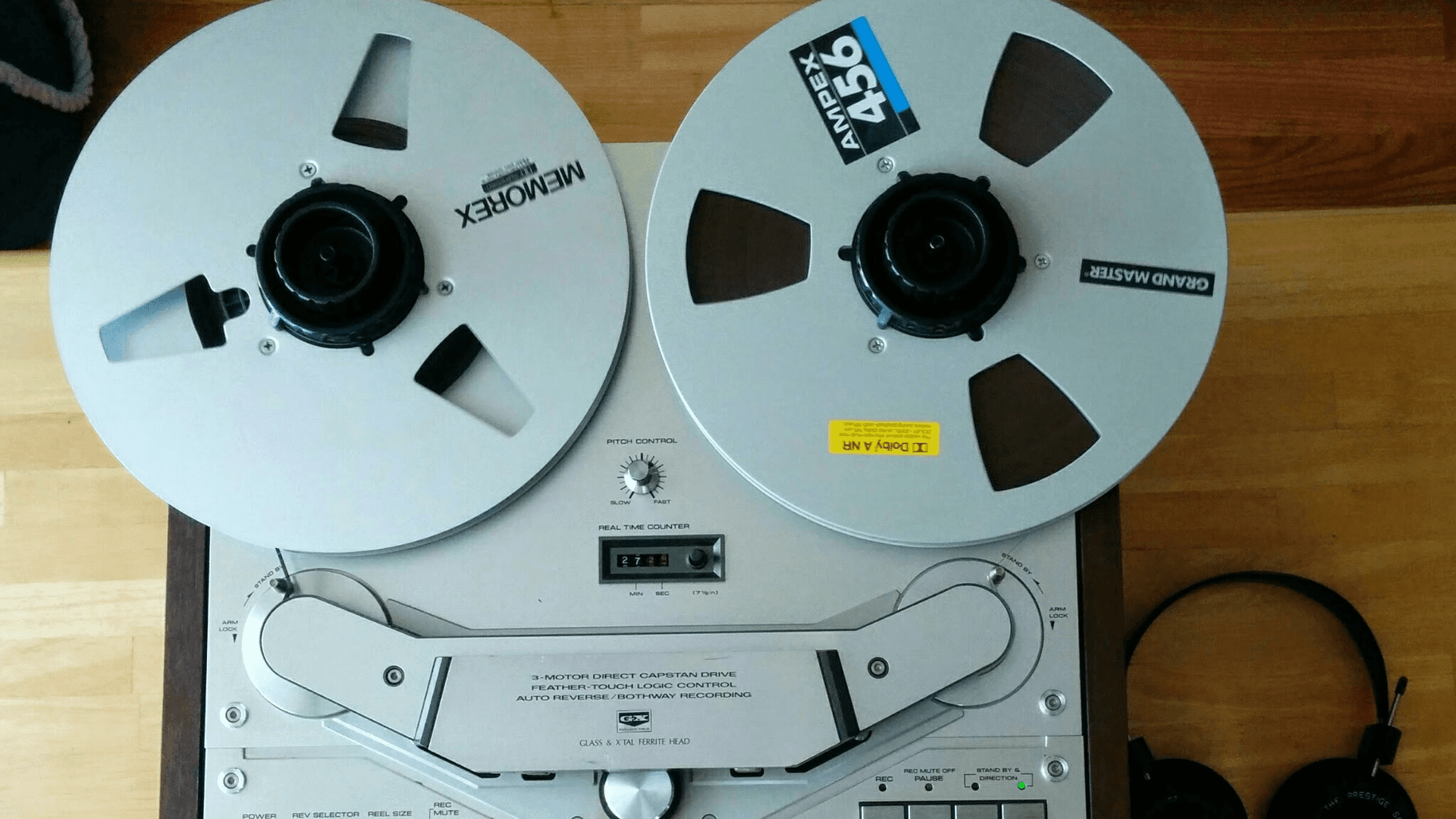
Hero photo: Vintage Akai GX-635D reel-to-reel tape deck with ten-inch tape reels. Photo by Sameer Verma, CC BY-SA 2.0, via Wikimedia Commons.
Take our professional IQ test
Want to know your IQ? Try the first ever professional online IQ test.