What is the Wechsler Memory Scale? A guide to the WMS-IV | Riot IQ
Aug 31, 2026·Specific IQ Tests & Formats
What is the Wechsler Memory Scale? A guide to the WMS-IV
The Wechsler Memory Scale (WMS-IV) is Pearson's adult memory battery for ages 16 to 90, scoring five memory indexes co-normed with the WAIS-IV IQ test. (151 chars)
Dr. Russell T. WarneChief Scientist
Share
The Wechsler Memory Scale, Fourth Edition (WMS-IV) is an individually administered memory battery published by Pearson in 2009 for people ages 16 to 90. It measures how well a person takes in new information and recalls it, both right away and after a delay, and it reports performance as five "index scores" set on the same metric as IQ, with a mean of 100 and a standard deviation of 15. Clinicians use it to evaluate memory complaints, brain injury, epilepsy, and suspected dementia, usually alongside the WAIS-IV intelligence test. This article covers what the Wechsler Memory Scale measures, how its two battery versions differ, how it pairs with an IQ test, and who typically takes it.
A memory test with an 80-year history
David Wechsler, the psychologist behind the Wechsler intelligence scales, published the original version in 1945 under the title "A Standardized Memory Scale for Clinical Use" in The Journal of Psychology. The scale has been revised several times since, and the fourth edition arrived in 2009. According to Pearson, the current publisher, the WMS-IV covers ages 16 years 0 months through 90 years 11 months, can be administered on paper or through the Q-interactive digital platform, and is a qualification level C instrument, which means it is sold only to professionals with graduate training in assessment.
Pearson notes that an updated fifth edition, the WMS-5, is now available. The fourth edition is the version described here because it anchors a large body of clinical research and remains the edition many test takers encounter in existing reports.
The five memory indexes
According to Pearson, the WMS-IV contains seven subtests organized into five domains, each of which produces an index score with a mean of 100 and a standard deviation of 15.
• Auditory memory: how well a person remembers information presented aloud, such as short stories and word pairs read by the examiner.
• Visual memory: memory for visual material, such as abstract designs and their locations on a grid.
• Visual working memory: the ability to hold visual information in mind and mentally work with it over a span of seconds.
• Immediate memory: recall measured right after the material is presented.
• Delayed memory: recall of the same material after a waiting period. In the 2023 BMC Geriatrics study by Lee and colleagues, the delayed conditions are described as following the initial presentation by roughly 20 to 30 minutes.
Notice that the last two indexes cut across the first two. The same story a person hears for the auditory memory measures is retold immediately and again after the delay, so the battery can separate a problem with taking information in from a problem with holding onto it. That distinction matters clinically: rapid forgetting over a delay is a classic warning sign in memory disorders, and it is something a standard IQ test never measures.
Subtests and the two battery versions
The WMS-IV comes in two versions. The adult battery serves examinees ages 16 to 69, and a shorter older adult battery serves ages 65 to 90.
Pearson's research documentation explains that the adult battery kept three subtests from the previous edition (Logical Memory, Verbal Paired Associates, and Visual Reproduction) and added four new ones: the Brief Cognitive Status Exam, an optional screener for global cognitive impairment; Designs, a memory test for abstract images and their spatial positions; and two visual working memory tasks, Spatial Addition and Symbol Span. Pearson describes Symbol Span as a visual analog of the Digit Span task on the WAIS-IV, using abstract symbols that are hard to name so that examinees cannot simply rehearse them verbally. If you are curious how the auditory version of that task works, see our article on what the digit span test measures.
The older adult battery drops Designs and Spatial Addition, which were normed only through age 69, and yields four indexes (auditory, visual, immediate, and delayed memory) from Logical Memory, Verbal Paired Associates, Visual Reproduction, and Symbol Span. The shorter format keeps testing time manageable for older examinees while preserving the core immediate versus delayed comparison.
How the WMS-IV pairs with the WAIS-IV
The WMS-IV was standardized together with the WAIS-IV, the adult Wechsler intelligence test, during 2008 and 2009. Pearson reports that the two batteries were "co-normed," meaning the same normative sample took both tests. That design choice is what makes the pairing so useful. Because both sets of scores come from the same reference population, an examiner can compare a person's memory indexes directly against their measured intelligence and ask whether memory is as strong as overall ability predicts it should be.
This comparison is called "ability-memory discrepancy analysis." A 2021 study by Ryan, Glass Umfleet, and Gontkovsky in the Journal of Psychoeducational Assessment examined these comparisons using WAIS-IV composites, including the Verbal Comprehension Index, Perceptual Reasoning Index, Working Memory Index, and General Ability Index as the intelligence standards, and found reliabilities for adult battery ability-memory comparisons ranging from .82 to .93. In practical terms, a person with a WAIS-IV score of 110 whose delayed memory index sits at 78 shows a gap that is unusual and clinically meaningful, whereas the same memory score in a person whose ability scores are also in the high 70s may simply reflect a consistent overall profile. For background on the intelligence side of the pairing, see our overview of the WAIS IQ test.
What memory indexes capture that IQ does not
An IQ test samples reasoning, acquired knowledge, spatial ability, working memory, and processing speed. What it generally does not include is "episodic memory," the ability to store new material and retrieve it after a meaningful delay. A person can reason through matrix puzzles at an average or better level while losing most of a short story within half an hour. Only a delayed recall trial reveals that pattern.
Working memory is the zone of overlap. Both the WAIS-IV and the WMS-IV measure it, because holding information in mind for seconds supports both reasoning and long-term storage. The difference is what happens next: an IQ test stops at the span of seconds, while a memory battery follows the information across a 20 to 30 minute delay to see how much survives. Our guide to how memory tests work walks through this distinction in more detail.
Who takes the Wechsler Memory Scale
The WMS-IV appears in evaluations where memory itself is the question.
• Memory complaints: adults who report forgetting conversations, appointments, or recent events can have those complaints quantified against age-based norms rather than judged by impression.
• Traumatic brain injury: memory is among the functions most often assessed after head injury. Pearson's clinical research on the new Designs subtest reported large group differences for traumatic brain injury samples, with effect sizes ranging from .72 to 1.36.
• Epilepsy surgery workups: a 2016 study by Bouman and colleagues in Epilepsy & Behavior administered the WMS-IV as part of comprehensive presurgical neuropsychological evaluations for temporal lobe resection. Patients with temporal lobe epilepsy scored significantly below healthy controls on most indices, though the authors found the battery had limited value for identifying which side of the brain was affected.
• Dementia evaluations: Lee and colleagues reported in BMC Geriatrics in 2023 that the WMS-IV older adult battery showed moderate to excellent test-retest reliability in people with dementia, with values of 0.82 to 0.85 for the index scores, supporting its use for tracking memory over time.
In every case the test is administered one-on-one by a qualified professional who integrates the scores with history, interviews, and other measures. No memory index diagnoses anything by itself.
Where an online IQ test fits
An online cognitive assessment and a clinical memory battery answer different questions. The Reasoning and Intelligence Online Test, developed by RIOT IQ with psychometrician Dr. Russell T. Warne, measures adult intelligence for ages 18 and up through 15 subtests across six cognitive indices: verbal reasoning, fluid reasoning, spatial ability, working memory, processing speed, and reaction time. It takes about 52 minutes and reports scores on the same mean-100, standard deviation-15 scale the Wechsler tests use.
Its working memory index covers one slice of what the WMS-IV measures, the short-term holding and manipulation of information. It does not attempt delayed recall trials, and no online test should. If you or a family member has genuine memory concerns, rapid forgetting, or a suspected neurological condition, the right path is a clinical evaluation with an instrument like the WMS-IV, since the RIOT IQ test does not replace an individually administered diagnostic evaluation. If instead you want a rigorous, normed picture of your overall cognitive abilities, including how your working memory compares to other adults, you can take the RIOT IQ test online.
Frequently asked questions
Is the Wechsler Memory Scale an IQ test?
No. It measures memory functioning rather than general intelligence. It was designed and normed to be used alongside the WAIS-IV IQ test, and its index scores share the same mean-100 scale, but the two instruments answer different questions.
What ages does the WMS-IV cover?
According to Pearson, the WMS-IV covers ages 16 years 0 months through 90 years 11 months. The adult battery serves ages 16 to 69 and the older adult battery serves ages 65 to 90.
How long does the WMS-IV take?
Pearson states that administration time varies by battery. The delayed recall conditions require a built-in waiting period of roughly 20 to 30 minutes after the material is first presented, so sessions are typically scheduled to accommodate that delay.
Can you take the Wechsler Memory Scale online at home?
No. It is a qualification level C instrument administered in person by a trained professional, on paper or through Pearson's Q-interactive platform. Online memory quizzes are unrelated to it.
What is the difference between the adult and older adult batteries?
The older adult battery, for ages 65 to 90, omits the Designs and Spatial Addition subtests and produces four index scores instead of five, dropping the visual working memory index. The core immediate and delayed recall subtests are the same.
Is there a newer edition than the WMS-IV?
Yes. Pearson notes that the WMS-5 is now available. The WMS-IV remains widely represented in existing clinical reports and research literature.
2. Holdnack, J. (n.d.). Clinical and psychometric properties of the new WMS-IV Design Memory subtest. Pearson. pearsonassessments.com
3. Lee, S.-C., Chien, T.-H., Chu, C.-P., Lee, Y., & Chiu, E.-C. (2023). Practice effect and test-retest reliability of the Wechsler Memory Scale-Fourth Edition in people with dementia. BMC Geriatrics, 23.. doi.org
4. Ryan, J. J., Glass Umfleet, L., & Gontkovsky, S. T. (2021). Reliabilities of WMS-IV discrepancy score comparisons for subtests, indexes, and selected WAIS-IV composites. Journal of Psychoeducational Assessment, 39(5), 519-530. doi.org
5. Bouman, Z., Elhorst, D., Hendriks, M. P. H., Kessels, R. P. C., & Aldenkamp, A. P. (2016). Clinical utility of the Wechsler Memory Scale, Fourth Edition (WMS-IV) in patients with intractable temporal lobe epilepsy. Epilepsy & Behavior, 55, 178-182. doi.org
6. Wechsler, D. (1945). A standardized memory scale for clinical use. The Journal of Psychology, 19(1), 87-95. doi.org
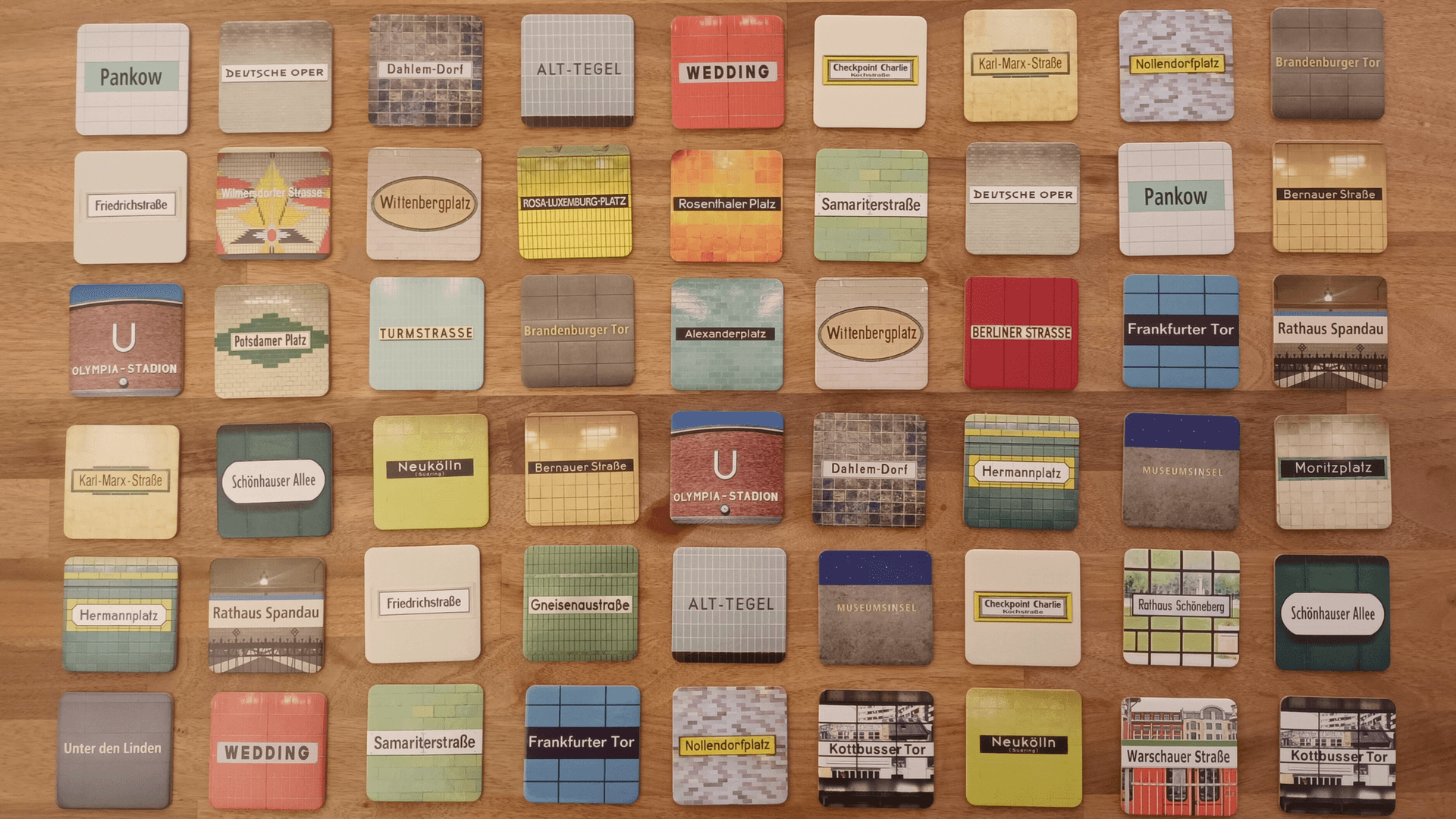
Hero photo: a memory matching game laid out in a grid on a wooden table. Photo by MissyWegner via Wikimedia Commons, CC BY-SA 4.0 (https://creativecommons.org/licenses/by-sa/4.0/), cropped.
Take our professional IQ test
Want to know your IQ? Try the first ever professional online IQ test.