The Grooved Pegboard Test measures fine motor speed and eye-hand coordination using 25 keyed pegs. Learn how it works, its norms, and what scores mean.
Dr. Russell T. WarneChief Scientist
Share
The Grooved Pegboard Test is a timed measure of manual dexterity and "psychomotor speed," the speed at which a person can see a target, plan a movement, and carry it out. The examinee picks up small metal pegs one at a time and fits them into a board of 25 holes, first with the dominant hand and then with the non-dominant hand, while the examiner records the time in seconds. Every peg has a ridge along one side, and every hole has a matching slot in a different orientation, so each peg must be rotated into position before it will drop in. That single design choice turns a simple filling task into a demanding test of fine motor control and eye-hand coordination. This article explains how the test works, what it measures, who uses it, and what the norms show.
What the Grooved Pegboard Test is
The Grooved Pegboard is manufactured by Lafayette Instrument Company as Model 32025. According to the manufacturer, the unit "consists of 25 holes with randomly positioned slots," and the pegs, "which have a key along one side, must be rotated to match the hole before they can be inserted." Lafayette states that this requirement makes the test demand more complex visual-motor coordination than most pegboards, and lists neuropsychological test batteries, student laboratories, and industrial screening as its main uses.
The administration instructions and age-curve data in the official manual are taken from the Neuropsychological Test Manual developed by Dr. Ronald Trites at the Royal Ottawa Hospital. The manual defines three versions by age: an adult version for ages 15 and up, an adolescent version for ages 9 to 14, and a "kiddie" version for ages 5 to 8 that uses only the first two rows of the board (10 pegs).
A related instrument, the Purdue Pegboard, is another widely used pegboard measure of manual dexterity. The Grooved Pegboard is generally the more demanding task of the two because of the rotation requirement.
How the test is administered
The board is placed at the edge of the table in line with the examinee's midline, with the peg tray just above it. The examiner demonstrates by filling the top row, then asks the examinee to fill the board as quickly as possible without skipping any holes. Per the Lafayette manual, the dominant hand is always tested first. For the right-hand trial the rows are filled from left to right, and for the left-hand trial from right to left, one peg at a time, using only the hand being tested.
The examiner records three things for each trial:
• Time in seconds: the clock runs from the moment the examinee starts until the last peg is placed. This is the primary score.
• Drops: any unintentional drop of a peg between the tray and the hole is counted. Deliberately setting a peg down to reposition it does not count.
• Pegs placed: the number of pegs correctly seated, which matters when a trial is stopped early.
A trial may be discontinued after five minutes, in which case the record is flagged as incomplete. The examiner also notes anything that could affect performance, such as a sore finger or a bandage. For most healthy adults the procedure is brief: the manual's reference data put average completion times for ages 10 to 59 at about 65 seconds for the dominant hand and about 70 seconds for the non-dominant hand.
What the test measures
At its core, the Grooved Pegboard Test measures fine motor speed and dexterity under visual guidance. A recent normative study in the journal Applied Neuropsychology: Adult describes it as assessing fine motor control, psychomotor speed, and visuomotor coordination. Because the keyed holes point in different directions, each peg requires a small, visually guided rotation, so the examinee cannot fall into a fixed rhythm.
Testing each hand separately is central to the test's clinical value. Comparing the two hands gives a window on "lateralized" motor function, meaning function tied to one side of the brain, since each hemisphere primarily controls the opposite hand. Lafayette notes that because both sides of the body are examined, inferences may be drawn regarding possible lateral brain damage. In healthy adults the non-dominant hand is typically about five seconds slower, so a much larger gap, in either direction, is something a clinician will look at closely.
The manual is careful about limits. It states that scores are of diagnostic use only within the context of a broader sampling of medical, cognitive, motor, and sensory information. A slow pegboard time by itself does not diagnose anything; hand injuries, arthritis, tremor, and vision problems can all move the score.
Who uses the Grooved Pegboard Test
The Grooved Pegboard shows up wherever researchers and clinicians need a quick, sensitive index of motor slowing. It is a standard component of many batteries used in neuropsychological testing, alongside measures such as the Trail Making Test and the Stroop test. Documented uses include:
• Traumatic brain injury: a National Institutes of Health study of patients one to five years after brain injury found that mild, moderate, and severe injury groups differed significantly on the Grooved Pegboard, one of the few battery measures that tracked injury severity.
• Parkinson's disease research: researchers at the University of Colorado tested 82 people with Parkinson's disease and reported that pegboard times for each hand were associated with overall motor severity and time since diagnosis, and that tremor did not confound the relationship. They concluded the test is a useful tool for assessing motor severity in the disease.
• Multiple sclerosis: the Lafayette manual reproduces data from a 1970 study in which patients with multiple sclerosis averaged 323 seconds on the task, versus about 172 seconds for control patients with other nervous system conditions.
• Toxin exposure studies: a 2021 study in the journal Environmental Health found that residents living near a large manganese smelter in South Africa completed the pegboard more slowly than residents of a comparable non-exposed community, especially with the non-dominant hand, alongside higher ratings of parkinsonism.
• Industrial screening: the publisher notes that the test should relate most strongly to jobs requiring speed and finger dexterity, such as assembly work, and recommends that employers validate it locally before using it for selection.
Norms, age, and sex effects
Normative data for the Grooved Pegboard come from several sources, and the patterns are consistent. In a frequently cited 1993 study in Perceptual and Motor Skills, Ruff and Parker tested 360 healthy volunteers between ages 16 and 70, stratified by gender, education, and age. Women were substantially faster than men on the Grooved Pegboard, which is the reverse of the pattern on finger tapping, where women were slower. Performance declined modestly with age, and better educated participants were somewhat faster. The authors recommended using stratified norms rather than a single cutoff.
A 2025 normative study of 266 French-speaking adults aged 50 to 90 in Quebec reached similar conclusions: being female predicted faster times on every trial, older age predicted slower times, and left-handers did somewhat better on the non-dominant-hand trials. The Lafayette manual's own reference tables tell the same story about aging, with average dominant-hand times holding in the low 60-second range through middle age and rising to about 83 seconds for adults 60 and older.
The practical point is that a raw time means little until it is compared against norms for the person's age and sex. These demographic effects, while real, are modest in healthy people; the large separations seen in multiple sclerosis are of a different order entirely.
Motor speed, processing speed, and IQ
How much does a pegboard time say about thinking speed or intelligence? Something, though not much on its own. Pegboard performance is often analyzed alongside "processing speed" measures, which assess how quickly a person completes simple mental tasks, because both involve rapid visually guided responding. In the NIH brain injury study mentioned above, estimated premorbid IQ was significantly related to Grooved Pegboard performance, as it was to processing speed scores, yet the associations are modest. Dexterity can also be impaired by purely peripheral problems, such as a hand injury, that say nothing about the brain, so no one should read a pegboard time as a statement about intelligence.
Modern IQ tests therefore measure speed with tasks that minimize the fine motor component. The RIOT IQ test, the Reasoning and Intelligence Online Test developed by RIOT IQ with psychometrician Dr. Russell T. Warne, includes processing speed and reaction time among its six cognitive indices, alongside verbal reasoning, fluid reasoning, spatial ability, and working memory. It is designed for adults 18 and older, takes about 52 minutes across 15 subtests, and reports scores on the familiar mean-100, standard-deviation-15 scale. Its speeded tasks use simple key presses, so scores reflect mental quickness rather than hand dexterity. While it does not replace an individually administered diagnostic evaluation, it offers a rigorous, normed picture of your cognitive speed and reasoning. You can take it at riotiq.com.
Frequently asked questions
How long does the Grooved Pegboard Test take?
Healthy adults typically finish each hand in roughly 60 to 90 seconds. Under standard rules, a trial may be discontinued after five minutes.
What is a normal Grooved Pegboard score?
Scores are reported as time in seconds per hand. Published reference values for ages 20 to 29 average about 63 seconds for the dominant hand and 69 for the non-dominant hand, with times rising gradually after age 50.
Does the Grooved Pegboard Test measure IQ?
No. It measures fine motor speed and eye-hand coordination. Research shows modest associations between pegboard performance and broader cognitive measures, but a pegboard time is a motor score, and intelligence tests measure reasoning and knowledge with far less demand on the hands.
Why is each hand tested separately?
Because each brain hemisphere primarily controls the opposite hand, comparing dominant and non-dominant performance can point to lateralized problems. A gap much larger than the typical few seconds may prompt further neurological investigation.
What conditions can slow Grooved Pegboard performance?
Documented examples include traumatic brain injury, Parkinson's disease, multiple sclerosis, and neurotoxic exposures such as manganese. Peripheral factors like arthritis, hand injury, or poor vision can also slow times without any brain involvement.
2. Lafayette Instrument Company. (2002). Grooved Pegboard Test user instructions, Model 32025. fab-ent.com
3. Ruff, R. M., & Parker, S. B. (1993). Gender- and age-specific changes in motor speed and eye-hand coordination in adults: Normative values for the Finger Tapping and Grooved Pegboard Tests. Perceptual and Motor Skills, 76(3, Pt 2), 1219-1230. pubmed.ncbi.nlm.nih.gov
4. Giguère, S.-A., Chantal, S., Landry, M., Belzile, F., Macoir, J., & Hudon, C. (2025). Normative data for the Grooved Pegboard Test in Quebec-French middle-aged and older adults. Applied Neuropsychology: Adult. Advance online publication. pubmed.ncbi.nlm.nih.gov
5. Buard, I., Yang, X., Kaizer, A., Lattanzio, L., Kluger, B., & Enoka, R. M. (2022). Finger dexterity measured by the Grooved Pegboard test indexes Parkinson's motor severity in a tremor-independent manner. Journal of Electromyography and Kinesiology, 66, 102695. pmc.ncbi.nlm.nih.gov
6. Leary, J. B., Kim, G. Y., Bradley, C. L., Hussain, U. Z., Sacco, M., Bernad, M., Collins, J., Dsurney, J., & Chan, L. (2018). The association of cognitive reserve in chronic-phase functional and neuropsychological outcomes following traumatic brain injury. Journal of Head Trauma Rehabilitation, 33(1), E28-E35. pubmed.ncbi.nlm.nih.gov
7. Racette, B. A., Nelson, G., Dlamini, W. W., Prathibha, P., Turner, J. R., Ushe, M., Checkoway, H., Sheppard, L., & Nielsen, S. S. (2021). Severity of parkinsonism associated with environmental manganese exposure. Environmental Health, 20, 27. pubmed.ncbi.nlm.nih.gov
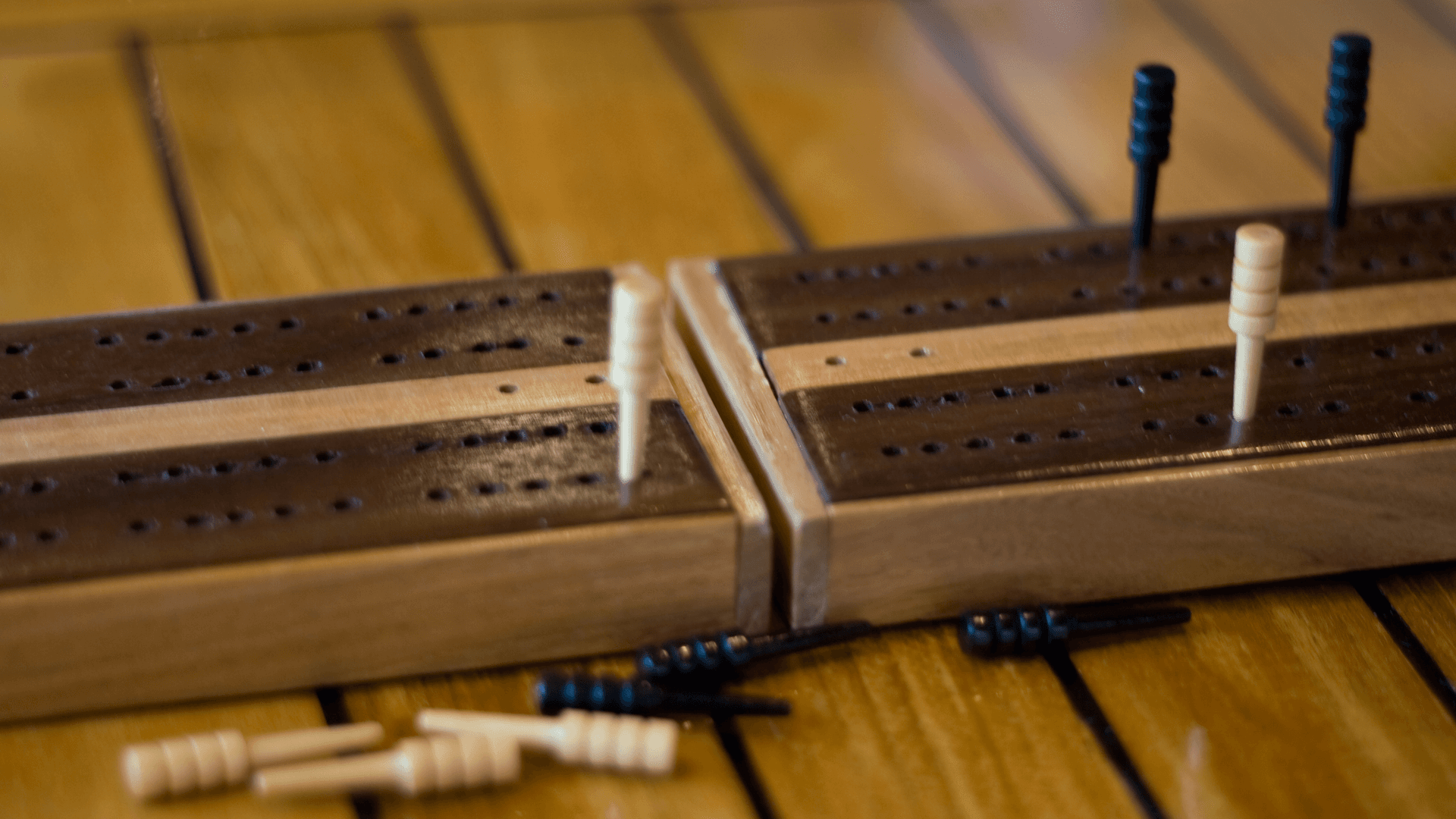
Hero photo: Wooden peg boards with rows of small holes and slender pegs, some inserted upright and others waiting on the table. Photo by Andrew Malone, CC BY 2.0, via Wikimedia Commons (cropped).
Take our professional IQ test
Want to know your IQ? Try the first ever professional online IQ test.