What is the DAT test? The Dental Admission Test explained | Riot IQ
Aug 31, 2026·Specific IQ Tests & Formats
What is the DAT test? The Dental Admission Test explained
The DAT test is the American Dental Association exam required for U.S. dental school admission. Learn its four sections, 200-600 scoring, and IQ overlap. (153 chars)
Dr. Russell T. WarneChief Scientist
Share
The DAT test, formally the Dental Admission Test, is the standardized admissions exam that every U.S. dental school requires as part of its application process. It is administered by the American Dental Association (ADA) and delivered by computer at Prometric test centers year round. The exam contains four sections: the Survey of the Natural Sciences, the Perceptual Ability Test, Reading Comprehension, and Quantitative Reasoning. Since March 1, 2025, results have been reported on a 200 to 600 scale, replacing the older 1 to 30 scale. This article explains what each section measures, how scoring works, what makes the Perceptual Ability Test cognitively unusual among admissions exams, and how the DAT compares with a true IQ test.
Who takes the DAT and why
The DAT exists to give dental education programs a common yardstick for comparing applicants. According to the ADA, the test is accepted by all U.S. dental schools and select dental schools in Canada, and it is designed to assess an applicant's potential for success in dental education. Grades from different colleges mean different things, so a national exam lets admissions committees compare candidates on equal footing. That logic dates back to the program's origins: the ADA's user's manual notes that development of the testing program began in 1945, when dental schools were struggling with high attrition and a flood of applications from returning World War II veterans.
Most test takers are undergraduates or recent graduates preparing to apply to dental school. The ADA recommends taking the exam after completing the coursework it covers, especially organic chemistry, and suggests the spring of junior year or the summer immediately after as a typical window. In this respect the DAT plays the same gatekeeping role for dentistry that exams like the UCAT play for medicine in other countries; our guide to the UCAT covers that parallel in detail.
The four sections of the DAT test
The DAT is a battery of four multiple-choice tests presented in English. According to the ADA's 2026 Candidate Guide, the sections and item counts are as follows.
• Survey of the Natural Sciences (100 items, 90 minutes): an "achievement test," meaning it measures learned knowledge rather than raw ability. It contains 40 biology items, 30 general chemistry items, and 30 organic chemistry items drawn from typical undergraduate courses.
• Perceptual Ability Test (90 items, 60 minutes): a set of two-dimensional and three-dimensional puzzles that measure how accurately a candidate can perceive object dimensions and mentally manipulate shapes in space. No science knowledge is involved.
• Reading Comprehension (50 items, 60 minutes): three passages of roughly 1,100 to 1,400 words on basic science topics, each followed by 15 to 20 questions. The ADA states that prior understanding of the topics is not a prerequisite; the section rewards careful reading and analysis.
• Quantitative Reasoning (40 items, 45 minutes): algebra, word problems, probability and statistics, and data analysis. The ADA's user's manual notes there are no calculus or advanced mathematics problems.
The total appointment runs five hours and 15 minutes, which includes an optional 15-minute tutorial, an optional 30-minute break after the Perceptual Ability Test, and an optional post-test survey.
The Perceptual Ability Test: the DAT's spatial section
The Perceptual Ability Test, usually shortened to PAT, is what sets the DAT apart from most graduate admissions exams. The ADA's user's manual states that the PAT evaluates several of the major factors identified in research on perceptual and spatial ability, including angle discrimination, block counting, paper folding, form development, and object visualization. The 2026 Candidate Guide lists six subtests: apertures (judging whether a 3D object can pass through an opening), view recognition, angle discrimination, paper folding, cube counting, and 3D form development.
The reason dentistry cares about this is practical. Dentists work in a small, mirrored, three-dimensional space, and the ADA notes that the ability to visually perceive small differences has long been shown to matter when selecting people for work requiring fine manual skill. The same abilities have a much broader significance in intelligence research. "Spatial ability," the capacity to mentally represent and transform objects, is one of the well-established broad factors of human cognitive ability, and research by Wai, Lubinski, and Benbow drawing on more than 50 years of longitudinal data found that it predicts entry into and success in science, technology, engineering, and mathematics fields beyond what verbal and mathematical scores explain. If you want the deeper story on why this ability appears on cognitive tests at all, see our article on visual-spatial reasoning and why it shows up on an IQ test. Spatial skills also respond to practice more readily than many other abilities, a point we cover in our guide to improving spatial reasoning skills.
How DAT scoring works
DAT results are reported as "scale scores," which are neither raw counts of correct answers nor percentiles. Two features of the system are worth understanding.
• The 200 to 600 scale: according to the ADA, a new scoring system took effect on March 1, 2025. The old 1 to 30 reporting scale, in place since 1988, was replaced by a three-digit scale running from 200 to 600 in 10-point increments. All scores sent to the centralized dental school application service now use the new scale, and older results are converted psychometrically. Under the old scale, the ADA described a score of 19 as typically signifying average performance; its concordance table maps that to roughly 410 on the new scale.
• The Academic Average: the headline number most schools look at. The ADA defines it as the rounded average of a candidate's scale scores in Biology, General Chemistry, Organic Chemistry, Quantitative Reasoning, and Reading Comprehension. The Perceptual Ability score is reported separately and is excluded from the Academic Average. A separate Total Science score averages the three science sections.
For context on what counts as strong performance, the ADA's percentile tables, based on a national sample of more than 30,000 recent DAT attempts, show that an Academic Average of 400 sits near the 54th percentile, while 460 reaches the 88th percentile. Individual dental schools set their own expectations, so applicants should check the programs they are targeting rather than rely on a single cutoff.
Test logistics: where, when, and how often
The DAT has been computer-based since 1999 and is offered year round at Prometric test centers in the United States, its territories, and select locations in Canada, though the ADA notes it is no longer offered in Quebec. Candidates apply through the ADA, and the association advises submitting the application six to eight weeks before the desired test date, then booking a Prometric appointment 60 to 90 days ahead because seats fill quickly.
Retakes are permitted under strict rules. According to the ADA, candidates must wait 60 days between attempts, may test at most four times in any 12-month period, and after a third attempt must apply for permission to test again with proof of a recent dental school application. A small number of unscored experimental questions appear on every form, and multiple test forms of varying difficulty are equated statistically so that scores remain comparable.
Is the DAT test an IQ test?
No, and the differences are instructive. The largest section of the DAT is an achievement test of memorized science content, something no professionally built IQ test would include, because IQ tests aim to measure reasoning ability rather than curriculum knowledge. The DAT also has no overall composite representing general cognitive ability; the Academic Average deliberately excludes the Perceptual Ability Test. Finally, DAT scores describe standing within a self-selected pool of dental school applicants, a group that is stronger academically than the general adult population, so a middling DAT score does not translate to a middling IQ.
That said, the exam clearly draws on cognitive abilities that intelligence tests measure. The Perceptual Ability Test is a close cousin of the spatial tasks on cognitive batteries, Quantitative Reasoning overlaps with fluid and quantitative reasoning measures, and Reading Comprehension leans on verbal ability. Performing well on the DAT reflects both preparation and underlying reasoning skill, in proportions the exam itself cannot separate.
FAQ
What does DAT stand for?
In this context, DAT stands for Dental Admission Test, the ADA's admissions exam for dental education programs in the United States and Canada.
Is the DAT the same as the Differential Aptitude Tests?
No; the Differential Aptitude Tests were an unrelated multi-aptitude battery once used in school and career counseling that happened to share the abbreviation.
How long does the DAT take?
The full appointment is five hours and 15 minutes, including an optional tutorial, an optional 30-minute break, and a post-test survey. Actual testing time across the four sections is 255 minutes.
What is a good DAT score?
Scores now run from 200 to 600. Per the ADA's percentile tables, an Academic Average around 400 is near the middle of recent test takers, and 460 or higher reaches roughly the top 12 percent. Each school weighs scores by its own criteria.
How many times can you take the DAT?
Up to four times in any 12-month period, with a 60-day wait between attempts. From the third attempt onward, candidates need ADA permission and proof of a recent dental school application.
Does the DAT measure IQ?
No. It mixes science achievement with reasoning and spatial tasks and norms its scores against dental school applicants, so it cannot produce an IQ score, although its Perceptual Ability section resembles spatial subtests on cognitive batteries.
Curious about your own spatial and reasoning profile?
The DAT answers a narrow question: how prepared is this applicant for dental school? If what actually interests you is your own cognitive profile, including the spatial ability the PAT taps, a normed IQ test is the better instrument. The RIOT IQ test (Reasoning and Intelligence Online Test), developed by RIOT IQ with psychometrician Dr. Russell T. Warne, is built for adults 18 and older. It includes 15 subtests across six cognitive indices (verbal reasoning, fluid reasoning, spatial ability, working memory, processing speed, and reaction time), takes about 52 minutes, and reports scores on the familiar mean-100, standard-deviation-15 IQ scale. It does not replace an individually administered diagnostic evaluation, though it offers a rigorous picture of where your abilities stand. You can take the RIOT IQ test at riotiq.com.
References
1. American Dental Association. (2026). Dental Admission Test (DAT). ada.org
2. American Dental Association. (2026). DAT scores. ada.org
3. American Dental Association. (2025). Understanding the new Dental Admission Test (DAT) score reporting scale: Guidelines for candidates, admissions officers, and pre-health advisors. ada.org
4. American Dental Association. (2025). Dental Admission Test (DAT) 2026 candidate guide. ada.org
5. American Dental Association. (2026). Dental Admission Test (DAT) user's manual. ada.org
6. Wai, J., Lubinski, D., & Benbow, C. P. (2009). Spatial ability for STEM domains: Aligning over 50 years of cumulative psychological knowledge solidifies its importance. Journal of Educational Psychology, 101(4), 817-835. doi.org
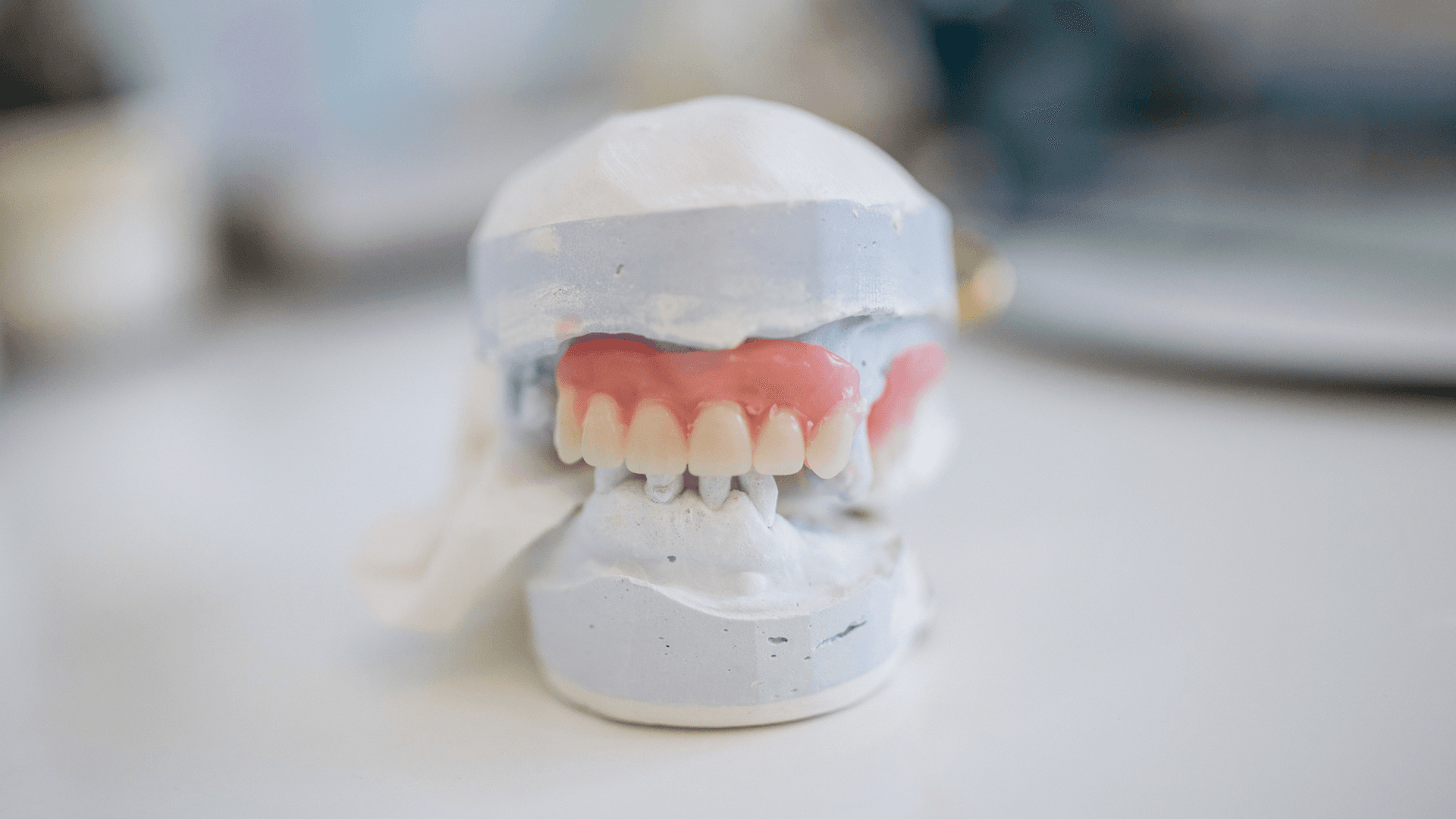
Hero photo: Dental anatomy model showing teeth and gums on a study desk. Photo by Shixart1985, Wikimedia Commons, CC BY 2.0 (https://creativecommons.org/licenses/by/2.0).
Take our professional IQ test
Want to know your IQ? Try the first ever professional online IQ test.